Latest amendment made by the Provincial Motor Vehicles (Second Amendment) Act, 2026 (Sindh Act XXX of 2026).
Edition scope: This edition includes the issued 1 October 2025 traffic-fine tables and separately presents the 2023 statutory BRT Part B; their consolidation relationship remains under review. The continuing status of the 2008 changes concerning sections 112 and 112-A also remains under review. These specified questions prevent an unqualified claim that this is a fully current consolidation.
An Ordinance to amend and consolidate the law relating to Motor Vehicles in the Province of West Pakistan.
WHEREAS it is expedient to amend and consolidate the law relating to motor vehicles in the Province of West Pakistan;
AND WHEREAS, the Provincial Assembly of West Pakistan is not in session and the Governor of West Pakistan is satisfied that circumstances exist which render immediate legislation necessary;
NOW, THEREFORE, in exercise of the powers conferred on him by clause (1) of Article 79 of the Constitution, the Governor of West Pakistan is pleased to make and promulgate the following Ordinance:
CHAPTER I PRELIMINARY
1. Short title and extent. (1) This Ordinance may be called the 2[Provincial] Motor Vehicles Ordinance, 1965.
(2) It extends to the whole of Pakistan.
87[(2-A) “BRT” means Bus Rapid Transit vehicle operating on fixed fares for all stages;]87
2. Definitions. In this Ordinance, unless the context otherwise requires, the following expressions shall have the meanings hereby respectively assigned to them, that is to say:-
(1) “ambulance” means a vehicle designed for the carriage of sick, wounded or invalid persons or animals;
6[“(1-A) “ambulance” means a vehicle designed or adapted primarily for the purpose for carriage of sick, wounded or invalid persons or animals;”]6;
(2) “axle weight” means in relation to an axle of a vehicle the total weight transmitted by the several wheels attached to that axle to the surface whereon the vehicle rests;
(3) “Corporation” means the Road Transport Corporation established under Section 70;
7[“(4) “Certificate of registration” means and includes the Security Featured Motor Vehicle Registration (MVR) Smart Card issued by the competent authority to effect that a motor vehicle has been registered in accordance with the provisions of Chapter-III;”.]7
(5) “contract carriage” means a Motor Vehicle which carries a passenger or passengers for hire or reward under a contract expressed or implied for the use of the vehicle as a whole at or for a fixed or agreed rate or sum and from one point to another without stopping to pick up or set down along the line of route passengers not included in the contract; and includes a motor cab not-withstanding that the passengers may pay separate fares;
87[(5-A) “Corridor” means a way for operation of BRT vehicles.]87
(6) “delivery van” means any goods vehicle the registered laden weight of which does not exceed 5,000 pounds avoirdupois;
(7) “driver” includes, where a separate person acts as steersman of a Motor Vehicle, that person as well as any other person engaged in the driving of the vehicle;
(8) “emergency vehicle” means a Motor Vehicle used solely for police, fire-brigade or ambulance purposes or to relieve distress,
8[“(8-A) “emergency vehicle” means a motor vehicle used solely, “as a law enforcement vehicle”, fire-brigade or ambulance to relieve distress;”]8;
88[(9) “fares” includes sums payable for a season ticket or in respect of the hire of a contract carriage, or includes a sums collected from a passenger travelling by any mode of mass transit vehicle through mandatory ticketing system, e-ticketing system, auto fare collection (AFC) system or any fare collection mechanism, as the case may be;]88
(10) “goods” include livestock, and anything (other than equipment ordinarily used with the vehicle) carried by a vehicle except living person, but does not include luggage or personal effects carried in a motorcar or in a trailer attached to a motorcar or the personal luggage of passengers travelling in the vehicle;
(11) “goods vehicle” means any Motor Vehicle constructed or adapted for use for the carriage of goods, or any Motor Vehicle not so constructed or adapted when used for the carriage of goods, solely or in addition to passengers;
(12) “Government” means the 2[Provincial Government];
(13) “heavy transport vehicle” means a transport vehicle the registered axle weight of which exceeds 10,600 pounds avoirdupois, or the registered laden weight of which exceeds 14,500 pounds avoirdupois;
92[(13-A) “holding period” means the period during which a motor vehicle remains in dealer stock in the name of a Motor Dealer Licensee in the Motor Registration Authority (MRA) system.]92
(14) “intersection” shall include the area bounded by the side lines, real or projected, of two or more public highways which meet or cross each other;
(15) “invalid carriage” means a Motor Vehicle the unladen weight of which does not exceed five hundredweights, specially designed and constructed, and not merely adapted, for the use of a person suffering from some physical defect or disability, 9[“including differently abled persons with hearing impairment”]9 and used solely by or for such a person;
(16) “licence” means the document issued by a competent authority authorising the person specified therein to drive a Motor Vehicle or a Motor Vehicle of any specified class or description;
(17) “licensing authority” means an authority empowered to grant licences under this Ordinance;
(18) “light transport vehicle” means any public service vehicle other than a motor cab, or any goods vehicle other than a heavy transport vehicle or a delivery van;
(19) “locomotive” means a Motor Vehicle which is itself not constructed to carry any load (other than equipment used for the purpose of propulsion), the unladen weight of which exceeds 16,000 pounds avoirdupois, but does not include a road roller;
(20) “motor cab” means any Motor Vehicle constructed, adapted or used to carry not more than ten passengers excluding the driver, for hire or reward;
(21) “motorcar” means any Motor Vehicle other than a transport vehicle, locomotive, road roller, tractor, motorcycle or invalid carriage;
(22) “motorcycle” means a Motor Vehicle, other than an invalid carriage, with less than four wheels, the unladen weight of which, inclusive of any sidecar attached to the vehicle, does not exceed 900 pounds avoirdupois;
(23) “motor vehicle” means any mechanically 104[electrically or electronically] propelled vehicle 88[BRT]88 adapted for use upon roads, whether the power of propulsion is transmitted thereto from an external or internal source, and includes a chassis to which a body has not been attached 10[, a tractor]10 and a trailer 11[a combined harvester, a rig, a fork lifter, a road roller, construction and earth moving machine such as a wheel loader, a dumper, a crane, an excavator, a grader, a dozer, a pipe layer, a road making and a road or sewage cleaning plant]11; but does not include a vehicle running upon fixed rails or used solely upon the premises of the owner;
12[“(23-A) “Obstruction” means any action by a person, vehicle or otherwise that would impede the progress of another vehicle. The words “obstruct” and “obstructing” shall be construed accordingly.”]12.
(24) “owner” means the person in whose name the motor vehicle is registered and includes:—102
(a) a transferee of the motor vehicle from such person;
(b) in relation to a motor vehicle which is the subject of a hire-purchase agreement, the person in possession of the vehicle under that agreement; and
(c) where the person in whose name the motor vehicle is registered or the person in possession of the motor vehicle under a hire-purchase agreement is—
(i) a minor, the guardian of such minor;
(ii) a company registered under the Companies Act, 1913, the directors of such company;
(iii) a society registered under the Societies Registration Act, 1860, or under any law relating to co-operative societies, the principal officer of such society by whatever designation known;
(iv) a firm, all the partners of such firm; and
(v) any other association of persons, all the members of such association:
Provided that where such company, firm, society or other association of persons has given notice to the registering authority that it has nominated a director, partner, office-bearer, member or officer, as the case may be, of the company, firm, society or association to be the owner of the vehicle for the purposes of this Ordinance, the person so nominated shall alone be deemed to be the owner for the purposes of this Ordinance;
(25) “permit” means the document issued by the Provincial Transport Authority or a Regional Transport Authority, authorising the use of a transport vehicle as a contract carriage or stage carriage or authorising the owner as a private carrier or public carrier to use such vehicle;
(26) “prescribed” means prescribed by rules made under this Ordinance;
(27) “private carrier” means an owner of a transport vehicle other than a public carrier who uses that vehicle solely for the carriage of goods which are his property or the carriage of which is necessary for the purposes of his business not being a business of providing transport, or who uses the vehicle for any of the purposes specified in sub-section (2) of section 44;
108[(27-A) “Province” means the Province of Sindh;]
(28) “public carrier” means an owner of a transport vehicle who transports or undertakes to transport goods, or any class of goods, for another person at any time and in any public place, for hire or reward, whether in pursuance of the terms of a contract or agreement or otherwise, and includes any person, body, association or company engaged in the business of carrying of the goods of persons associated with that person, body, association or company for the purposes of having their goods transported;
(29) “public highway” shall include any highway, road, street, avenue, alley, public place, public drive way or any other public way;
(30) “public place” means a road, street, way or other place, whether a thoroughfare or not to which the public have a right of access, and includes any place or stand at which passengers are picked up or set down by a stage carriage;
(31) “public service vehicle” means any Motor Vehicle used or adapted to be used for the carriage of passengers for hire or reward, and includes a motor cab, contract carriage, and stage carriage;
(32) “registered axle weight” means in respect of any vehicle the axle weight certified and registered by the registering authority as permissible for that vehicle;
(33) “registered laden weight” means in respect of any vehicle the total weight of the vehicle and load certified and registered by the registering authority as permissible for that vehicle;
(34) “registering authority” means an authority empowered to register Motor Vehicles under Chapter III;
(35) “school bus” means any Motor Vehicle used exclusively for the carriage of students of any educational institution, recognised by Government or the managing committee of which is a society registered under the Societies Registration Act, 1860;
(36) “semi-trailer” means any vehicle which is so designed that when operated, the forward end of its body or chassis rests upon the body or chassis of the towing Motor Vehicle;
(37) “stage carriage” means a Motor Vehicle carrying or adapted to carry more than six persons excluding the driver which carries passengers, for hire or reward at separate fares paid by or for individual passengers, either for the whole journey or for stages of the journey;
(38) “Street (road way)” means that part of the public highway which is intended for vehicular traffic;
(39) “tractor” means a Motor Vehicle which is not itself constructed to carry any load (other than equipment used for the purpose of propulsion) the unladen weight of which does not exceed 16,000 pounds avoirdupois, but does not include a road-roller;
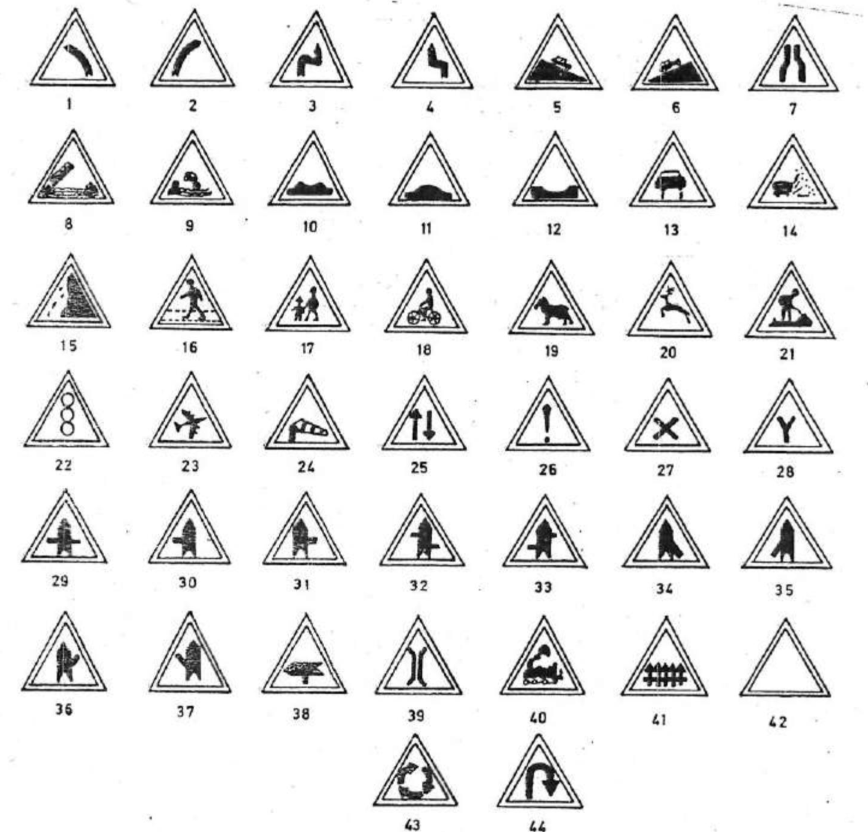
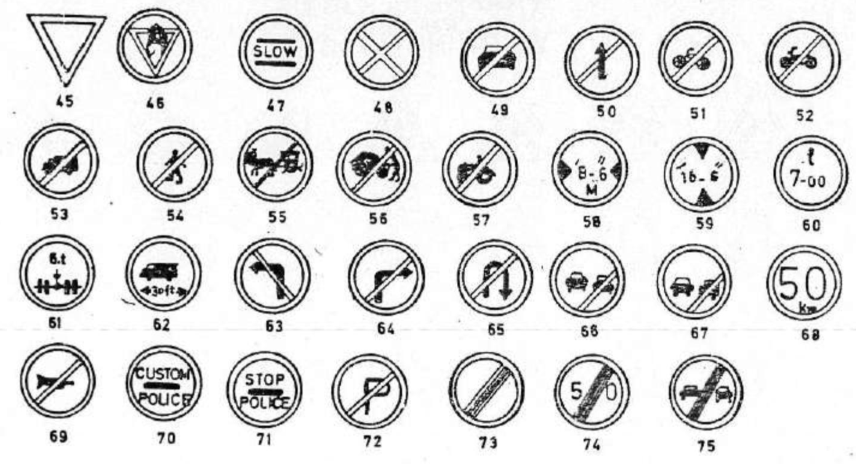
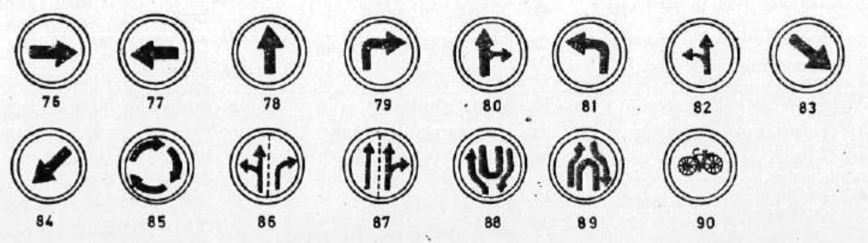
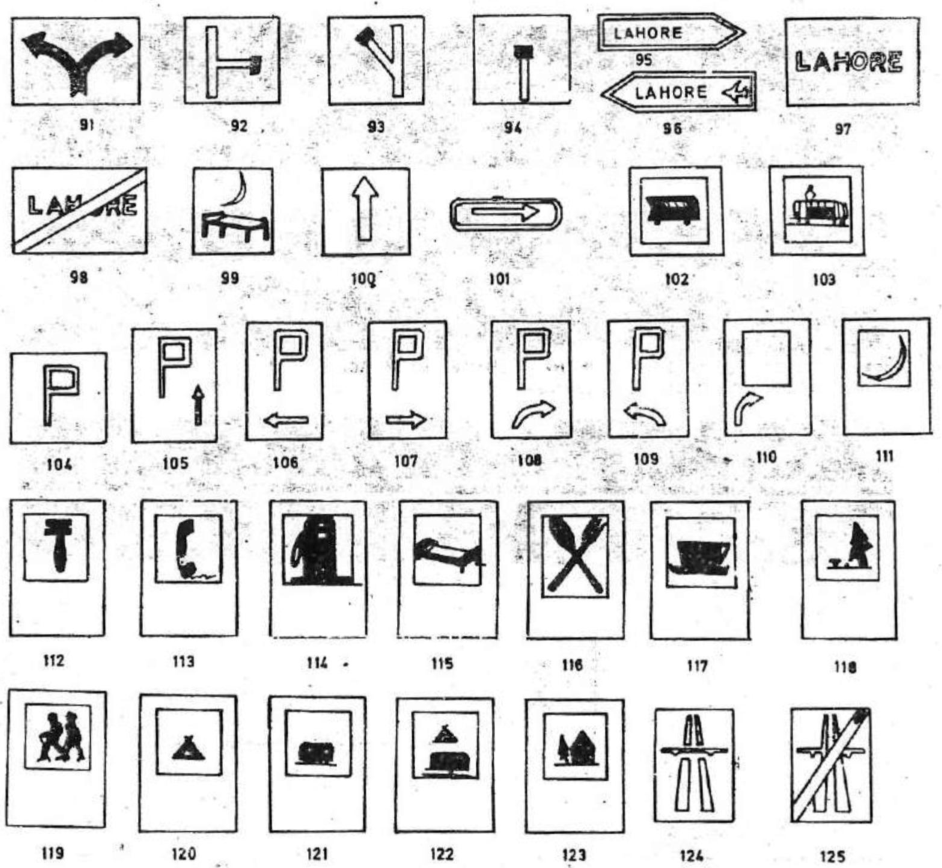
(40) “traffic signs” includes all signals, warning sign posts, direction posts, or other devices for the information, guidance or direction of drivers of Motor Vehicles;
(41) “trailer” means any vehicle other than a side-car drawn or intended to be drawn by a Motor Vehicle;
(42) “transport vehicle” means a public service vehicle, a goods vehicle, a locomotive or a tractor [***];
90[(42-A) “technology” shall include, but not be limited to, Automatic Number Plate Recognition (ANPR) cameras, speed cameras, and any other automated traffic violation detection systems, hereinafter referred to as the detection system;
(42-B) “use of technology” means the detection system may be employed to automatically detect, record and verify any traffic violation specified in the Twelfth Schedule, whether such violation relates to moving traffic or parking violations.]90
(43) “unladen weight” means the weight of a vehicle or trailer, including all equipment ordinarily used within the vehicle or trailer when working, but excluding the weight of the driver or attendant; and where alternative parts or bodies are used, the unladen weight of the vehicle means the weight of the vehicle with the heaviest such alternative part or body;
(44) “weight” means the total weight transmitted for the time being by the wheels of a vehicle to the surface on which the vehicle rests.
88[(46) “service contract” means a contract between the Provincial Transport Authority or any other relevant authority, as may be applicable, and a service provider;
(47) “service provider” means a service provider engaged pursuant to a service on contract to provide services in respect of the bus rapid transit system and may include, without limitation, the BRTs vehicle operators automatic fare collection provider and operator, station manager, security personal, janitorial and housekeeping service provider.]88
CHAPTER II LICENSING OF DRIVERS OF MOTOR VEHICLES
3. Prohibition on driving without licence. 13[(1)]13 No person shall drive a Motor Vehicle in any public place unless he holds an effective licence authorising him to drive the vehicle; and no person shall so drive a Motor Vehicle as a paid employee or shall so drive a public service vehicle unless his licence specifically entitles him so to do:
Provided that a person receiving instruction in driving a Motor Vehicle may, subject to such conditions as may be prescribed by Government in this behalf, drive a Motor Vehicle in any public place.
14[(2) No person shall drive a motor vehicle in any public place unless he has in his possession his own copy of the most recent version of the Pakistan Highway Code published by the Federal Government]14.
4. Age limit in connection with driving of motor vehicles. (1) No person shall drive in any public place:—
(i) a motorcycle or an invalid carriage, unless he has attained the age of eighteen years;
(ii) a motorcar, otherwise than as a paid employee, unless he has attained the age of eighteen years;
(iii) a motorcar as a paid employee or a transport vehicle, unless he has attained the age of twenty-one years;
(iv) a heavy transport vehicle, unless he has attained the age of twenty-two years.
(2) (a) No person about the age of fifty years shall drive a transport vehicle in any public place unless the licence entitling him so to do bears an effective endorsement by the licensing authority that such person has furnished a certificate in Form B as set forth in the First Schedule signed by a registered medical practitioner.102
(b) The licensing authority shall not make on any licence any such endorsement as is referred to in clause (a) unless it appears from the medical certificate furnished by the holder of the licence that he is not suffering from any disease or disability specified in the Second Schedule or any other disease or disability which is likely to cause the driving by him of a transport vehicle to be a source of danger to the public or to the passengers.
(c) An endorsement made under the provisions of clause (a) shall be effective for a period of twelve months from the date thereof, but the said period may, from time to time, be extended by the licensing authority by a further period of twelve months at any one time, on the production by the holder of the licence of a fresh medical certificate as required under clause (a) and on being satisfied therefrom that the holder of the licence is not suffering from any disease or disability referred to in clause (b).
(3) No person shall drive a Motor Vehicle in a public place with his eyes wholly or partly covered with any cloth or other opaque substance, or in such manner as to interfere in any manner with his vision.
5. Owners of Motor Vehicles not to permit contravention of section 3 or section 4. No owner or person in charge of a Motor Vehicle shall cause or permit any person who does not satisfy the provisions of Section 3 or Section 4 to drive the vehicle.
6. Restriction on use of licence by person other than holder. No holder of a licence shall permit it to be used by any other person.
7. Grant of licence. (1) Any person who is not disqualified under Section 4 for driving a Motor Vehicle and who is not for the time being disqualified for holding or obtaining a licence, may apply to the licensing authority having jurisdiction in the area in which he ordinarily resides or carries on business or, if the application is for a licence to drive as a paid employee, in which the employer resides or carries on business for the issue to him of a licence.
(2) Every application under sub-section (1) shall be in Form A as set forth in the First Schedule, shall be signed by, or bear the thumb-impression of the applicant in two places, and shall contain the information required by the form.
(3) Where the application is for a licence to drive as a paid employee or to drive a transport vehicle, or where in any other case the licensing authority for reasons to be stated in writing so requires, the application shall be accompanied by a medical certificate in Form B as set forth in the First Schedule signed by a registered medical practitioner.
(4) Every application for a licence to drive 15[a motor vehicle]15 shall be accompanied by three copies of a recent photograph of the applicant attested by a Magistrate or 16[an Officer of Government not inferior in rank to an officer in grade 17 of the National Pay Scales]16.
(5) If, from the application or from the medical certificate referred to in sub-section (3), it appears that the applicant is suffering from any disease or disability specified in the Second Schedule or any other disease or disability which is likely to cause the driving by him of a Motor Vehicle of the class which he would be authorised by the licence applied for to drive to be a source of danger to the public or to the passengers, the licensing authority shall refuse to issue the licence:
Provided that:-
(a) a licence limited to driving an invalid carriage may be issued to the applicant, if the licensing authority is satisfied that he is fit to drive such a carriage;
(b) the applicant may, except where he suffers from a disease or disability specified in the Second Schedule, claim to be subjected to a test of his fitness or ability to drive a motor vehicle of a particular construction or design, and if he passes such test to the satisfaction of the licensing authority and is not otherwise disqualified, the licensing authority shall grant him a licence to drive such Motor Vehicle as the licensing authority may specify in the licence.
17[“(c) the applicant with hearing impairment having up to 40 DB hearing loss shall wear hearing aids and in case the hearing loss exceeds 40 DB, the applicant shall use assistive technology devices or means as per description vehicle of special type mentioned in Form-A(k) of First Schedule.
(d) the person who will take the driving test should know sign language or should be assisted by a person who knows sign language.
(e) no license fee shall be charged from such person.
Provided that the vehicles of such persons shall attach mandatory stickers on their vehicles, as may be prescribed”]17.
(6) No licence shall be issued to any applicant unless he passes to the satisfaction of the licensing authority the test of competence specified in the Third Schedule:
Provided that where the application is for a licence to drive a Motor Vehicle (not being a transport vehicle) otherwise than as a paid employee, the licensing authority may exempt the applicant from the test specified in the Third Schedule, if
(a) the applicant possesses a driving certificate issued by an automobile association recognised in this behalf by Government; or
(b) the licensing authority is satisfied that the applicant has previously held a licence (or similar document) valid outside the Province and has had not less than twelve months recent experience of driving a Motor Vehicle of the class to which the application refers:
Provided further that where the applicant, being a serving member of the Armed Forces of Pakistan, is in possession of a valid army driving licence and has been actually driving one or more classes of Motor Vehicle for not less than three years immediately before the date of application, the licensing authority shall, subject to the prescribed conditions, exempt him from the test specified in the Third Schedule and issue to him a driving licence for the class or classes of Motor Vehicles he has been so driving.
(7) The test of competence to drive shall be carried out in a vehicle of the class to which the application refers and for the purposes of Part I of the test:-
(a) a person who passes the test in driving a heavy transport vehicle shall be deemed also to have passed the test in driving any Motor Vehicle other than a motorcycle or a road-roller;
(b) a person who passes the test in driving a light transport vehicle shall be deemed also to have passed the test in driving a motorcar, or a motor cab or a delivery van.
(8) No licence shall be issued to an applicant to drive a heavy transport vehicle unless he has held for a period of not less than three years immediately preceding the making of the application an effective licence to drive a motor vehicle other than a motorcycle, an invalid carriage or a road-roller 90[and has held for a period not less than one year immediately preceding the making of the application an effective licence to drive a light transport vehicle]90.
(9) When an application has been duly made to the appropriate licensing authority and the applicant has satisfied such authority of his physical fitness and of his competence to drive and has paid to the authority the prescribed fee, the licensing authority shall grant the applicant a licence unless the applicant is disqualified under Section 4 for driving a Motor Vehicle or is for the time being disqualified for holding or obtaining a licence:
Provided that a licensing authority may issue a licence to drive a motorcycle or a motorcar notwithstanding that it is not the appropriate licensing authority, if the licensing authority is satisfied that there is good reason for the applicant's inability to apply to the appropriate licensing authority.
18[(10) No licence shall be issued to any applicant unless he has in his possession his own copy of the most recent version of the Pakistan Highway Code published by the Federal Government]18.
90[7-B. Mandatory pre-license driver training education for HTV and LTV. (1) No person shall be eligible to apply for a driving license for HTV and/or LTV unless the person has, prior to submission of the application, successfully completed a certified pre-license driver education course from a registered driver training school or institute recognized or run by the Licensing Authority.
Provided that the provisions of this sub-section shall apply after the period of one year from the date of commencement of the Provincial Motor Vehicles (Amendment) Act, 2025.
(2) The driver education course shall include both theoretical and practical components as may be prescribed by Government from time to time by notification in the official Gazette.
(3) The Licensing Authority shall maintain a record of recognized driving schools and shall be empowered to inspect, regulate and revoke recognition in case of non-compliance.
(4) Government may, by rules, prescribe syllabus, standards of facilities and instructors, issuance of completion certificates, the process of verification and audit of such institutions and the minimum hours of instruction, which shall not be less than thirty hours.
(5) The Licensing Authority may by rules enforce the establishment, mandatory attendance, regulation, licensing and control of government-recognized schools or establishments for the instruction and training of drivers of motor vehicles prior to the issuance of a driving license, including prescribing curriculum, standards of instruction, duration of courses, qualifications of instructors, inspection procedures, penalties for non-compliance, and the acceptance, regulation, suspension, or withdrawal of their recognition.]90
90[7-C. Demerit point system, assignment of points to violations. (1) Whosoever is proved guilty of the violations listed in the table below shall incur demerit points with the specified points being assigned according to the severity of the violation.
Scroll horizontally to view all columns.
Section 7-C demerit points
S. No.
Traffic violation
Demerit points
1
Driving under the influence (DUI) (criminal act)
10 points
2
Failure to stop at an accident scene (Hit and Run)
10 points
3
Reckless driving (one-wheeling, street racing, drifting, aggressive tailgating with intent)
8 points
4
Dangerous driving (excessive speeding, driving a vehicle with serious mechanical fault)
8 points
5
Driving against one way
8 points
6
Driving a public service vehicle without proper authorization
8 points
7
Driving an unregistered vehicle
8 points
8
Driving without a valid license
6 points
9
Driving a motor cycle without crash helmet
6 points
10
Unlawful use of tinted paper on windows
6 points
11
Use of fake number plate
4 points
12
Use of fancy number plate
4 points
13
Use of illegal emergency lights
4 points
14
Use of a mobile phone or hand-held device while driving
4 points
15
Failing to obey traffic signals
4 points
16
Pillion riding by more than two persons
4 points
17
Using the Wrong Lane
4 points
18
Violation of stop line/zebra crossing
4 points
19
Overtaking from the wrong side
4 points
20
Driving without seatbelt (driver or passenger)
2 points
21
Violation of parking rules
2 points
22
Littering or throwing objects from a vehicle
2 points
(2) Each time the driver commits the violation as specified in the table under sub-section (1) above, the demerit points shall be assigned to the driver's licence in accordance with this section. These points shall be recorded and maintained in the Form-G issued by the Licensing Authority.
(3) The demerit points shall be assigned at the time of the violations by the Traffic Enforcement Officer, and this information shall instantaneously be transferred to the Licensing Authority's database.
(4) The demerit points shall stay on a driving record for three (3) years but they shall only be counted for two (2) years towards the totting-up process. After three (3) years, the Licensing Authority shall remove the penalty points from driving record of a driver.
(5) When a driver accumulates thirty (30) or more demerit points within twelve (12) months period, the driver's license shall be suspended for a period of three (3) months and in case of HTV license, the suspension shall be for a period of six (6) months. The Licensing Authority shall communicate the suspension of license to the driver through an official notice, which may be provided electronically or via postal services within fourteen (14) days of the suspension.
(6) When a driver accumulates thirty (30) or more demerit points within a six (6) months period, the driver's license shall be revoked and he shall be banned for driving for a period of six (6) months and in case of an HTV license, the revocation shall be for a period of one year. The Licensing Authority shall communicate the revocation of license to the driver through an official notice, which may be provided electronically or via postal services, within fourteen (14) days of the cancellation.
(7) If a driver within two (2) years of passing the driving test accumulates fifteen (15) or more demerit points, his driving license shall be revoked for a period of six (6) months and in case of HTV license, the revocation shall be for a period of one year. The Licensing Authority shall communicate the revocation of license to the driver through an official notice, which may be provided electronically or via postal services, within fourteen (14) days of such revocation.
(8) After completion of a suspension period, the driver may apply to the Licensing Authority for the restoration of his license, which may require attending a refresher driving course at the driver's own expense. In case of revocation, the driver shall apply for a license afresh, after fulfilling any additional conditions, as may be prescribed by the Licensing Authority.
(9) The appeal so filed under sub-section (8) shall be decided by the Licensing Authority within seven (7) working days.
(10) Upon suspension or revocation of license under this section, no Licensing Authority shall—
(a) issue a new driving license to such person;
(b) renew any previously held license; or
(c) permit the transfer, conversion, or issuance of a license in any other jurisdiction.
(11) The suspension or revocation of such license shall be promptly communicated to all other Licensing Authorities within Pakistan.]90
8. Form and contents of licence. (1) Every licence, except a licence issued under Section 15, shall be in Form C as set forth in the First Schedule and shall have affixed thereto one of the signatures or thumb-impressions given on the application for the licence and, 19[***]19 one of the photographs referred to in sub-section (4) of Section 7.
(2) A licence shall specify whether the holder is entitled to drive as a paid employee and whether he is entitled to drive a public service vehicle and shall further be expressed as entitling the holder to drive a Motor Vehicle of one or more of the following classes namely:-
(k) any other Motor Vehicle of a specified description.
9. Additions to licence. (1) Any person holding a licence issued under this Ordinance who is not for the time being disqualified for holding or obtaining a licence may apply in Form D as set forth in the First Schedule to the licensing authority having jurisdiction in the area in which he ordinarily resides or carries on business or, if the application relates to a licence to drive as a paid employee in which the employer resides or carries on business, for the addition of any class of Motor Vehicles to the licence as is specified in Section 8.
(2) The provisions of Section 7 shall apply to an application under this section as if the application were for the grant of a licence under that section to drive the class of Motor Vehicle which the applicant desires to be added to his licence:
Provided that the provisions of sub-sections
(3) and (4) of that section shall not apply where the applicant is the holder of a licence to drive as a paid employee or to drive a transport vehicle.
(3) No fee other than a fee for the test of competence to drive shall be charged for an addition to a licence under this section.
10. Extent of validity of licence. (1) Subject to any rules made by Government, a licence issued under the foregoing sections shall be effective throughout the Province.
(2) Subject to any rules made by Government, a licence to drive a Motor Vehicle issued by a competent authority in any part of Pakistan not included in the Province shall be valid throughout the Province as if it were a licence issued under this Ordinance and it shall be lawful for the holder of such a licence to drive and be employed in driving in the Province a Motor Vehicle of any class or description which he is authorized by such licence to drive.
Provided that the holder of such a licence is not disqualified under any of the provisions of this Ordinance for holding or obtaining a licence in the Province.
11. Currency of licences. A licence issued under the foregoing sections shall, subject to the provisions contained in this Ordinance as to the cancellation of licences and the disqualification of holders of licences for holding or obtaining licences, be effective without renewal for a period up to three years in the case of licence to drive a motorcar or motorcycle otherwise than as a paid employee, and in any other case for a period of twelve months only from the date of issue or last renewal.
12. Renewal of licences. (1) Any licensing authority may on an application made to it renew a licence issued under the provisions of this Ordinance:
21[Provided that no licence shall be renewed unless the holder thereof has in his possession his own copy of the most recent version of the Pakistan Highway Code published by the Federal Government]21.
(2) A licence to drive as a paid employee shall not be renewed so as to be effective for any period after the expiry of five years from the date of the medical certificate furnished by the licence holder under Section 7 unless he furnishes a fresh medical certificate in Form B as set forth in the First Schedule and signed by a registered medical practitioner in which case the period of five years shall be computed from the date of the last of such certificates.
(3) An application for the renewal of a licence shall be in Form E as set forth in the First Schedule and shall contain the declaration required by the form;
Provided that if the applicant does not or is unable to subscribe to the said declaration, the provisions of sub-section (5) of Section 7 shall apply.
(4) The fee payable for the renewal of a licence shall be as prescribed, and an enhanced fee may be prescribed where the application for renewal is made more than thirty days from the date of expiry of the licence:
Provided that if the application for renewal is made more than three years after the expiry of the licence, the licensing authority may refuse to renew the licence unless the applicant undergoes and passes to its satisfaction the test of competence specified in the Third Schedule.
(5) When the authority renewing the licence is not the authority which issued the licence, it shall intimate the fact of renewal to the authority which issued the licence.
13. Cancellation of licence on grounds of disease or disability. (1) Notwithstanding anything contained in Section 11 or Section 12, any licensing authority may at any time cancel a licence or may require the holder thereof, as a condition of continuing to hold such licence, to furnish a fresh medical certificate in Form B as set forth in the First Schedule and signed by a registered medical practitioner, if the licensing authority has reasonable grounds to believe that the holder of the licence is by virtue of any disease or disability, unfit to drive a Motor Vehicle.
(2) When the authority cancelling the licence is not the authority which issued the licence, it shall intimate the fact of cancellation to the authority which issued the licence.
14. Order refusing licences and appeals therefrom. (1) Where the licensing authority refuses to issue or cancels or refuses to renew any licence, it shall do so by an order communicated to the applicant or the holder, as the case may be, giving reasons in writing for such refusal or cancellation.
(2) Upon the issue of any such order the person affected, if he is the holder of a licence, shall forthwith surrender his licence to the licensing authority making the order if the licence has not already been surrendered, and the licensing authority shall, if no appeal is preferred against its order as provided in sub-section (3), or where any appeal has been preferred and been dismissed, destroy the licence or cause it to be destroyed.
(3) Any person aggrieved by an order referred to in sub-section (1) may, within thirty days of the service on him of the order, appeal to the prescribed authority, who shall decide the appeal after giving the authority against whose order the appeal has been preferred an opportunity of being heard and that authority shall be bound by the decision of the appellate authority.
15. Licence to drive Motor Vehicles, the property of the Federal Government. (1) The authority specified in Part A of the Fourth Schedule may grant licences, valid throughout the Province, to persons who have completed their eighteenth year to drive Motor Vehicles which are the property or are for the time being under the exclusive control of the Federal Government.
(2) A licence issued under this Section shall specify the class or classes of vehicles which the holder is entitled to drive and the period for which he is so entitled.
(3) A licence issued under this section shall not entitle the holder to drive any Motor Vehicle except a Motor Vehicle which is the property or for the time being under the exclusive control of the Federal Government.
(4) The authority issuing any licence under this section shall at the request of Government furnish such information respecting any person to whom a licence is issued as Government may at any time require.
16. Power of licensing authority to disqualify for holding a licence. (1) If a licensing authority is satisfied after giving him an opportunity of being heard that any person:—
(a) is a habitual criminal or a habitual drunkard, or
(b) is using or has used a motor vehicle in the commission of a cognizable offence, or
(c) has by his previous conduct as driver of a motor vehicle shown that his driving is likely to be attended with danger to the public, it may, for reasons to be recorded in writing make an order disqualifying that person for a specified period for holding or obtaining a licence.
22[(1-A) If a licensing authority is satisfied, after giving him an opportunity of being heard, that in respect of any person an order under sub-section (1) of this section, or a declaration under sub-section (1) of Section 18, has been made on more than one occasion, it may, for reason to be recorded in writing, make an order cancelling the licence granted to that person and disqualifying him for such period as it may deem fit.]22
(2) Upon the issue of any such order the person affected if he is the holder of a licence, shall forthwith surrender his licence to the licensing authority making the order, if the licence has not already been surrendered, and the licensing authority shall keep it until the disqualification has expired or has been removed.
(3) Any person aggrieved by an order made by a licensing authority under this section may, within thirty days of the service on him of the order, appeal to the prescribed authority and such appellate authority shall give notice to the licensing authority and hear either party if so required by that party and make such inquiry into the matter as it thinks fit. An order made by any such appellate authority shall be final.
17. Power of Regional Transport Authority to disqualify. (1) A Regional Transport Authority constituted under Chapter IV may, for reasons to be recorded in writing and subject to any prescribed conditions declare any person disqualified, for a specified period, for holding or obtaining a licence to drive a transport vehicle in the Province.
(2) A Regional Transport Authority making a declaration under sub-section (1) shall, if the person so disqualified is the holder of a licence, furnish a copy of the declaration to the licensing authority by whom the licence was granted, and if the person so disqualified is not the holder of a licence, to the licensing authority within whose jurisdiction he ordinarily resides.
(3) Upon the making of a declaration under sub-section (1), the person affected, if he is the holder of a licence shall forthwith surrender his licence to the licensing authority by whom the licence was granted, and the licensing authority shall keep it until the disqualification has expired or has been removed.
(4) Any person aggrieved by an order made under sub-section (1) may within thirty days of the receipt of intimation of such order, appeal against the order to the prescribed authority.
18. Power of Court to order disqualification. (1) Where a person is convicted of an offence under this Ordinance, or of an offence in the commission of which a motor vehicle was used, the Court by which such person is convicted may subject to the provisions of this section, in addition to imposing any other punishment authorised by law, declare the person so convicted to be disqualified for such period as the Court may specify for holding any licence or for holding a licence to drive a particular class or description of vehicles:
Provided that the Court shall not order the disqualification of an offender convicted for the first or second time of an offence punishable under Section 98.
(2) The Court shall order the disqualification of an offender convicted of an offence punishable under Section 99 or Section 100 and such disqualification shall be for a period of not less than six months.
(3) The Court shall order the disqualification of an offender convicted of an offence against the provisions of clause (c) of sub-section (1) of Section 92 or of section 94 and such disqualification shall be for a period of not less than one month.
(4) The Court shall unless for special reasons to be recorded in writing it thinks fit to order otherwise, order the disqualification of an offender:—
(a) who having been convicted of an offence punishable under Section 101 is again convicted for an offence punishable under that section,
(b) who is convicted of an offence punishable under Section 103,
(c) who is convicted of an offence under Section 106:
Provided that the period of disqualification shall not exceed, in the cases referred to in clauses (a) and (b), two years, and in the case referred to in clause (c) one year.
(5) A Court ordering the disqualification of an offender convicted of an offence punishable under Section 101 may also direct that the offender shall, whether he has previously passed the test of competency to drive specified in the Third Schedule or not, remain disqualified until he has subsequent to the making of the order of disqualification passed that test to the satisfaction of the licensing authority.
(6) The Court to which an appeal lies from any conviction of an offence of the nature specified in sub-section (1) may set aside or vary any order of disqualification made by the Court below, and the Court to which appeals ordinarily lie from any Court may set aside or vary any order of disqualification made by that Court, notwithstanding that no appeal lies against the conviction in connection with which such order was made.
19. Effect of disqualification order. (1) A person in respect of whom any disqualification order is made under this Chapter shall be debarred to the extent and for the period specified in such order from holding or obtaining a licence, and the licence, if any, held by such person at the date of the order shall cease to be effective during such period.
(2) The operation of a disqualification order made under Section 18 shall not be suspended or postponed while an appeal is pending against such order or against the conviction as a result of which such order is made unless the appellate Court so directs.
(3) Any person in respect of whom any disqualification order has been made may at any time after the expiry of six months from the date of the order apply to the Court or other authority by which the order was made, to remove the disqualification; and the Court or authority, as the case may be, may, having regard to all the circumstances of the case, remove or vary the order of disqualification:
Provided that where an application has been made under this section a second application thereunder shall not be entertained before the expiry of a further period of three months.
20. Endorsement. (1) The Court or authority making an order of disqualification shall endorse or cause to be endorsed upon the licence, if any, held by the person disqualified, particulars of the order of disqualification and of any conviction for an offence in respect of which an order of disqualification is made; and particulars of any removal or variation of an order of disqualification made under sub-section (3) of Section 19 shall be similarly so endorsed.
(2) Any person accused of an offence specified in the Fifth Schedule or any other offence involving the driving of a motor vehicle shall, when attending the Court trying him for such offence bring with him his licence if it is in his possession.
(3) The Court by which any person is convicted of an offence specified in the Fifth Schedule or any other offence involving the driving of a motor vehicle shall, whether or not an order of disqualification is made in respect of such conviction, endorse or cause to be endorsed particulars of such conviction on any licence held by the person convicted.
21. Transfer of endorsement and issue of licence free from endorsement. (1) An endorsement on any licence shall be transferred to any new or duplicate licence obtained by the holder thereof until the holder becomes entitled under the provisions of this section to have a licence issued to him free from endorsement.
(2) Where a licence is required to be endorsed and the licence is at the time not in the possession of the Court or authority by which the endorsement is to be made, then:--
(a) if the person in respect of whom the endorsement is to be made is at the time the holder of a licence, he shall produce the licence before the Court or authority within such time as the Court or authority may fix, or
(b) if, not being then the holder of a licence, he subsequently obtains a licence, he shall within five days after obtaining the licence produce it before the Court or authority for the purpose of endorsement; and if the licence is not produced within the time specified the person in respect of whom the endorsement is to be made shall be deemed to have committed an offence punishable under Section 97 and the licence shall on the expiry of such time be of no effect until it has been produced for the purpose of endorsement.
(3) A person whose licence has been endorsed shall if during the period of five years since the last endorsement was made no further order of endorsement has been made against him, be entitled, on surrendering his licence and on payment of the prescribed fee, to receive a copy of the licence free from all endorsements, and if the endorsement was only in respect of exceeding a speed limit, he shall be entitled to have a copy of the licence free from endorsement issued on the expiration of one year from the date of the order directing the endorsement to be made:
Provided that in computing the said period of five years and one year respectively, the time during which the said person was disqualified for holding or obtaining a licence shall be excluded.
(4) When a licence is endorsed or an order of endorsement is made by any Court it shall send particulars of the endorsement or order, as the case may be, to the licensing authority by which the licence was last renewed and to the licensing authority which granted the licence.
(5) Where the holder of a licence is disqualified by the order of any Court for holding or obtaining a licence, the Court shall take possession of the licence and forward it to the licensing authority by which it was granted or last renewed and that authority shall keep the licence until the disqualification has expired or has been removed and the person entitled to the licence has made a demand in writing for its return to him:
Provided that, if the disqualification is limited to the driving of a motor vehicle of a particular class or description, the Court shall endorse the licence to this effect and shall send a copy of the order of disqualification to the licensing authority by which the licence was granted and shall return the licence to the holder.
(6) Where on an appeal against any conviction or order of a Court which has been endorsed on a licence, the appellate Court varies or sets aside the conviction or order, the appellate Court shall so inform the licensing authority by which the licence was last renewed and the licensing authority which granted the licence, and shall amend or cause to be amended the endorsement of such conviction or order.
22. Power to make rules. (1) Government may make rules for the purpose of carrying into effect the provisions of this Chapter.
(2) Without prejudice to the generality of the foregoing power, such rules may provide for all or any of the following matters, namely:—
(a) the appointment, jurisdiction, control and functions of licensing authorities and other prescribed authorities;
(b) the conduct and hearing of appeals that may be preferred under this Chapter, the fees to be paid in respect of such appeals and the refund of such fees;
Provided that no fee so fixed shall exceed two rupees;
(c) the issue of duplicate licences to replace licences lost, destroyed or mutilated, the replacement of photographs which have become obsolete and the issue of temporary licences to persons receiving instruction in driving and the fees to be charged therefor;
(d) the conditions subject to which a Regional Transport Authority may disqualify a person for holding a licence to drive a transport vehicle;
(e) the medical examination and testing of applicants for licences and of drivers and the fees to be charged therefor;
(f) the fees to be paid for the grant and renewal of licences;
(g) the exemption of prescribed persons, or prescribed classes of persons from payment of all or any portion of the fees payable under this Chapter;
(h) the granting by registered medical practitioners of the certificates referred to in sub-section (2) of Section 4, sub-section (3) of Section 7 and sub-section (1) of Section 13;
(i) the communication of particulars of licences granted by one licensing authority to other licensing authorities;
(j) the control of schools or establishments for the instruction of drivers of motor vehicles, and the acceptance of driving certificates issued by such schools or establishments as qualifying the holder for exemption from Part I of the test specified in the Third Schedule; and
(k) the exemption of drivers of road-rollers from all or any of the provisions of this Chapter or of the rules made thereunder.
CHAPTER III REGISTRATION OF MOTOR VEHICLES
23. Motor vehicles not to be driven without registration. (1) No person shall drive any motor vehicle and no owner of a motor vehicle shall cause or permit the vehicle to be driven in any 23[place]23 unless the vehicle is registered in accordance with this Chapter and the vehicle carries a registration mark displayed in the prescribed manner.
Explanation.-- A motor vehicle shall not be deemed to be registered in accordance with this Chapter if the certificate of registration has been suspended or cancelled:
87[Provided that the BRT vehicle shall operate with convoy numbers assigned by the Sindh Mass Transit Authority established under the Sindh Mass Transit Authority Act, 2014.]87
(2) Nothing in this Section shall apply to a motor vehicle while being driven within the limits of jurisdiction of a registering authority to or from the appropriate place of registration for the purpose of being registered under section 24, 26, 40 or 41, or to a motor vehicle exempted from the provisions of this Chapter while in the possession of a dealer in motor vehicles.
89[23-A. Penalty in default of registration. (1) If a motor vehicle, imported into the country by any owner or showroom motor dealer, or a motor vehicle manufactured in the country, or invoiced by any authorized showroom dealer or manufacturer, such motor vehicle shall be liable to be registered under section 23, within thirty (30) days from its date of Goods Declaration (GD) / Bill of Entry (BOE); in case of import, or from the date of invoice in case of local manufactured vehicles:
92[Provided that an active Motor Dealers Licensee (MDL) registered in the MRA Online System, who acquires possession of a registered motor vehicle by purchase or otherwise for the purpose of resale, shall be entitled to hold such vehicle in a dealer stock for an initial period of six (6) months, which may be extended twice, for a further period of three (3) months each, subject to the approval of the Director General, Excise & Taxation& Narcotics Control Department (ET&NCD), Government of Sindh. The vehicle shall be recorded in the MRA System upon online payment of processing as prescribed by ET&NCD:]92
92[Provided further that the aggregate holding period shall not exceed one (1) year, and no vehicle held in dealer stock shall be permitted to ply on road during such holding period.]92
(2) Any vehicle imported or locally manufactured, to be used in any other province, shall be transported thorough carrier and shall not ply in the Province of Sindh in any case without registration.
(3) If an owner or showroom / motor dealer, fails to register such motor vehicle within the specified period motioned under sub-section (1), he/she shall, besides the registration fee prescribed under the rules, be liable to a penalty mentioned in the Table hereunder;
Provided that if the motor vehicle, whether imported or manufactured in the country, is sold by the owner / showroom / motor dealer, who shall be responsible for registration of a such motor vehicle, before handing over to the buyers.
Scroll horizontally to view all columns.
Scroll horizontally to view all columns.
Section 23-A registration penalties table 1
S.No.
Period of default of All Motor vehicle
Penalty of default
1.
BOE / Local Invoice date (period) exceeds thirty (30) days and does not exceed sixty (60) days
Rs.10,000/-
2.
The Period exceeds sixty (60) days and does not exceed ninety (90) days
Rs.25,000/-
3.
The period exceeds ninety (90) days and does not exceed one hundred-twenty (120) days
Rs.50,000/-
4.
The period exceeds one hundred-twenty (120) days and does not exceed one hundred fifty (150) days
Rs.75,000/-
5.
The period exceeds one hundred-fifty days (150) and does not exceed one hundred eighty (180) days
Rs.100,000/-
6.
The period exceeds one hundred-eighty days (180) days
Rs.200,000/-
7.
In case of motorcycles / scooter/ EV-Scooter, a penalty of fixed charges will be imposed in case of default exceeds thirty (30) days from the date of Invoice/GD.
Rs.5,000/-
8.
In the case of rickshaw/public transport, a penalty of fixed charges will be imposed in case of default exceeding thirty (30) days from the date of Invoice/GD.
10,000/-
(4) In case of non-compliance of the provisions of sub-section (1) the Motor Registering Authority shall confiscate the motor vehicle and will be released only after registration of the vehicle and recovering the dues / taxes as prescribed by Government.]89
89[23-B. Issuance of series of number plates. (1) The Excise, Taxation and Narcotics Control Department shall issue all categories or numbers and/or series numbers and shall fix fees or charges periodically for manufacturing of such number plates to the owners of vehicles through fundraising events or on prescribed fee, as the case may be. The Department may also award honorary Premium Number Plate (Complimentary / gratis) upon individuals who have rendered meritorious services at the national or international level, thereby bringing prestige and honor to the nation, under SOPs as prescribed by the Excise, Taxation & Narcotics Control Department.
(2) The Excise, Taxation and Narcotics Control Department may propose, or earmark allocation of funds raised through fundraising events or activities, online or physical as the case may be, for any project / noble purpose or a cause, without any deductions including any fees or taxes in public interest. The Department may seek private sponsorship for different activities of the Department including fundraising events or as the case may be.
(3) The Excise, Taxation & Narcotics Control Department may also establish as many facilitation centers for public convenience for provision of different services for motor registration by charging convenience fee or any other charges as the case may be, including sponsorship from private sector, in public interest under SOPs to be issued by the Excise, Taxation & Narcotics Control Department.]89
89[23-C. Transaction on Open Letters. There shall be no transaction on open letters after commencement of the Provincial Motor Vehicles (Amendment) Act, 2024.]89
89[23-D. Data sharing relating to motor vehicles manufactured/assembled. (1) The manufacturers or assemblers of motor vehicles shall share the data of all vehicles manufactured or assembled with the Excise, Taxation & Narcotics Control Department, in a manner as may be prescribed by the Excise, Taxation & Narcotics Control Department, Government of Sindh.
(2) In case of non-compliance of the provisions of sub-section (1), the registration of all such vehicles manufactured or assembled or sold shall be halted until such compliance is made by the manufacturer or assembler or sold shall be halted until such compliance is made by the manufacturer or assembler; and such non-compliance report will be communicated to the respective regulators for further actions under relevant laws.]89
24. Registration where to be made. (1) Subject to the provisions of Section 26, Section 40 and Section 41, every owner of a motor vehicle shall cause the vehicle to be registered by the registering authority of the division in which he has his residence or place of business or in which the vehicle is normally kept.
(2) Government may, by rules made under Section 43, require that any certificate of registration issued under the provisions of the Motor Vehicles Act, 1939, shall be presented, within a prescribed period, to a specified registering authority for entry therein of such further particulars of the vehicle as that authority may, for the purposes of this Ordinance, deem fit to record.
25. Registration how to be made. (1) An application by or on behalf of the owner of a motor vehicle for registration shall be in Form F as set forth in the First Schedule, shall contain the information required by that form, and shall be accompanied by the prescribed fee.
(2) The registering authority shall issue to the owner of a motor vehicle registered by it a certificate of registration in Form G as set forth in the First Schedule and shall enter in a record to be kept by it particulars of such certificate.
24[(3) The registration authority shall assign to the vehicle a distinguishing mark (in this Ordinance referred to as the registration mark) consisting of a group of six numerals followed, in English and Urdu scripts, by the name of the district in which the vehicle is being registered or, in the case of a vehicle being registered in Islamabad Capital Territory, by the words “Islamabad اسلام آباد”:
Provided that any motor vehicle, whether the property of Government or not, declared by the Federal Government to be meant for the use of the President or the Prime Minister, or by a Provincial Government to be meant for the use of the Governor or the Chief Minister of the Province, shall not be assigned a registration mark, and shall instead display such other mark as may be specified by the Federal Government or the Provincial Government, as the case may be.
(4) The prescribed authority shall make available to the owner of the vehicle, on payment of the prescribed fee, a set of two plates made of such material, colour and dimensions as may be prescribed.
(5) Government may, by a notification in the official Gazette, direct that motor vehicles registered before the commencement of the Provincial Motor Vehicles (Amendment) Ordinance, 1981, shall be assigned new registration marks within such period and according to such procedure as may be specified in the notification.]24
26. Temporary registration. (1) Notwithstanding anything contained in Section 24, the owner of a motor vehicle may apply in the prescribed manner to any registering Authority to have the vehicle temporarily registered and thereupon such registering authority shall issue to the owner of the vehicle a temporary certificate of registration and assign to the vehicle a temporary mark of registration.
(2) A registration made under this section shall be valid only for a period of one month, and shall not be renewable.
27. Production of vehicle at the time of registration. The registering authority may, before proceeding to register a motor vehicle, require the person applying for registration of the vehicle to produce the vehicle either before itself or such authority as Government may by order appoint for this purpose in order that the registering authority may satisfy itself that the particulars contained in the application are true and that the vehicle complies with the requirements of Chapter VI and of the rules made thereunder.
28. Refusal of registration. (1) The Registering authority may, for reasons to be recorded in writing, refuse to register any motor vehicle, if--
(a) the vehicle is mechanically so defective as to render its use unsafe; or
(b) the vehicle does not comply with the requirements of Chapter VI, or of the rules made thereunder; or
(c) the applicant fails to furnish particulars of any previous registration of the vehicle; or
(d) the applicant fails to produce before the registering authority--
(i) where the vehicle has been previously registered under this Ordinance or under any other law relating to the registration of motor vehicles in force in any place in Pakistan, a letter of authority or a certificate of transfer from the person shown as owner in the last registration certificate in respect of such vehicle; or
(ii) where the vehicle has been imported from any place outside Pakistan and has not been previously registered in any place in Pakistan, an import licence for the vehicle.
(2) Where a registering authority refuses to register a motor vehicle, it shall furnish to the applicant free of cost a copy of the reasons for refusal.
29. Effectiveness in West Pakistan of registration. (1) Subject to the provisions of section 30, a motor vehicle registered by a competent authority in any part of Pakistan not included in the Province under the law relating to motor vehicles in force in such part, shall not be required to be registered under this Ordinance:
Provided that there is in force in respect of the vehicle a certificate conforming to and containing substantially the same particulars as the certificate of registration in Form G as set forth in the First Schedule issued by such competent authority in respect of such vehicle.
(2) A certificate complying with the requirements of the proviso to the last preceding sub-section shall be effective throughout the Province as if it were a certificate of registration issued under this Ordinance and the provisions of this Ordinance shall apply thereto.
(3) Sub-section (1) shall not apply to any motor vehicle previously registered in the Province if the certificate of registration of the vehicle is, for the time being, suspended or cancelled for any reason other than that of permanent removal of the vehicle from the Province.
30. Assignment of fresh registration mark on removal to another Province. (1) When a motor vehicle not required to be registered in the Province by virtue of sub-section (1) of section 29 is kept in the Province for a period exceeding twelve months, the owner of the vehicle shall apply to the Registering authority within whose jurisdiction the vehicle then is, for the assignment of a new registration mark and shall present the certificate of registration of the vehicle to that registering authority.
25[(2) Where an application is made under sub-section (1), the requirements of section 25 shall be complied with.]
(3) Government may make rules under section 43 requiring the owner of a motor vehicle not registered within the Province, which is brought into or is for the time being in the Province, to furnish to the prescribed authority such Information with respect to the motor vehicle and its registration as may be prescribed.
31. Change of residence or place of business. (1) If the owner of the motor vehicle ceases to reside or have his place of business at the address recorded in the certificate of registration of the vehicle he shall, within thirty days of any such change of address, intimate his new address to the registering authority by which the certificate of registration was issued, or if the new address is within the jurisdiction of another registering authority, to that other registering authority and shall at the same time forward the certificate of registration to the registering authority in order that the new address may be entered therein.
(2) A registering authority other than the original registering authority making any such entry shall communicate the altered address to the original registering authority.
(3) Nothing in sub-section (1) shall apply where the change of the address recorded in the certificate of registration is due to a temporary absence not intended to exceed six months in duration or where the motor vehicle is neither used nor removed from the address recorded in the certificate of registration.
89[32. Sale of Motor Vehicle, Transfer of Ownership and Seizure of Tampered Vehicles. (1) The sale and transfer of any motor vehicle registered under this Chapter shall be in such manner as may be prescribed by the Excise, Taxation & Narcotics Control Department, Government of Sindh:
92[Provided that an active Motor Dealers Licensee (MDL) registered in the MRA Online System, who acquires possession of a registered motor vehicle by purchase or otherwise for the purpose of resale, shall be entitled to hold such vehicle in a dealer stock for an initial period of six (6) months, which may be extended twice, for a further period of three (3) months each, subject to the approval of the Director General, Excise & Taxation & Narcotics Control Department (ET&NCD), Government of Sindh, and the vehicle shall be recorded in the MRA System upon online payment of processing as prescribed by ET&NCD.]92
92[Provided further that the aggregate holding period shall not exceed one (1) year, and no vehicle held in dealer stock shall be permitted to ply on road during such holding period.]92
(2) Within thirty (30) days of sale of any motor vehicle, the seller and purchaser shall report such sale of motor vehicle for transfer of ownership to the registering authority for issuance of new ownership certificate of registration as may be prescribed.
(3) On report under sub-section (2), the purchaser shall be responsible for transfer of the motor vehicle within fifteen days, failing to which the purchaser shall be liable to penalties mentioned in the table hereunder.
Scroll horizontally to view all columns.
Scroll horizontally to view all columns.
Section 32 transfer penalties table 1
S.No.
Motor vehicle All types / engine capacity
Penalty of default
Maximum capping
1.
Upto 1000cc
Rs.200/- per day
Rs.20,000/-
2.
From 1001cc to 1300cc
Rs.300/- per day
Rs.40,000/-
3.
From 1301cc to 2000cc
Rs.400/- per day
Rs.50,000/-
4.
From 2001cc to 2500cc
Rs.500/- per day
Rs.75,000/-
5.
From 2501cc to 3000cc
Rs.1,000/- per day
Rs.150,000/-
6.
From 3001cc and above
Rs.2,000/- per day
Rs.250,000/-
7.
In case of motorcycles / scooter/EV-Scooter, a default penalty of fixed charged will be imposed in case if default exceeding fifteen days
Rs.50/- per day
Rs.10,000/-
8.
In case of rickshaw/public transport, a default penalty of fixed charged will be imposed in case if default exceeding fifteen days
Rs.100/- per day
Rs.20,000/-
(4)(a) Any vehicle found to have a tampered chassis, including those with cut and weld alterations seized by the Excise & Taxation Officer (not below the rank of Inspector) of Excise, Taxation & Narcotics Control Department or Police Officer of Sindh Police Department within the Province of Sindh shall immediately be handover to the Provincial Motor Vehicle Pool of the Excise, Taxation & Narcotics Control Department, Government of Sindh. Such vehicles shall be maintained in operational condition and utilized for official purposes by various offices of the Government of Sindh, under SOPs to be issued by the Excise, Taxation & Narcotics Control Department.
(b) The Administrative Secretary, Excise, Taxation & Narcotics Control Department may allocate such seized vehicles to various Government Offices, subject to specified conditions and limitations, which shall be duly recorded in the allotment order.
(c) A specialized forensic laboratory will be established to certify whether any vehicle has been tampered with or has undergone cut and weld alterations under ET&NCD or as the case may be, prescribed by the Excise, Taxation & Narcotics Control Department either in public or private sector.
(d) Any tampered vehicle seized by the Excise, Taxation & Narcotics Control Department or Sindh Police Department, the owner of such vehicle may file an appeal before the Director (MVR) Excise & Taxation Karachi within the period of 15 (fifteen) days of such seizure, to be decided within period of (30) thirty days. In case of rejection of appeal, such vehicle shall stand ceased and to be kept in Provincial Pool of the Excise, Taxation & Narcotics Control Department, Government of Sindh.]89
26[32-A. Cancellation of certificate of registration of vehicles registered in the Tribal Areas of Baluchistan in certain cases. If the owner of a motor vehicle registered by a registering authority having jurisdiction in the Tribal Areas of the Province of Balochistan ceases to reside or to have his place of business in those areas, or sells or otherwise transfers the motor vehicle to any person who does not reside or have his place of business in those areas, the certificate of registration and registration mark of the vehicle shall stand cancelled as from the day on which he ceases to reside or to have his place of business in those areas or, as the case may be, sells or otherwise transfers the vehicle to such person.]26
33. Alteration in motor vehicle. (1) If a motor vehicle is so altered that the particulars contained in the certificate of registration are no longer accurate the owner of the vehicle shall within fourteen days of the making of any such alteration, report the alteration to the registering authority within whose jurisdiction he resides and shall forward the certificate of registration of the vehicle to that authority together with the prescribed fee in order that particulars of the alteration may be entered therein:
Provided that it shall not be necessary to report any change in the unladen weight of the motor vehicle consequent on the addition or removal of fittings or accessories, if such change does not exceed two per cent of the weight entered in the certificate of registration.
(2) A registering authority other than the original registering authority making any such entry shall communicate the details of the entry to the original registering authority.
34. Suspension of registration. (1) A registering authority or any other prescribed authority may, after giving the owner an opportunity of making any representation he may wish to make, for reasons to be recorded in writing, suspend the registration certificate of a motor vehicle, if-
(a) the vehicle is not insured as required by law; or
(b) any fees or taxes payable in respect of the Vehicle under this Ordinance or the rules framed thereunder, or the West Pakistan Motor Vehicle Taxation Act, 1958, have remained unpaid for a period exceeding three months from the date such fees or taxes were due; or
(c) in the case of a public service vehicle, it is not covered by a valid certificate of fitness; or
(d) the authority has reasons to believe that the vehicle is in such a condition that its use in a public place would constitute a danger to the public, or that it fails to comply with the requirements of Chapter VI or of the rules made thereunder; or
(e) a substantially false statement has been made in the application for registration of the vehicle;or
(f) the registration certificate 27[or plate]27 has been deliberately defaced or mutilated or unauthorised additions or alterations have been made therein; and such suspension shall remain in force till the vehicle is duly insured as required by law, or the fees or taxes have been paid, or a valid certificate of fitness 28[or plate, as the case may be]28 in respect of the vehicle has been obtained, or the defects are remedied to the satisfaction of such authority, or the false statement in the application for registration has been replaced by a correct statement in the prescribed manner, as the case may be.
(2) A registering authority or any prescribed authority may, after giving the owner an opportunity of making any representation he may wish to make and for reasons to be recorded in writing, suspend, for a period not exceeding six months, the certificate of registration of a vehicle, if it is satisfied that:-
(i) the vehicle is used for subversive activities against the State; or
(ii) the vehicle is used for hire or reward without obtaining a permit from the Provincial or a Regional Transport Authority as required under section 44; or
(iii) the vehicle has been found by a Court to have been used by the owner of the vehicle, or with his knowledge or connivance in the commission of a cognizable offence punishable with imprisonment of not less than five years.
(3) An authority other than a registering authority shall, when making a suspension order under sub-section (1), intimate in writing the fact of suspension and the reasons therefor to the registering authority within whose jurisdiction the vehicle is at the time of suspension.
(4) A registering authority or other prescribed authority suspending the registration certificate of a motor vehicle under this section shall communicate the fact Of suspension together with the reasons therefor in writing to the owner of the vehicle, and the owner shall thereupon forthwith surrender to that authority the certificate Of registration and any token or card issued to authorise the use of the vehicle in a public place.
(5) Where the registration of a motor vehicle has been suspended under sub-section (1) for a continuous period Of not less than one month, the registering authority, within whose jurisdiction the vehicle was when the registration was suspended, shall, if it is not the original registering authority, inform that authority of the suspension, and when the suspension has continued without interruption for a period of not less than six months, the registering authority within whose jurisdiction the vehicle was when the registration was suspended may, if it is the original registering authority, cancel the registration and the entry relating to the vehicle in its record, and if it is not the original registering authority, shall forward the certificate of registration and any token or card surrendered under subsection (4) to that authority which may cancel it forthwith.
(6) The certificate of registration and any token or card surrendered under sub-section (4) shall be returned to the owner when the order suspending registration is rescinded.
35. Cancellation of registration. (1) If a motor vehicle has been destroyed or has been rendered permanently incapable of use, the owner shall, as soon as may be, report the fact to the registering authority within whose jurisdiction he resides and shall forward to that authority the certificate of registration of the vehicle together with any token or card issued to authorise the use of the vehicle in a public place.
(2) The registering authority shall, if it is the original registering authority cancel the registration and the certificate of registration, or, if it is not, shall forward the report and the certificate of registration, to the original registering authority and that authority shall cancel the registration and the certificate of registration.
(3) Any registering authority may order the examination of a motor vehicle within its jurisdiction by such authority as Government may by order appoint and, if upon such examination and after giving the owner an opportunity to make any representation he may wish to make, it is satisfied that the vehicle is in such a condition that its use in a public place would constitute a danger to the public and that it is beyond reasonable repair, may, for reasons to be recorded in writing, cancel the registration of the vehicle.
(4) If a registering authority is satisfied that a motor vehicle has been permanently removed out of the Province, it shall cancel the registration of the vehicle.
(5) A registering authority or any prescribed authority cancelling the registration of a motor vehicle under this section shall communicate the fact, together with the reasons therefor, in writing to the owner of the vehicle, and the owner of the vehicle shall thereupon forthwith surrender to that authority the certificate of registration of the vehicle and any token or card issued to authorise the use of the vehicle in a public place.
(6) A registering authority making an order of cancellation under this section shall, if It is the original registering authority cancel the certificate of registration and the entry relating to the vehicle in its records, and if it is not the original registering authority, intimate in writing the fact of cancellation and the reasons therefor, and forward the certificate of registration and any token or card surrendered to it under sub-section (6) to the original registering authority, and that authority shall cancel the certificate of registration and the entry relating to the motor vehicle In its records.
(7) The expression “original registering authority” in this section and in Sections 31, 32, 33 and 34 means the registering authority in whose records the registration of the vehicle is recorded.
36. Appeals. (1) any owner of a motor vehicle aggrieved by an order of refusal to register a motor vehicle made under Section 28 or to issue a certificate of fitness made under sub-section (1) of Section 39 or by an order of suspension or cancellation of registration made under section 34 or 35 or by an order of cancellation of the fitness certificate made under sub-section (3) of Section 39 may, within thirty days of the date on which he has received notice of such order, appeal against the order in the prescribed manner to the prescribed authority.
(2) The appellate authority shall give notice of the appeal to the original authority, and after giving opportunity to the original authority and the appellant to be heard either personally or by pleader in the appeal, pass such orders as it thinks fit.
37. Special requirement for registration to transport vehicles. (1) A registering authority shall refuse to register any transport vehicle, other than a motor cab unless the application for registration is accompanied by a document in Form H as set forth in the First Schedule signed by the maker of the vehicle or an assembler duly authorised by the maker in this behalf stating the maximum laden weight and maximum axle weights for which the vehicle is and the several axles are designed.
(2) Where a transport vehicle or chassis, as the case may be, has affixed to it a metal plate, bearing the stamp of the maker or assembler and identified as appertaining to the particular vehicle or chassis to which it is attached, which contains the particulars specified in sub-section (1), that plate may at the discretion of a registering authority be deemed to be the document referred to in that sub-section.
38. Special particulars to be recorded on registration of transport vehicles. A registering authority, when registering a transport vehicle other than a motor cab, shall enter in the record of registration and shall also, enter in the certificate of registration of vehicle the following particulars, namely:--
(a) the unladen weight of the vehicle;
(b) the number, nature and size of the tyres attached to each wheel;
(c) the laden weight of the vehicle and the axle weights pertaining to the several axles thereof, determined in accordance with the Tyre and Rim Manufacturers Association load ratings for tyres as revised from time to time and approved by the Provincial Transport Authority;
(d) if the vehicle is used or adapted to be used for the carriage of passengers solely or in addition to goods, the number of passengers for whom accommodation is provided, and the owner of the vehicle shall have the said particulars exhibited in the prescribed manner on the vehicle.
39. Certificate of fitness of transport vehicles. (1) Subject to the provisions of Section 40, a transport vehicle shall not be deemed to be validly registered for the purposes of section 23, unless it carries a certificate of fitness in Form I as set forth in the First Schedule, issued by the prescribed authority, to the effect that the vehicle complies for the time being with all the requirements of Chapter VI and the rules made thereunder; and where the prescribed authority refuses to issue such certificate it shall supply the owner of the vehicle with its reasons in writing for such refusal.
(2) Subject to the provisions of sub-section (3), a certificate of fitness shall remain effective for three years unless a shorter period; not being in any case less than six months, is specified in the certificate by the 29[authority issuing the certificate:]29
30[Provided that in case of a permit issued under Section 60(1)(a), a certificate of fitness shall remain effective for a period of six months and on the expiry of that period the permit shall be deemed to be suspended until a new certificate of fitness has been obtained.]30
(3) The 31[***]31 prescribed authority may, for reasons to be recorded in writing, cancel a certificate of fitness at any time, if satisfied that the vehicle to which it relates no longer complies with all the requirements of this Ordinance and the rules made thereunder, and on such cancellation the certificate of registration of the vehicle and any permit granted in respect of the vehicle under Chapter IV shall be deemed to be suspended until a new certificate of fitness has been obtained.
87[(4) The provisions of sub-section (1) shall not apply to any BRT vehicles operated through Sindh Mass Transit Authority.]87
32[39-A. Examination of public service vehicle by the prescribed authority. (1) The public service vehicles and school vans, using CNG, LPG, LNG as fuel shall be examined by the prescribed authority in the manner as may be prescribed by rules and Standard Operating Procedures (SOPs).
(2) The prescribed authority under sub-section (1) shall have the power to exercise the powers and perform the functions as follows:-
(a) to lay down the quality control and standardization the specification of CNG Cylinders Kits for the safety of human life and property in coordination with the concerned authorities;
(b) work in coordination with relevant federal, provincial and local governments departments, agencies and bodies, to achieve its objectives of this Act;
(c) to examine all CNG cylinders and kits according to the notified standards;
(d) to provide consultancy, advisory and laboratory services, expertise and facilities to the public and private sector organizations and companies;
(e) to assist educational establishments in the preparation and conduct of courses and training programs for the standards of national and international level;
(f) to conduct the functions of demonstration, training, testing, inspections, equipment, approval, data processing, technical advice, transfer of technology, refueling and vehicle conversion for use of CNG in automobiles;
(g) to conduct inspection, certification and en-route checking along with Traffic Police;
(h) to establish laboratories, facilities and infrastructure in the Province of Sindh and to take all steps and measures which are necessary to promote, implement and undertake assignments to fulfill its objectives and functions;
(i) to publish the instructions, guidelines or policies, for the purposes of awareness of the CNG users and general public in the leading newspapers;
(j) to perform such other functions and exercise such other powers as may be necessary for carrying out the purposes of this Act.”.]32
40. Registration of vehicles the property of the Federal Government. (1) The authorities specified in Part B of the Fourth Schedule may register any motor vehicle which is the property or for the time being under the exclusive control of the Federal Government, and any vehicle so registered shall not, so long as it remains the property or under the exclusive control of the Federal Government, require to be registered otherwise than under this Ordinance.
(2) A transport vehicle registered under this section shall carry a certificate of fitness in Form I as set forth in the First Schedule issued by the Authority referred to in sub-section (1).
(3) An authority registering a vehicle under sub-section (1) shall assign to it a registration mark in accordance with the provisions contained in the Fourth Schedule and shall issue a certificate in respect of the vehicle that the vehicle has been registered under this section.
(4) If a vehicle registered under this section ceases to be the property or under the exclusive control of the Federal Government, the provisions of Section 24 shall thereupon apply.
(5) The authority registering a vehicle under sub-section (1) shall furnish to Government all such information regarding the general nature, overall dimensions, and axle weight of the vehicle as Government may at any time require.
41. Special registration of vehicles. 33[Notwithstanding anything contained in this Chapter and the Sixth Schedule, Government may, by rules, prescribe a special procedure for the registration of any class, or type or category of motor vehicle, or motor vehicles belong to a specified class of persons, and such rules may among other matters provide for:--
(a) the appointment of special registration authority for such motor vehicles; and
(b) a special registration mark to be carried by such motor vehicles]33.
42. Application of Chapter III to trailers. (1) The registration mark assigned to a trailer shall be displayed in the prescribed manner on the side of the vehicle.
(2) No person shall drive a motor vehicle to which a trailer is or trailers are attached unless the registration mark of the motor vehicle so driven is displayed in the prescribed manner on the trailer or on the last trailer in the train, as the case may be.
43. Power to make rules. (1) Government may make rules for the purpose of carrying into effect the provisions of this Chapter.
(2) Without prejudice to the generality of the foregoing power, such rules may provide for all or any of the following matters, namely:--
(a) the conduct and hearing of appeals that may be preferred under this Chapter, the fees to be paid in respect of such appeals and the refund of such fees;
(b) the appointment, functions and jurisdiction of registering and other prescribed authorities;
(c) the issue of certificates of registration and certificates of fitness and duplicate of such certificates to replace certificates lost, destroyed or mutilated;
(d) the temporary registration of motor vehicles, and the issue of temporary certificate of registration and marks;
(e) the manner in which registration marks and the particulars referred to in Section 38, and other prescribed particulars shall be exhibited;
34[(ee) the authorising of suitable workshops to issue certificates of fitness, the licensing of such workshops; the equipment and apparatus to be maintained by such workshops, their inspection, the terms and conditions and the period for which and the authorities by whom, the licences may be granted and renewed, and the fees to be paid for the grant and renewal of the licences);]34
(f) the fees to be charged for the issue or alteration of certificates of registration for certificates, of fitness, for registration marks, and for the examination or inspection of motor vehicles and the refund of such fees;
(g) the exemption of prescribed persons or prescribed classes of persons from payment of all or any portion of the fees payable under this Chapter;
(h) the forms, other than those set forth in the First Schedule, to be used for the purposes of this Chapter;
(i) the communication between registering authorities of particulars of certificates of registration and by owners of vehicles registered outside the Province of particulars of such vehicles and of their registration;
(j) the particulars to be furnished by the owner of any motor vehicle to the registering authority, upon the transfer of possession of the motor vehicle under the terms of a hiring agreement;
(k) the extension of the validity of certificates of fitness pending consideration of applications for their renewal;
(l) the exemption from the provisions of this Chapter and the conditions and fees for exemption, of motor vehicles in the possession of dealers;
(m) the exemption of road-rollers, graders and other vehicles designed and used solely for the construction, repair and cleaning of roads from all or any of the provisions of this Chapter and the rules made thereunder and the conditions governing such exemption; and the exemption of light goods vehicles from the provisions of Section 39 and the conditions governing such exemption.
CHAPTER IV CONTROL OF TRANSPORT VEHICLES
44. Transport vehicles not to be used or driven without permit. (1) No owner of a transport vehicle shall use or permit the use of, and no driver of a transport vehicle shall drive or cause or permit to be driven, the vehicle in any public place, save in accordance with the conditions of a permit authorising the use or driving of the vehicle in such place granted or countersigned by a Regional or Provincial transport Authority:
Provided that a stage-carriage permit shall, subject to any conditions that may be specified in the permit, authorise the use of the vehicle as a contract carriage:
Provided further that a stage-carriage permit may, subject to any conditions that may be specified in the permit, authorise the use of the vehicle as a goods vehicle either when carrying passengers or not:
Provided also that a public carrier's permit shall, subject to any conditions that may be specified in the permit, authorise the holder to use the vehicle for the carriage of goods for or in connection with a trade or business carried on by him.
(2) In determining, for the purposes of this Chapter, whether a transport vehicle is or is not used for the carriage of goods for hire or reward:--
(a) the delivery or collection by or on behalf of the owner of goods sold, used or let on hire or hire purchase in the course of any trade or business carried on by him other than the trade or business of providing transport.
(b) the delivery or collection by or on behalf of the owner of goods which have been or which are to be subject to a process or treatment in the course of a trade or business carried on by him, or
(c) the carriage of goods in a transport vehicle by a manufacturer of or agent or dealer in such goods whilst the vehicle is being used for demonstration purposes, shall not be deemed to constitute a carrying of the goods for hire or reward; but the carriage in a transport vehicle of goods by a person not being a dealer in such goods who has acquired temporary ownership of the goods for the purpose of transporting them to another place and there relinquishing ownership shall be deemed to constitute a carrying of the goods for hire or reward.
(3) Sub-section (1) shall not apply:--
(a) to any transport vehicle owned by or on behalf of the Federal or any Provincial Government and used for public purpose unconnected with any commercial enterprise;
(b) to any transport vehicle owned by a local authority or by a person acting under contract with a local authority and used solely for road cleaning, watering or conservancy purposes;
(c) to any emergency vehicle;
(d) to any transport vehicle used for any other public purpose prescribed in this behalf;
(e) to any transport vehicle used solely for conveyance of corpses;
(f) to any transport vehicle used for towing a disabled vehicle or for removing goods from a disabled vehicle to a place of safety;
(h) to any trailer used for any purpose other than the carriage of goods for hire or reward when draws by a motor vehicle constructed for the carriage of not more than six passengers excluding the driver;
87[(i) to any Bus Rapid Transit operated through Sindh Mass Transit Authority.]87
(4) Subject to the provisions of sub-section (3). Sub-section (1) shall, if Government by rules made under Section 69 so prescribes, apply to any motor vehicle adapted to carry than nine passengers excluding the driver.
108[44-A. Permission to drive transport vehicle registered in other Provinces. A transport vehicle registered in any other Province may be allowed to be driven within the Province—
(a) in case of a transport vehicle for which a permit has been issued, by general or special resolution of the Provincial Transport Authority; and
(b) in any other case, by general or special order of Government;
subject to such terms and conditions as may be specified by the Provincial Transport Authority or Government in the said order or resolution, as the case may be.]108
45. Power of Government to control road transport. (1) Government having regard to:--
(a) The advantages offered to the public trade and industry by the development of motor transport, and
(b) The desirability of—
(i) Co-ordinating road and rail transport,
(ii) preventing the deterioration of the road system, and
(iii) preventing uneconomic competition among transport vehicles, and after having heard the representatives of the interests affected and having consulted the Provincial and Regional Transport Authorities concerned, may, for reasons to be recorded in writing by a notification in the official Gazette--
(i) prohibit or restrict throughout the Province or in any area or on any route within the Province, subject to such conditions as it may think desirable, the conveying of long distance goods traffic generally or of prescribed classes of goods, by private or public carriers; or
(ii) fix maximum or minimum fares or freights for stage-carriages and public carriers to be applicable throughout the Province or within any area or on any route within the Province.
88[(II-A) Government may, by notification in the official Gazette and in consultation with the Sindh Mass Transit Authority, fix the maximum or minimum fare or freight for BRT:103
(2) Notwithstanding anything in sub-section (1), Government may, by notification under this sub-section, cancel generally or in relation to a specified area any permit or class of permits granted under this Chapter in respect of transport vehicles in order to enable the Corporation constituted under Section 70 to use its transport vehicles on the routes thus rendered vacant:
Provided that the provisions of Section 22 of the West Pakistan General Clauses Act, 1956 as to previous publication shall apply to a notification under this sub-section, and for the purposes of the said section, a notification under this sub-section shall be deemed to be a rule made under an Act.
(3) Government may direct the Provincial Transport Authority or a Regional Transport Authority not to grant or issue any permit (if already granted but not issued) or to restrict the grant of fresh permits to a specified number on any route or routes or part of a route on which the Corporation is already operating motor transport or intends to do so.
Explanation.—For the purpose of this sub-section “route” includes any combination of routes or an elongation of a route.
Provided that children under three feet or not exceeding five years shall be exempted from fare to travel in a BRT vehicle.]88
36[45-A. Power to regulate stage carriages. (1) Government may regulate stage carriages on a route or in an area for the purposes of--
(a) reducing traffic congestion;
(b) providing an efficient, adequate, reliable dignified, safe, integrated economical and properly coordinated road transport system;
(c) providing adequate seating arrangements for women and disabled, and for Senior Citizens; and
(d) satisfying any other requirement for proper transportation system, conduct or cause to be conducted a periodical survey in order to determine all or any of the following:-
(i) the need for alignment or realignment of a route or routes;
(ii) the particular type or kind of motor vehicle (including nature, capacity, quality and age) which can be used as a stage carriage on the route;
(iii) the number of permits for the stage carriages requires to be issued for the route;
(iv) the measures to control and reduce environmental pollution and traffic congestion;
(v) the need for preservation and future expansion of road and commuter demands.]36
46. Transport authorities. (1) Government shall, by notification in the official Gazette, constitute—
(i) a Provincial Transport Authority to exercise and discharge throughout the Province the powers and functions specified in sub-section (6); and
(ii) Regional Transport Authorities to exercise and discharge throughout such areas (in this Chapter referred to as regions) as may be specified in the notification, in respect of each Regional Transport Authority, the powers and functions conferred by or under this Chapter on such authorities.
Provided that the area specified as the region of a Regional Transport Authority shall in no case be less than an entire District.
(2) The Provincial Transport Authority or a Regional Transport Authority shall consist of such number of 37[Officials and Non-Officials]37 as Government may think fit to appoint, but no person who has any financial interests, whether as proprietor, employee or otherwise, in any transport undertaking shall be appointed or continue as a member of the Provincial or a Regional Transport Authority.
Explanation.—A person shall not be deemed to have any financial interest in a transport undertaking for the purposes of this section merely by reason of the fact that he is a member or an employee of the Railway Board or is a person in the service of Pakistan or serving under the Corporation.
(3) If any person who is appointed as a member of the Provincial or a Regional Transport Authority has any such interest in a transport undertaking as is referred to in sub-section (2), he shall forthwith give notice of the same in writing to Government.
(4) If any member of the Provincial or a Regional Transport Authority during his term of office acquires any such interest in a transport undertaking as is referred to in sub-section (2), he shall within four weeks of acquiring such interest give notice of the same in writing to Government, and shall on the giving of such notice cease to be such member.
(5) If any person becomes a member or continues to remain as a member of the Provincial or a Regional Transport Authority in contravention of the provisions of this section, he shall be deemed to have committed an offence against this Ordinance.
(6) The Provincial Transport Authority shall exercise and discharge the following powers and functions, namely:—
(i) to co-ordinate and regulate the activities and policies of the Regional Transport Authorities;
(ii) to perform the duties of a Regional Transport Authority—
(a) where there is no such authority; or
(b) where there is such authority, if it thinks fit so to do and if so required by that authority;
(iii) to settle all disputes and decide all matters on which differences of opinion arise between the Regional Transport Authorities; and
(iv) to discharge such other functions as may be prescribed.
(7) The Provincial Transport Authority may, subject to such conditions as may be prescribed, issue to a Regional Transport Authority such orders and directions of a general character in respect of road transport as it may deem necessary, and the Regional Transport Authority shall give effect to all such orders and directions.
(8) The Provincial Transport Authority and any Regional Transport Authority, if authorised in this behalf by rules made under section 69, may delegate such of its powers and functions to such authority or person, and subject to such restrictions, limitations and conditions, as may be prescribed by the said rules.
47. General provisions as to applications for permits. (1) Every application for a permit shall be made to the Regional Transport Authority of the region or of one of the regions in which it is proposed to use the vehicle or vehicles and, if the applicant resides or has his principal place of business in any one of those regions, to the Regional Transport Authority of that region.
(2) Nothing in sub-section (1) shall apply to road transport services operated by the Corporation.
48. Application for stage carriage permits. 38[(1) An application for a permit to use a motor vehicle as a stage carriage (in this Chapter referred to as a stage carriage permit) shall contain the following particulars, namely:--
(a) The name and address of the applicant;
(b) The registration number, type, model and seating capacity of the vehicle in respect of which the application is made;
(c) The route or routes on which or the area within which it is intended to use the vehicle; and
(2) An application for a permit shall be accompanied by an affidavit of the applicant to the effect that he is the actual owner of the motor vehicle in respect of which the application is made.
Explanation.--For the purposes of this Chapter, "actual owner" means a person or a body of persons having proprietary rights in a motor vehicle, acquired by way of purchase, gift, inheritance, or under a hire-purchase agreement, or as a result of the settlement of a lawful claim.
39[49. Procedure for grant of application for stage carriage permits. (1) Where an application for a stage carriage permit conforming to the provisions of Section 48 has been received by the Regional Transport Authority, it shall, on the payment of the prescribed fee, and on the applicant furnishing to the Regional Transport Authority, 40[“a certificate of Group Insurance issued by an Insurance Company, duly registered with the Securities and Exchange Commission of Pakistan and approved and notified in the official Gazette by Government”]40 of the prescribed sum as security for payment of any compensation that the applicant may be required to pay under the provisions of Section 67, grant a permit to the applicant in the prescribed form in respect of the motor vehicle specified in the application]39:
Provided that where any such permit granted in respect of the vehicle for which the permit is applied for has been suspended or cancelled, the Regional Transport Authority—
(a) shall not, during the period of suspension of the previous permit, grant a permit in respect of the vehicle;
(b) may, in case of cancellation of a previous permit, for reasons to be recorded in writing, a copy whereof shall be granted to the applicant free of cost, refuse to grant a permit for a period not exceeding three months whereafter the applicant may make a fresh application for the grant of a stage carriage permit.
41[“(2) No Certificate, as contemplated by sub-section (1) shall be required in respect of a stage carriage permit authorizing the plying of a stage carriage exclusively in an urban area.
(3) In case the certificate, as required under sub-section (1), is withdrawn by the Insurance Company, the permit shall stand cancelled.
(4) The permits issued before the coming into force of this amendment shall not remain valid after the expiry of 45 days of the coming into force of this amendment, if the certificate, as required by sub-section (1), is not filed with the Regional transport Authority within the stipulated time.”]41
50. Conditions for grant of stage carriage permits. 42[(1) A condition shall be inserted in every stage carriage permit that in case of death of, or injury to, a passenger in the vehicle to which the permit relates arising out of the use of the vehicle, there shall be paid by the permit holder as compensation:
(a) In case of death of a passenger, a sum of rupees 43[fifteen thousand]43 to the legal representatives of the deceased passenger; and
(b) In case of an injury to a passenger, the amount specified in the thirteenth Schedule to the injured passenger.
(2) A Regional Transport Authority may attach to a stage carriage permit any prescribed condition or any or all of the following conditions, namely:--
(i) that the service specified in the permit shall be commenced not later than a specified date and be continued for a specified period;
(ii) that a specified number of return trips of daily service shall be maintained on the route or routes specified in the permit and that they may be varied only in accordance with the specified conditions;
(iii) that the stage carriage shall be used only on specified routes or in specified areas;
(iv) that copies of the fare-table and time-table approved by the Regional Transport Authority shall be exhibited on the stage carriage and at its stands and stops on the route, and that the time table and fare-table so exhibited shall be observed;
(v) that not more than a specified number of passengers and not more than a specified amount of luggage shall be carried on any stage carriage at any one time;
(vi) that within Municipal limits and in such other areas and places as may be prescribed, passengers shall not be taken up or set down except at specified places;
(vii) that the permit holder shall maintain such accounts and records of the operation of the services and shall submit such financial and statistical returns as may be required by the Regional or Provincial Transport Authority, and that the records and accounts shall be produced for inspection before the person or persons authorised in this behalf.by the Regional or Provincial Transport Authority; and
(viii) that tickets shall be issued to passengers for the fares paid.
(3) The Provincial Transport Authority or a Regional Transport Authority may regulate the timings of departure of stage carriages, whether they belong to one or more owners.]42
51. Application for contract carriage permit. An application for a permit to use a motor vehicle as a contract carriage (in this Chapter referred to as a contract carriage permit) shall contain the following particulars, namely:—44
(d) any other particulars which may be prescribed.
52. Procedure of Regional Transport Authority in considering application for contract carriage permit. A Regional Transport Authority shall, in deciding whether to grant or refuse a contract-carriage permit, have regard to the extent to which additional contract carriage may be necessary or desirable in the public interest; and shall also take into consideration any representations made by persons already holding contract carriage permits in the region or by any local authority or police authority in the region to the effect that the number of contract-carriages for which permits have already been granted is sufficient for or in excess of the needs of the region or any area within the region.
53. Power to restrict the number of contract carriage and impose conditions on contract carriage permits. 47[(1) A Regional Transport Authority may, after consideration of the matters specified in section 52—
(a) fix the number of contract-carriages generally or contract-carriages of any specified type for which contract-carriage permits may be granted in the region or any specified area within the region;
(b) refuse to grant a contract-carriage permit, or grant a contract-carriage permit in respect of a particular contract-carriage or a particular service of contract-carriages in such form as it may, subject to the rules made under section 69, deem fit;
Provided that no person shall be granted a contract-carriage permit for any area not specified in the application made by him under section 51;
(c) attach to the contract-carriage permit any prescribed condition or all or any one of the following conditions, namely.
(i) that the contract-carriage or contract carriages shall be used only in a specified area or on a specified route or routes;
(ii) that except in accordance with specified conditions no contract or hiring may be entered into for transporting goods or passengers in the contract-carriage or carriages outside a specified area;
(iii) that subject to specified conditions, goods may be carried in a contract-carriage to the exclusion of or in addition to passengers;
(iv) that in the case of motor cabs, specified fares shall be charged and a table of fares displayed on the vehicle;
(v) that, in the case of vehicles other than motor cabs, specified rates of hiring not exceeding specified maximum shall be charged;
(vi) that in the case of motor cabs, a specified weight of passengers' luggage shall be carried free of charge and a specified charge shall be made for any luggage in excess of the luggage to be carried free of charge;
(vii) that a taxi-meter shall be fitted to every motor cab;
(viii) that specified conditions of the permit shall be liable to be varied, and that further specified conditions may be attached to the permit by the authority at any time on due notice being given to the permit holder;
(ix) that the conditions of the permit shall not be departed from save with the approval of]47 the authority.
48[(2) There shall be inserted in every contract-carriage permit other than such permit in respect of a motor cab, a condition that in case of death of, or injury to a passenger in the vehicle to which the permit relates arising out of the use of the vehicle there shall be paid by the permit holder as compensation:--
(a) In case of death of a passenger, a sum of rupees eight thousand to the legal representatives of the deceased passenger; and
(b) In case of an injury to a passenger, the amount specified in the Thirteenth Schedule, to the injured passenger.]48
54. Application for private carrier’s permit. An application for a permit to use a transport vehicle for the carriage of goods for or in connection with a trade or business carried on by the applicant (in this Chapter referred to as a private carrier’s permit) shall contain the following particulars, namely:—44
(a) the type and carrying capacity of the vehicle;
(b) the nature of the goods which the applicant expects normally to carry in connection with his trade or business;
(c) the area for which the permit is required; and
(d) any other particulars which may be prescribed.
55. Procedure of Regional Transport Authority in considering application for a private carrier's permit. (1) Where an application conforming to the provisions of section 54 for a private carrier's permit has been received by the Regional Transport Authority, it shall, if satisfied that the vehicle or vehicles for which the permit is required will not be used except in connection with the business of the applicant, such business not being transport business, grant the applicant, on the payment of the prescribed fee, a permit in the prescribed. form in respect of the vehicle or vehicles specified in the application:
Provided that the Regional Transport Authority may, for reasons to be recorded in writing, a copy whereof shall be granted free of cost to the applicant, refuse to grant a permit, where:--
(i) the applicant is the holder of a private carrier's permit which has been suspended; or
(ii) any such permit previously held by the applicant has been cancelled; or
(iii) any such permit previously granted in respect of the vehicle or vehicles for which the permit is applied for has been suspended or cancelled.
(2) A Regional Transport Authority may in granting a private carrier's permit impose conditions to be specified in the permit relating to the description of goods which may be carried, or the area in which the permit shall be valid, or the maximum laden weight and axle weight of any vehicles used.
(3) A Regional Transport Authority may, on the application of the holder of a private carrier's permit granted by it. and subject to such conditions as it may attach, extend the operation of the permit to the region or to any area within the region of another Regional Transport Authority, and the requirements of section 65 as to counter signature of permits shall not be applicable to any such permit:
Provided that nothing in this section shall authorise a Regional Transport Authority to grant a permit effective solely within the region of another Regional Transport Authority.
56. Application for public carrier's permit. An application for a permit to use a motor vehicle for the carriage of goods for hire or reward (in this Chapter referred to as a public carrier's permit) shall be made on the prescribed form and shall contain the prescribed particulars.
57. Procedure of Regional Transport Authority in considering application for public carrier's permit. (1) Where an application for a public carrier's permit conforming to the provisions of section 56 has been received by a Regional Transport Authority, it shall, on payment of the prescribed fees, grant a permit in the prescribed form in respect of the vehicle or vehicles specified in the application:
Provided that the Regional Transport Authority may refuse to grant the permit where:—
(i) the applicant is the holder of a public carrier's permit which has been suspended; or
(ii) any such permit previously held by the applicant has been cancelled; or
(iii) any such permit previously granted in respect of the vehicle or vehicles for which the permit is applied for has been suspended or cancelled.
(2) A Regional Transport Authority may, on the application of the holder of a public carrier's permit granted by it, and subject to such conditions as it may attach, extend the operation of the permit to the region or to any area within the region of another Regional Transport Authority, and the requirements of section 65 as to counter signature of permits shall not be applicable to any such permit:
Provided that nothing in this section shall authorise a Regional Transport Authority to grant a permit effective solely within the region of another Transport Authority.
58. Power to restrict the number of and attach conditions to public carrier’s permits. The Regional Transport Authority may attach to a public carrier’s permit all or any of the following conditions, namely:--
(i) That the vehicle shall be used only on specified routes or in a specified area;
(ii) That the laden weight and the axle weights of any vehicles used shall not exceed a specified maximum;
(iii) that such records as may be prescribed relating to the plying of the vehicles shall be maintained; and
(iv) that the vehicle used shall comply with such other specified condition or conditions appropriate to the service which the Regional Transport Authority thinks proper to impose in the public interest or with a view to prevent uneconomic competition between Road Transport Services.
59. Procedure in applying for and granting permits. (1) An application for a permit of any kind may be made at any time.
(7) When a Regional Transport Authority refuses an application for a permit of any kind it shall ' give to the applicant in writing its reasons for the refusal.
60. Duration and renewal of permits. (1) A permit other than a special permit issued under section 64 shall be effective without renewal:--
(a) in the case of a stage carriage permit or a contract carriage permit, not being a permit to ply a motor-cab, for such period not being less than one year and not more than three years as the Regional Transport Authority may after considering the condition of the bus for the route in question in its discretion specify in the permit; and
(b) in the case of any other permit, for such period not being less than three years and not more than five years, as the Regional Transport Authority may, in its discretion specify in the permit.
(2) A permit may be renewed on an application made in that behalf in the prescribed manner and on payment of the prescribed fee for a period specified in sub-section (1).
61. General conditions attaching to all permits. (1) Save as provided in section 62, a permit shall not be transferable from one person to another except with the permission of the transport authority which granted the permit and shall not without such permission operate to confer on any person to whom a vehicle covered by the permit is transferred any right to use that vehicle in the manner authorised by the permit.
(2) The holder of a permit may, with the permission of the authority by which the permit was granted, replace by another vehicle of the same or substantially similar nature and capacity any vehicle covered by the permit.
(3) The following shall be conditions of every permit:—
(a) that the vehicle or vehicles to which the permit relates are at all times so maintained as to comply with the requirements of Chapter VI and the rules made thereunder;
(b) that the vehicle or vehicles to which the permit relates are not driven at a speed exceeding the speed permissible under this Ordinance;
(c) that any prohibition or restriction imposed and any maximum or minimum fares or freights fixed by notification made under section 45 are observed in connection with any vehicle or vehicles to which the permit relates;
(d) that the vehicle or vehicles to which the permit relates are not driven in contravention of the provision of section 76;
(e) that the permit-holder shall furnish to the Provincial Transport Authority or a Regional Transport Authority or an officer of the Transport Department authorised in this behalf, within such period of time as may be fixed by that authority or the officer, such information relating to the vehicle or vehicles covered by the permit or the permit-holder's business as a carrier as may be required by that authority or officer;
(f) that the provisions of any law for the time being in force in the Province relating to insurance of motor vehicles so far as they apply to the holder of the permit are observed; and
(g) that the permit-holder's business premises shall be according to a design approved by the Provincial Transport Authority and maintained properly.
Explanation: In this clause, business premises include bus stations, shelters, garages and repais shops for the vehicle or vehicles to which the permit relates.102
62. Cancellation and suspension of permit. (1) The transport authority which granted a permit may cancel the permit or may suspend it for such period as it thinks fit:--
(a) on the breach of any condition specified in sub-section (3) of section 61 or of any other condition contained in the permit; or
(b) if the holder of the permit uses or causes or allows a vehicle to which the permit relates to be used in any manner not authorized by the permit; or
(c) if the holder of the permit ceases to possess the vehicle or vehicles covered by the permit; or
(d) if the holder of the permit has obtained the permit by fraud or misrepresentation; or
(e) if the holder of a public carrier's permit fails, without reasonable cause, to ply the vehicle; or
(f) if the holder of the permit uses or causes or allows the vehicle or vehicles to be used for subversive activities against the State; or
(g) if the holder of the permit uses or causes or allows the vehicle or vehicles to be used for the transport of goods the movement of which is banned under any law for the time being in force, or for the commission of a cognizable offence; or
(h) if a forgery has been committed in respect of the permit or it has in any way otherwise been tampered with:
Provided that no permit shall be cancelled unless an opportunity has been given to the holder of the permit to submit his explanation and of being heard.
(2) Where a transport authority cancels or suspends a permit, it shall record in writing its reasons for the cancellation or suspension and shall give a copy thereof to the holder of the permit.
63. Transfer of permit on death of holder. (1) Where the holder of a permit dies, the person succeeding to the possession of the vehicle or vehicles covered by the permit may, for a period of three months, use the permit as if it had been granted to himself:
Provided that such person has, within thirty days of the death of the holder, informed the transport authority which granted the permit of the death of the holder and of his intention to use the permit:
Provided further that no permit shall be so used after the date on which it would have ceased to be effective without renewal in the hands of the deceased holder.
(2) The transport authority may, on application made to it within three months of the death of the holder of a permit, transfer the permit to the person succeeding to the possession of the vehicles covered by the permit.
64. Special permits. 51[(1) A Regional Transport authority may grant special permits, to be effective for one return trip only, authorising the use of a motor vehicle for that trip as a public service vehicle.
(2) A Regional Transport Authority may, subject to such conditions as it may impose in this behalf, delegate its powers of issuing a permit under sub-section (1) to its Chairman, any member or any gazetted officer of Government."]51
65. Validation of permits for use outside region in which granted. (1) A contract carriage permit or a stage carriage permit granted by the Regional Transport Authority of any one region shall not be valid in any other region, unless the permit has been countersigned by the Regional Transport Authority of that other region.
(2) A Regional Transport Authority when counter-signed the permit may attach to the permit any condition which it might have imposed if it had granted the permit, and may likewise vary any 62 condition attached to the permit by the authority by which the permit was granted.
(3) The provisions of this Chapter relating to the grant, cancellation and suspension of permits shall apply to the grant, cancellation and suspension of countersignatures of permits.
(4) Notwithstanding anything in sub-section (1), a Regional Transport Authority of one region may issue a temporary permit under clause (a) or clause (e) of section 66 to be valid in another region with the concurrence, given generally or for the particular occasion, of the Regional Transport Authority of that other region.
66. Appeals. (1) Any person:—
(a) aggrieved by the refusal of the Provincial or a Regional Transport Authority to grant a permit, or by any condition attached to a permit granted to him, or
(b) aggrieved by the cancellation or suspension of the permit or by any variation of the conditions thereof, or
(c) aggrieved by the refusal to transfer the permit to the person succeeding on the death of the holder of a permit to the possession of the vehicle or vehicles covered by the permit, or
(d) aggrieved by the refusal of the Provincial or a Regional Transport Authority to countersign a permit, or by any condition attached to such countersignature, or
(e) aggrieved by the refusal to renew a permit, or
(f) being a local authority or police authority or an association which, or a person providing transport facilities who, having opposed the grant of a permit, is aggrieved by the grant thereof or by any condition attached thereto, or
(g) being the holder of a licence, who is aggrieved by the refusal of a Regional Transport Authority to grant an authorisation to drive a public service vehicle, may, within thirty days and in the prescribed manner, appeal to the prescribed authority, who after giving such person and the original authority an opportunity of being heard, pass such order, not inconsistent with the provisions of this Ordinance or the rules framed thereunder, as it may deem fit:
Provided that the appellate authority shall not increase the number of permits granted by the Provincial Transport Authority or a Regional Transport Authority.
(2) No appeal shall lie against any order passed under sub-section(2) of section 45.
(3) Save as expressly provided in this Ordinance, no Court or other authority shall have jurisdiction:--
(a) to entertain or adjudicate upon any matter which the Provincial or a Regional Transport Authority or the prescribed authority is empowered by this Ordinance to dispose of or to determine; or
(b) to question the legality of anything done under this Ordinance by or at the instance of the Provincial or a Regional Transport Authority or the prescribed authority.
(4) No Court or other authority shall be competent to grant an injunction or other order in relation to any roceedings before the Provincial or a Regional Transport Authority or the prescribed authority under this ort Ordinance, or anything done or intended to be done by or at the instance of any such authority under this Ordinance.
67. Compensation for the death of, or injury to, a passenger. 52[(1) In the case of death of, or injury to a passenger in a stage carriage or a contract carriage, other than a contract carriage constructed, adapted or used to carry not more than six passengers including the driver, arising out of the use of such carriage, there shall be paid, if a permit has been granted in respect of that carriage, by the holder of the permit, and, if no permit has been so granted, by the owner of the carriage as compensation the amount specified in the Thirteenth Schedule--
(a) in the case of death of a passenger, to the legal representatives of the deceased passenger, and
(b) in the case of an injury to a passenger, to the injured passenger.
(2) The compensation payable under sub-section (1) shall be in addition to any sum which the person entitled to receive compensation may receive or be eligible to receive under a policy of insurance under the provisions of Section 95 of the Motor Vehicles Act, 1939 (IV of 1939).
(3) Any contract for the conveyance of a passenger in a stage carriage or contract carriage, other than a contract carriage constructed, adapted or used to carry not more than six passengers including the driver, in respect of which a permit has been issued under this chapter, shall, so far as it purports to restrict the liability of any person, or to absolve any person from his liability, in respect of any claim made against that person in respect of the death of, or injury to, the passenger who is being carried in, entering or alighting from the vehicle, or purports to impose any conditions with respect to the enforcement of any such liability, be void.]52
53[67-A. Claims Tribunal. (1) Government may, by notification in the official Gazette, constitute a Claims Tribunal for such area or areas as may be specified in the notification for the purpose of adjudicating upon claims for compensation under Section 67.
(2) A Claims Tribunal shall consist of one or more members as Government may deem fit to appoint, and where it consists of two or more members, one of them shall be appointed as the Chairman thereof.]53
55[67-B. Applications for compensation. (1) An application for compensation under Section 67 may be made:—
(a) by the person who has sustained the injury; or
(b) where death has resulted, by the legal representatives of the deceased passenger; or
(c) by an agent duly authorised by the person injured or the legal representatives of the deceased passenger, as the-case may be.
(2) Every application under sub-section (1) shall be made to the Claims Tribunal having jurisdiction over the area in which the accident resulting in the death or injury, as the case may be of the passenger, and shall be in such form and shall contain such particulars as may be prescribed.
(3) No application for compensation under this section shall be entertained unless it is made within ninety days of the accident:
Provided that the Claims Tribunal may entertain an application after the expiry of the said ninety days, if it is satisfied that the applicant was prevented by sufficient cause from making the application, in time.]55
Editorial territorial note: The former 67-BB destination refers to a Punjab-only addition. Its operative text is excluded from this Sindh edition.54
55[67-C. Award of compensation. On receipt of an application for compensation made under section 67-B. the Claims Tribunal shall hold an inquiry into the claim, giving an opportunity to the parties of being heard and pass an order determining, in accordance with the provisions of section 67, the amount of compensation payable, and specifying the person or persons to whom the compensation shall be paid.]55
56[67-D. Procedure and powers of Claims Tribunal. (1) In the holding of an inquiry under section 67-C, the Claims Tribunal shall, subject to any rules that may be made in this behalf by Government, follow such summary procedure as it thinks fit.
(2) The Claims Tribunal shall be deemed to be a civil Court for all the purposes of section 195 and Chapter XXXV of the Code of Criminal Procedure 1898 (Act V of 1898).
(3) The Claims Tribunal shall have all the powers of a Civil Court:--
(a) for the purposes of taking evidence on oath, enforcing the attendance of witnesses and compelling the discovery and production of documents and material objects; and
(b) for such other purposes as may be prescribed.]56
57[67-E. Appeal. (1) Subject to the provisions of sub-section (2), any person aggrieved by an order of the Claims Tribunal awarding or refusing to award compensation, may within ninety days from the date of the order, prefer an appeal to the prescribed authority.
(2) No appeal shall lie under sub-section (1) if the amount in dispute in appeal does not exceed rupees one thousand.]57
60[67-F. Recovery of amount of compensation. (1) Where any compensation has been awarded by the Claims Tribunal or the prescribed authority, and the same has not been paid to the person to whom it has been awarded, within seven days of the order awarding the compensation--
(a) if the compensation is payable by a person who has furnished 61[the certificate]61 under Section 49, 62[the insurance Company issuing the certificate]62 shall on being required by the Tribunal deposit with the Tribunal the amount of compensation, or so much thereof as can be paid out of the amount secured under 63[the certificate]63;
Provided that amount of compensation which cannot be so recovered shall be recoverable in the manner provided in clause (b);
(b) if the compensation is payable by a person who has not furnished 64[the certificate]64 under Section 49, the Claims Tribunal or the prescribed authority awarding the compensation may on the application of the person entitled to receive the compensation, issue a certificate to the Collector, and the Collector shall thereupon proceed to recover the amount specified in the certificate in the same manner as an arrear of land revenue.
(2) Where any compensation has been paid under the provisions of clause (a) of sub-section (1) out of any amount secured under Section 49, in respect of a stage carriage, the permit in respect of such stage carriage shall stand suspended until the permit-holder furnishes to the Regional Transport Authority which issued the permit, 65[the fresh certificate]65 of the prescribed sum under the provisions of section 49.]60
66[67-G. Bar of jurisdiction. No Civil Court shall have jurisdiction to entertain any question relating to any claim for compensation which may be adjudicated upon by a Claims Tribunal, and no injunction in respect of any action taken or to be taken by or before a Claims Tribunal in respect of any claim for compensation shall be granted by a Civil Court.]66
91[67-H. Mandatory third party liability motor insurance. Notwithstanding anything contained in this Ordinance, no motor vehicle shall be registered under section 23 or granted transfer of ownership under section 32, and/or alteration and annual tax payment under relevant taxation law and rules, by the registration authority unless the motor vehicle except two wheelers or motorcycles holds a valid policy of third party insurance, which covers third party risk by providing the irrevocable option of claim payment to the injured person(s) or legal heirs as the case may be, through payment of claim without intervention of the court on no-fault basis as per the limits specified in the Sixteenth Schedule by an insurer registered under the Insurance Ordinance, 2000.]91
91[67-I. Compensation for the death of or injury to a passenger. In the case of death of, or injury to a person, in an accident by a vehicle covered under motor third party liability insurance under section 67-H, shall be paid by the respective insurer as compensation amount as specified in the Sixteenth Schedule within forty-five (45) days or within such period as specified in the Insurance Ordinance, 2000 whichever is earlier.]91
68. Power to make rules as to stage carriages and contract carriages. (1) Government may make rules in respect of stage carriages and contract carriages:—
(a) to provide for the licensing of persons acting as conductors of such carriages;
(b) to regulate the conduct of persons licensed to act as drivers of, and the conduct and duties of conductors of, such vehicles, when acting as such; and
(c) to regulate the conduct of passengers in such vehicles.
(2) Without prejudice to the generality of the foregoing provisions, such rules may:--
(a) authorise the removal from such vehicle by the driver or conductor or on the request of the driver or conductor, or any passenger, by any police officer, of any person infringing the rules;
(b) require a passenger who is reasonably suspected by the driver or conductor of contravening the rules to give his name and address to a police officer or to the driver or conductor on demand;
(c) require a passenger to declare, if so requested by the driver or conductor, the journey he intends to take or has taken in the vehicle and to pay the fare for the whole of such journey and to accept any ticket provided therefor;
(d) require, on demand being made for the purpose by the driver or conductor or other person authorised by the owner of the vehicle, production during the journey and surrender at the end of the journey by the holder thereof any ticket issued to him;
(e) require a passenger, if so requested by the driver or conductor, to leave the vehicle on the completion of the journey for which he has paid the fare;
(f) require the surrender by the holder thereof on the expiry of the period of journey for which it is issued of a ticket issued to him;
(g) require the maintenance of complaint books in stage carriages and prescribe the conditions under which passengers may record any complaints in the same.
69. Power to make rules for the purposes of this Chapter. (1) Government may make rules for the purposes of carrying into effect the provisions of this Chapter.
(2) Without prejudice to the generality of the foregoing power, rules under this section may be made with respect to all or any of the following matters, namely:—
(i) the period of appointment and the terms of appointment of and the conduct of business by Regional and Provincial Transport Authorities the delegation of powers by them to their respective Chairmen or any Member and the reports to be furnished by them;
(ii) the conduct and hearing of appeals that may be preferred under this Chapter, the fees to be paid in respect of such appeals and the refund of such fees;
(iii) the forms to be used for the purposes of this Chapter, including the forms of permits;
(iv) the issue of copies of permits in place of permits mutilated, defaced, lost or destroyed;
(v) the documents, plates and marks to be carried by transport vehicles, the manner in which they are to be carried and the languages in which any such documents are to be expressed;
(vi) the badges and uniform to be worn by drivers and conductors of stage carriages and contract carriages;
(vii) the fees to be paid in respect of permits, duplicate permits, plates and badges;
(viii) the exemption of prescribed persons or classes of persons from payment of all or any portion of the fees payable under this Chapter;
(ix) the custody, production and cancellation on expiration, of permits, and the return of permits which have become void or have been cancelled;
(x) the conditions subject to which a permit issued in one region shall be valid in another region;
(xi) the authorities to whom the time within which and the manner in which appeals may be preferred;
(xii) the construction and fittings of, and the equipment to be carried by stage and contract carriages, whether generally or in specified areas;
(xiii) the determination of the number of passengers a stage or contract carriage is adapted to carry and the number of passengers which may be carried;
(xiv) the conditions subject to which goods may be carried on stage and contract carriages partly or wholly in lieu of passengers;
(xv) the safe custody and disposal of property left in a stage or contract carriage;
(xvi) regulating the painting or marking of transport vehicles and the display of advertising matter thereon, and in particular prohibiting the painting or marking of transport vehicles in such colour or manner as to induce any person to believe that the vehicle is used for the transport of mails:
(xvii) the conveyance in stage or contract carriages of corpses or persons suffering from any infectious disease or goods likely to cause discomfort or injury to passengers, and the inspection and disinfection of such carriages, if used for such purposes;
(xviii) the provision of fitting taxi-meters of approved standard type on motor cabs, and the examining, testing and sealing of taxi-meters;
(xix) prohibiting the picking up or setting down of passengers by stage or contract carriages at specified places or in specified areas or at places other than duly notified stands or halting places, and requiring the driver of a stage carriage to stop and remain stationary for a reasonable time when so required by a passenger desiring to board or alight from the vehicle at a notified halting place;
(xx) the requirements which shall be complied with in the construction or use of any duly notified stand or halting place, including the provision or adequate facilities for the convenience of the users thereof, the fees, if any, which may be charged for the use of such stands or places, the staff to be employed thereat and the duties and conduct of such staff, and generally for maintaining such stands and places in a serviceable and clean condition;
(xxi) the regulation of motor cab ranks;
(xxii) requiring the owners of transport vehicles to notify any change of address or to report the failure of or damage to any vehicle used for the conveyance of passengers for hire or reward;
(xxiii) authorising specified persons to enter at all reasonable times and inspect all premises used by permit-holders for the purposes of their business;
(xxiv) requiring a person in charge of a stage carriage to carry any person tendering the legal or customary fare;
(xxv) the conditions under which, the types of containers or vehicles in which and the seasons during which animals or birds may or may not be carried;
(xxvi) the licensing of and the regulation of the mnduct of agents or convasers who engage in the sale of tickets for travel by public service vehicles or otherwiæ solicit business for such vehicles;
(xxvii) the licensing of and the regulation of the activities of agents in the business of collecting, forwarding and distributing of goods carried by transport vehicles;
(xxviii) the inspection of transport vehicles and their content and of the permits relating to them;
(xxix) the carriage of persons others than the driver in goods vehicles;
(xxx) the records to be maintained and the return to be furnished by the owners of transport;
67[(xxxi) the classification of routes and imposition of restrictions regarding age of vehicles for the purpose of issuing stage carriage permits;]67
(xxxi) the form in which application should be made for grant of permits;
(xxxii) the amount of security which should be made for the grant of stage carriage and contract carriage permits;
(xxxiii) any other matter which is to be or may be prescribed.
70. Road Transport Corporation. (1) Government may establish a Road Transport Corporation for the purpose of operating road transport services in the Province and the Corporation so established shall be a body corporate by the name of the “Road Transport Corporation” having perpetual succession and a common seal, and shall by that name sue and be sued.
(2) The Corporation shall consist of a Chairman and two members to be appointed by Government.
(3) The term of office of the Chairman or a member shall be three years:
Provided that where the Chairman or a member is a person in the service of Pakistan, his term of office shall be such as may be determined by Government.
(4) On the expiry of the term of his office, the Chairman or a member shall be eligible for re-appointment for another term or for such shorter term as Government may determine.
(5) The Chairman or any member may at any time resign his office; provided that his resignation shall not take effect until it is accepted by Government.
(6) The Chairman and each member shall receive such salary and allowances as may be determined by Government and shall perform such duties as may be assigned to them under this Ordinance or the rules framed thereunder.
(7) Government may, by notification in the official Gazette, remove the Chairman or any member—
(i) if he refuses or fails to discharge or becomes in the opinion of Government incapable of discharging his responsibilities under this Ordinance; or
(ii) if he has been declared insolvent; or
(iii) if he has been declared to be disqualified for employment in, or has been dismissed from, the service under the Federal Government or the Provincial Government or has been convicted of an offence involving moral turpitude; or
(iv) if he has knowingly acquired or continues to hold, without the permission in writing of Government, directly or indirectly or through a partner, any share or interest in any contract or employment with or by or on behalf of the Corporation or in any land or property which to his knowledge is likely to benefit or has benefited as a result of the operations of the Corporation.
107[(7-A) A person employed for the purposes of an Organization established under sub-section (1) or the Karachi Transport Corporation a body corporate registered as a company shall be deemed to be a public servant within the meaning of section 21 of the Pakistan Penal Code.]
(8) Government shall consult the Corporation in all matters relating to the co-ordination of road and rail transport and in the fixation of fares and freights under Chapter IV.
(9) Government may make rules not inconsistent with the provisions of this Ordinance, prescribing the powers and functions of the Corporation.
71. Transport Authorities to have no jurisdiction in respect of motor transport operated by the Corporation. (1) The Corporation may operate motor transport on any route it may think fit, and where it so operates such transport, the Provincial Transport Authority and a Regional Transport Authority shall, notwithstanding anything in this Ordinance, have no jurisdiction in relation to that transport.
(2) The Provincial Transport Authority or the Regional Transport Authorities shall not grant or issue stage carriage permits on new route or routes wholly lying within an urban area to be notified in this behalf by Government, unless an offer has first been made to the Corporation to operate its services on such route or routes and the Corporation has declined to operate its services on such route or routes:
Provided that if the Corporation fails to operate its services on such route or routes within three months of the date on which the offer of the Provincial Transport Authority or the Regional Transport Authorities, as the case may be, was communicated to it, it shall be presumed that the Corporation has declined to operate its services on such route or routes.
72. Powers of the Road Transport Corporation to acquire property for motor transport operated by it. (1) The Corporation shall have power to acquire any property, movable or immovable, used in, or for, or ancillary to, the operation of any motor transport conducted under this Chapter.
(2) Such acquisition may be made by serving a notice of acquisition on the owner of the property, or if such owner is not readily traceable or the ownership is in dispute, by a notice of acquisition published in the official Gazette and shall take effect from the beginning of the day on which the notice is served or published.
(3) For any property so acquired there shall be paid compensation equivalent to the market value of the property acquired to be calculated in such manner as Government may prescribe.
(4) If any dispute arises as to the amount of compensation payable under sub-section (3), it shall be referred to the arbitration of a person who is or has been a High Court Judge and his award shall be final and binding on the parties and shall not be called in question in any Court of law nor shall anything in the Arbitration Act, 1940, apply to such an arbitration.
CHAPTER VI CONSTRUCTION EQUIPMENT AND MAINTENANCE OF MOTOR VEHICLES
73. General provision regarding construction and maintenance. Every motor vehicle shall be so constructed and so maintained as to be at all times under the effective control of the person driving the vehicle.
74. Power to make rules. (1) Government may make rules regulating the construction, equipment and maintenance of motor vehicles and trailers.
(2) Without prejudice to the generality of the foregoing power Government may make rules governing any of the following matters either generally in respect of motor vehicles or trailers or of motor vehicles or trailers of a particular class or in particular circumstances. namely:-
(a) the width, height, length and overhang of vehicles and of the loads to be carried therein;
(b) seating arrangements in public service vehicles and the protection of passengers against the weather;
(c) the size, nature and condition of tyres;
(d) brakes and steering gear;
(e) the use of safety glass;
(f) signalling appliances, lamps and reflectors;
(g) speed governors;
(h) the emission of smoke, visible vapour, sparks, ashes, grit or oil,
(i) the reduction of noise emitted by or caused by vehicles;
(j) prohibiting or restricting the use of audible signals at certain times or in certain places;
(k) prohibiting the carrying of appliances likely to cause annoyance or danger;
(l) the periodical testing and inspection of vehicles by prescribed authorities;
(m) the particulars, other than registration marks, to be exhibited by vehicles and the manner in which they shall be exhibited;
(n) the use of trailers or semi-trailers with motor vehicles; and
(o) prohibiting or requiring the painting in particular colours of motor vehicles of particular description or for particular purposes or in particular areas.
CHAPTER VII CONTROL OF TRAFFIC
75. Limits of speed. (1) No person shall drive a motor vehicle or cause or allow a motor vehicle to be driven in any public place at a speed exceeding the maximum speed fixed for the vehicle by or under this Ordinance or by or under any other law for the time being in force:
Provided that such maximum speed shall in no case exceed the maximum fixed for the vehicle in the Eighth Schedule.
(2) Government or any authority authorised in this behalf by Government may, if satisfied that it is necessary to restrict the speed of motor vehicles in the interest of public safety or convenience or because of the nature of any road or bridge, by notification in the official Gazette fix such maximum speed limits as it thinks fit for motor vehicles or any specified class of motor vehicles or for motor vehicles to which a trailer is attached either generally or in a particular area or on a particular road or roads and where any such restrictions are imposed, cause appropriate traffic signs to be placed or erected under section 79 at suitable places in such area or on or near such road or bridge, as the case may be.
(3) Nothing in this section shall apply to any vehicle registered under section 40 while it is being used in the execution of military manoeuvres within the area and during the period specified in a notification under sub-section (1) of section 2 of the Manoeuvres, Field Firing and Artillery Practice Act, 1938.
76. Limit of weight and limitation on use. (1) Government may prescribe conditions for the issue of permits for heavy transport vehicles by the Provincial or Regional Transport Authorities and may prohibit or restrict the use of such vehicles in any area or route within the Province.
(2) Except as may be otherwise prescribed, no Person shall drive or cause or allow to be driven in any public place any motor vehicle which is not fitted with pneumatic tyres.
(3) No person shall drive or cause or allow to be driven in any public place any motor vehicle or trailer--
(a) the unladen weight of which exceeds the unladen weight specified in the certificate of registration of the vehicle; or
(b) the laden weight of which exceeds the registered laden weight specified in the certificate of registration; or
(c) any axle weight which exceeds the maximum axle weight specified for that axle in the certificate of registration.
(4) Where the driver or person in charge of a motor vehicle or trailer driven in contravention of sub-section (2) or sub-section (3) is not the owner, a Court may presume that the offence was committed with the knowledge of or under the orders of the owner of the motor vehicle or trailer.
77. Power to have vehicle weighed. Any person authorised in this behalf by Government may, if he has reason to believe that a goods vehicle or trailer is being used in contravention of section 76, require the driver to convey the vehicle to a weighing device, if any, within a distance of one mile from any point on the forward route or within a distance of five miles from the destination of the vehicle for weighment; and if on such weighment the vehicle is found to contravene in any respect the provisions of section 76 regarding weight, he may, by order in writing, direct the driver to convey the vehicle or trailer to the nearest place to be specified in the order, where facilities exist for the storage of goods, and not to remove the vehicle or trailer from the place until the laden weight or axle weight has been reduced or the vehicle has otherwise been treated so that it complies with the provisions of the last preceding section.109
78. Power to restrict the use of vehicles. Government or any authority authorised in this behalf by Government, if satisfied that it is necessary in the interest of public safety or convenience, or because of the nature of any road or bridge, may, by notification in the official Gazette, prohibit or restrict, subject to such exceptions and conditions as may be specified in the notification, the driving of motor vehicles or of any specified class of motor vehicles or the use of trailers either generally in a specified area or on a specified road or bridge, and when any such prohibition or restriction is imposed, shall cause appropriate traffic signs to be placed or erected under section 79 at suitable places in such area or on or near such road or bridge, as the case may be:
Provided that where any prohibition or restriction under this section is to remain in force for a period of not more than one month, notification thereof shall not be necessary.
79. Power to erect traffic signs. (1) Government or any authority authorized in this behalf by Government may cause or permit traffic signs to be placed or erected in any public place for the purpose of regulating motor vehicle traffic.
(2) Traffic signs erected under this Chapter for any purpose for which provision is made in the Ninth Schedule shall be of the size, colour and type and shall have the meanings set forth in the Ninth Schedule, but Government or any authority empowered in this behalf by Government may make or authorise the addition to any sign set forth in the said Schedule of transcription of the words, letters or figures thereon in such script as Government may think fit:
Provided that the transcription shall be of similar size and colour to the words, letters or figures set forth in the Ninth Schedule.
(3) Except as provided by this Chapter, no traffic sign shall after the commencement of the Ordinance, be placed or erected on or near any road; but all traffic signs erected prior to the commencement of this Ordinance by any competent authority shall for the purposes of this Ordinance be deemed to be traffic signs erected under the provisions of this Chapter.
(4) Government or any authority authorised under sub-section (1) may remove or cause to be removed any sign or advertisement which, in its opinion, is so placed as to obscure any traffic sign from view or any sign or advertisement which is, in its opinion, so similar in appearance to a traffic sign as to be misleading.
80. Parking places and halting stations. Government or any authority authorised in this behalf by Government may, in consultation with the local authority having jurisdiction in the area concerned, determine places at which motor vehicles may stand either indefinitely or for a specified period of time, and may determine the places at which public service vehicles may stop for a longer time than is necessary for taking up and setting down of passengers.
81. Main roads. Government or any authority authorised by it in this behalf may, by notification in the official Gazette or by the erection at suitable places of the appropriate traffic signs referred to in 68[Part III]68 of the Ninth Schedule, designate certain roads as main roads for the purposes of the regulations contained in the Tenth Schedule.
82. Duty to obey traffic signs. (1) Every driver of a motor vehicle shall drive the vehicle in conformity with any indication given by a mandatory traffic sign and in conformity with the driving regulations set forth in the Tenth Schedule, and shall comply with all directions given by any electrical traffic signalling device or by any police officer engaged in the regulation of traffic in any public place.
(2) In this section "mandatory traffic sign" means traffic sign included in [Part III] of the Ninth Schedule, or any traffic sign of similar form (that is to say, consisting of or including a circular disc displaying a device, word or figure and having a red ground or border) erected for the purpose of regulating motor vehicle traffic under sub-section (1) of section 79.
69[82-A. Duty to make way for emergency vehicle. (1) A driver of a vehicle or any other person, to the extent practicable, shall slow down, move to the left, or otherwise make all possible efforts to give clear uninterrupted and safe passage to an emergency rescue vehicle or an ambulance with active warning lights and sirens.
(2) The driver Of the vehicle giving Way as in sub-section (1) is not liable for an offence under this Act and other road traffic rules as long as his actions are necessary, reasonable and do not endanger the safety of others.
82-B. Duty to stay clear of emergency vehicles. A driver of a vehicle or any other person, to the extent practicable, shall stay clear of a passing emergency vehicle and, in particular, leave a safe distance between the emergency vehicle and himself.”.]69
83. Signals and signalling devices. The driver of a motor vehicle shall on the occasions specified in the Eleventh Schedule make the signal specified therein:
Provided that the signals of an intention to turn to the right or left or to stop may be given by a mechanical or an electrical device of a prescribed nature affixed to the vehicle.
84. Vehicles with left hand control. No person shall drive or cause or allow to be driven in any public place any motor vehicle with a left-hand steering control unless it is equipped with a mechanical or electrical signalling device of a prescribed nature and in working order.
85. Leaving vehicle in dangerous position. No person in charge of a motor vehicle shall cause or allow the vehicle or any trailer to remain at rest on any road in such a position or in such a condition or in such circumstances as to cause or be likely to cause danger, obstruction or undue inconvenience to other users of the road.
86. Riding on running boards. No person driving or in charge of a motor vehicle shall carry any person or permit any person to be carried on the running board or otherwise than within the body of the vehicle:
Provided that Government may, by notification in the official Gazette, permit, in such areas as may be specified in the notification, the Civil Armed Forces, the Frontier Constabulary, the West Pakistan Rangers and the Armed Police to have an armed picket on the running board of a motor vehicle or otherwise than within the body of the vehicle.
87. Obstruction of driver. No person driving a motor vehicle shall allow any person to stand or sit or anything to be placed in such manner or position as to hamper the driver in his control of the vehicle.
70[87-A. Obstruction of emergency vehicles. No person driving a motor vehicle, or any other person, shall impede the progress of an emergency vehicle, with the vehicle or otherwise.”.]70
88. Stationary vehicles. No person driving or in charge of a motor vehicle shall cause or allow the vehicle to remain stationary in any public place, unless there is in the driver’s seat a person duly licensed to drive the vehicle or unless the mechanism has been stopped and a brake or brakes applied or such other measures taken to ensure that the vehicle cannot accidentally be put in motion in the absence of the driver.
89. Pillion riding. No driver of a two-wheeled motor cycle shall carry more than one person in addition to himself on the cycle and no such person shall be carried otherwise than sitting on a proper seat securely fixed to the cycle behind the driver's seat.
71[89-A. Rider to wear helmet. No person shall drive, or ride the pillion seat of, a two-wheeled motor vehicle except when he is wearing a crash helmet.
Explanation.-- In this section “crash helmet” means a helmet made of such material and meeting such other requirements as may be prescribed.]71
72[89-AA. Installation of functional tracker. No person shall ride a motorcycle or motor car without a functional tracker of the specifications, and installed in a manner as may be prescribed:
Provided that Government specify the date of applicability of this section to any kind or category or class of motorcycles or motor cars in any territory.”.]72
90. Duty to produce licence and certificate of registration. (1) The driver of a motor vehicle in any public place shall, on demand by any police officer in uniform, or any officer of the Transport Department not below the rank of Sub-inspector, on production if so required of his authority, produce his licence and the certificate of registration of the vehicle and where the vehicle is a transport vehicle, the certificate of fitness and the permit of the vehicle referred to in Sections 39 and 44, respectively, for examination.
(2) The owner of a motor vehicle, or in his absence the driver or other person in charge of the vehicle, shall on demand by a registering authority or any person authorised in this behalf by Government, produce the certificate of registration of the vehicle and, where the vehicle is a transport vehicle, the certificate of fitness referred to in Section 39.
(3) If the licence or certificates, as the case may be, are not at the time in the possession of the person to whom demand is made, it shall be a sufficient compliance with this section if such person produces the licence or certificates within ten days at any police station in the Province which he specifies to the officer or authority making the demand:
Provided that, except to such extent and with such modifications as may be prescribed, the provisions of this sub- section shall not apply to a driver driving as a paid employee or to the driver of a transport vehicle or to any person required to produce the certificate of registration or the certificate of fitness of a transport vehicle.
91. Railway crossing. (1) The driver of a transport vehicle who desires to pass over an un-manned Railway level crossing shall cause the vehicle to stop before the crossing and shall not attempt to pass over the crossing unless the conductor of the vehicle, or where the vehicle has no conductor, a person authorised in this behalf by the owner of the vehicle in writing other than the driver of the vehicle, walks before the vehicle until it has cleared the Railway lines.
(2) The name and particulars of the persons authorised by the owner under sub-section (1) shall be reported by the owner to the Registration Authority.
(3) A person shall not be deemed to have been authorised by the owner of the vehicle for the purposes of sub-section (1) unless he has in his possession at the time of performing the act required to be done under that sub-section the written authority of the owner in this behalf.
92. Duty of driver to stop in certain cases. (1) The driver of a motor vehicle shall cause the vehicle to stop and remain stationary so long as may reasonably be necessary—
(a) when required to do so by any police officer in uniform, or
(b) when required to do so by any person in charge of an animal if, such person apprehends that the animal is, or being alarmed by the vehicle, will become unmanageable, or
(c) when the vehicle is involved in the occurrence of an accident to a person, animal or vehicle or damage to any property, whether the driving or management of the vehicle was or was not the cause of the accident or damage, and he shall give his name and address and the name and address of the owner of the vehicle to any person affected by any such accident or damage who demands it provided such person also furnishes his name and address.
(2) The driver of a motor vehicle shall, on demand by a person giving his own name and address and alleging that the driver has committed an offence punishable under section 99, give his name and address to that person.
(3) In this section the expression "animal" means any horse, cattle, elephant, camel, ass, mule, sheep or goat.
93. Duty of owner of motor vehicles to give information. The owner of a motor vehicle the driver of which is accused of any offence under this Ordinance shall, on the demand of any police officer or an officer of the Transport Department authorised in this behalf by Government, give all information regarding the name and address of and the licence held by the driver which is in his possession or could by the exercise of due diligence be ascertained by him.
94. Duty of driver in case of accident and injury to a person, animal or damage to property. When any accident occurs, in which a motor vehicle is involved, the driver of the vehicle or other person in charge of the vehicle shall—
73[“(a) if any person is injured as a result of such accident, take all reasonable steps to secure medical attention for the person so injured, in particular, calling an ambulance, and only if necessary and if further delay would compromise the health or wellbeing of the person so injured, convey him to the nearest hospital, unless the injured person or his guardian, in case he is a minor, desires otherwise;”.]73
(b) if any animal is injured as a result of such accident, take steps and endeavour to locate and report the matter to the owner or custodian of the animal so injured and take all reasonable steps to secure medical attention, if necessary, for the animal;
(c) if any damage has been caused to any property as a result of such accident, take reasonable steps to report the damage to the party sustaining the damage; and
(d) give on demand by a police officer or an officer of the Transport Department authorized in this behalf by Government any information required by such officer relating to the occurrence, or, if no such officer is present, report the circumstances of occurrence at the nearest police station as soon as possible, and in any case within twenty-four hours of the occurrence.
95. Inspection of vehicle involved in accident. When any accident occurs in which a motor vehicle is involved, any person authorised in this behalf by Government may, on production if so required of his authority, inspect the vehicle and for that purpose may enter at any reasonable time any premises where the vehicle may be, and may remove the vehicle for examination:
Provided that the place to which the vehicle is removed shall be intimated to the owner of the vehicle and the vehicle shall be returned without unnecessary delay, and in no case later than forty-eight hours of its removal.
96. Power to make rules. (1) Government may make rules for the purpose of carrying into effect the provisions of this Chapter.
(2) Without prejudice to the generality of the foregoing power, such rules may provide for all or any of the following matters, namely:--
(a) The nature of the mechanical or electrical signalling devices which may be used on motor vehicles;
(b) The erection of electrical traffic signaling devices, and the types of such devices that may be installed;
(c) the removal and the safe custody of vehicles, including their loads, which have broken down or which have been left standing or have been abandoned on roads;
(d) the installation and use of weighing devices;
(e) the exemption from all or any of the provisions of this Chapter of emergency vehicles and other special classes of vehicles, subject to such conditions as may be prescribed;
(f) the maintenance and management of parking places and stands and the fees, if any, which may be charged for their use;
(g) prohibiting the driving down-hill of a motor vehicle with the gear disengaged, either generally or in a specified place;
(h) prohibiting the taking hold of or mounting of a motor vehicle in motion;
(i) prohibiting the use of footpaths or pavements by motor vehicles;
(j) generally, the prevention of danger, injury or annoyance to the public or any person, or of danger or injury to property or of obstruction to traffic.
CHAPTER VIII OFFENCES, PENALTIES AND PROCEDURE
97. Offences relating to licences. Whoever, being disqualified under this Ordinance for holding or obtaining a licence, drives a motor vehicle in a public place or applies for or obtains a licence or, not being entitled to have a licence issued to him free of endorsement applies for or obtains a licence without disclosing the endorsements made on a licence previously held by him, or being disqualified under this Ordinance for holding or obtaining a licence, uses a licence such as is referred to in sub-section (2) of section 10, shall be Punished with imprisonment of either description for a term Which may extend to six months, or with fine which may extend to five hundred rupees or with both, and any licence so obtained by him shall be of no effect; and if the vehicle so driven is a transport vehicle or the licence so applied for obtained or used is a licence to drive a transport vehicle, shall be punished with imprisonment which may extend to two years and with fine which may extend to rupees one thousand, and any licence so obtained by him shall be of no effect.
74[97-A. Penalty for fabrication of registration plate. Whoever, fabricates or counterfeits a registration plate in contravention of section 25 shall be punished with imprisonment of either description for a term which may extend to two years or with fine or with both.”]74
98. Driving at excessive speed. (1) Whoever drives a motor vehicle in contravention of section 75 shall be punished with fine which may extend to one hundred rupees, and when the vehicle is a transport vehicle, with a fine which shall not be less than one hundred rupees and which may extend to five hundred rupees.
(2) Whoever causes any person who is employed by or is subject to his control to drive a motor vehicle in contravention of section 75 shall be punished with fine which may extend to two hundred rupees, and when the vehicle is a transport vehicle, with a fine which may extend to five hundred rupees.
(3) No person shall be convicted of an offence punishable under sub-section (1) solely on the evidence of one witness to the effect that in the opinion of the witness such person was driving at a speed which was unlawful, unless that opinion is shown to be based on an estimate obtained by the use of some mechanical device.
(4) The publication of a time-table under which or the giving of any direction that any journey or part of a journey is to be completed within a specified time shall, if in the opinion of the Court it is not practicable in the circumstances of the case for the journey or part of a journey to be completed in the specified time without infringing the provisions of section 75, be prima facie evidence that the person who published the time-table or gave the direction has committed an offence punishable under sub-section (2).
75[“(5) No driver of an emergency vehicle shall be convicted of an offence punishable under sub-section (1) if he was responding to an emergency and was not exceeding the limit of 80 km/hour.”.]75
99. Driving recklessly or dangerously. (1) Whoever drives a motor vehicle at a speed or in a manner which is dangerous to human life or property, having regard to all the circumstances of the case, including the nature, condition and use of the place where the vehicle is driven and the amount of traffic which actually is at the time or which might reasonably be expected to be in the place, shall be Punished with imprisonment of either description for a term which may extend to six months, or with fine which may extend to five hundred rupees, and if the vehicle be a transport vehicle, with imprisonment which may extend to one year and with a fine which may extend to one thousand rupees.
(2) Whoever, having been previously convicted of an offence specified in sub-section (1) shall within three years of such conviction, be guilty of an offence punishable under that sub-section, shall be subject for every such subsequent offence to imprisonment of either description for a term which may extend to two years, or with fine which may extend to one thousand rupees, or with both, and where the vehicle is a transport vehicle, with imprisonment which may extend to four years and with fine which may extend to one thousand rupees.
100. Driving while under the influence of drink or drugs. Whoever while driving or attempting to drive a motor vehicle is under the influence of drink or a drug to such an extent as to be incapable of exercising proper control over the vehicle, shall be punishable with imprisonment for a term which may extend to six months, or with fine which may extend to one thousand rupees, or with both, and if having been previously convicted of such an offence, shall again be guilty of an offence punishable under this section, shall be subject for every such subsequent offence to imprisonment of either description for a term which may extend to two years, or with fine which may extend to one thousand rupees, or with both.
101. Driving when mentally or physically unfit to drive. Whoever drives a motor vehicle in any public place when he is to his knowledge suffering from any disease or disability calculated to cause his driving of the vehicle to be a source of danger to the public, shall be punished with fine which may extend to two hundred rupees and if having been previously convicted of such an offence, shall again be guilty of an offence punishable under this section, shall be subject for every such subsequent offence to fine which may extend to five hundred rupees.
76[101-A. Use of mobile telephones. (1) A person shall not drive a motor vehicle if he is using a hand-held mobile telephone or a device which performs an interactive communication function of transmitting and receiving data.
(2) A person shall not be guilty of contravention of sub-section (1) if, at the time of the alleged contravention, he is--
(a) using the mobile telephone or the device to call the police, fire brigade, ambulance or other emergency service; or
(b) responding to or acting in response to an emergency.”.]76
102. Punishment for abetment of certain offences. Whoever abets the commission of an offence under section 99, 100 or 101, shall be punishable with the punishment provided for the offence.
103. Racing and trials of speed. Whoever, without the written consent of Government permits or takes part in a race or trial of speed between motor vehicles in any public place shall be punished with imprisonment for a term which may extend to six months, or with fine which may extend to one thousand rupees, or with both.
104. Using vehicle in unsafe condition. Any person who drives or causes or allows to be driven in any public place a motor vehicle or trailer while the vehicle or trailer has any defect, which such person knows of or could have discovered by the exercise of ordinary care and which is calculated to render the driving of the vehicle a source of danger to persons and vehicles using such place, shall be punished with imprisonment for a term which may extend to one month or with fine which may extend to five hundred rupees, or with both, or if as a result of such defect an accident causing bodily injury to any person or animal or damage to property takes place, with imprisonment which may extend to six months, or with fine which may extend to one thousand rupees, or with both.
77[104-A. Using Oil Tanker, LNG, LPG containers in unsafe condition. (1) Any person who drives or cause or allows to be driven in any public place, enters in the Province of Sindh, a Trailer, Oil Tanker, LPG and LNG containers shall comply with the following conditions:-
(i) registration, inspection by Provincial Motor Vehicle Examiner, Transport Authority concerned;
(ii) installation of side grills safety locks;
(iii) use of protective tank linings to prevent it from ambient temperature;
(iv) usage of protective coating inside the tank;
(v) double walled container with vacuum leaked detector with alarm to avoid external leakage;
(vi) installation of devices for maintaining specific temperature;
(vii) installation of vents on the top corners of the container;
(viii) proper insurance certificate to compensate the affectees of any incident;
(ix) registration of goods, equipment of forwarding agency with the concerned Transport Authority.
(2) Any person contravenes the provisions of sub-section (1) shall be punished with imprisonment not exceeding one month and fine with rupees five thousand or with both.”.]77
105. Sale of vehicle in or alteration of vehicle to a condition contravening this Ordinance. Whoever, being an importer of or a dealer in motor vehicles, sells or delivers or offers to sell or deliver a motor vehicle or trailer in such condition that the use thereof in a public place would be in contravention of Chapter VI or any rule made thereunder or alters the motor vehicle or trailer so as to render its condition such that its use in a public place would be in contravention of Chapter VI or any rule made thereunder shall be punished with fine which may extend to two hundred rupees:
Provided that no person shall be convicted under this section if he proves that he had reasonable cause to believe that the vehicle would not be used in a public place until it had been put into a condition in which it might lawfully be so used.
106. Using vehicle without permit. Whoever drives a motor vehicle or causes or allows a motor vehicle to be used or lets out a motor vehicle for use in contravention of the provisions of sub-section (1) of section 44 shall be punished with imprisonment for a term which may extend to six months, or with fine which may extend to five hundred rupees, and if having been previously convicted of such an offence, shall again be guilty of an offence punishable under this section, shall be Subject for every such subsequent offence to imprisonment for a term which may extend to two years, or with fine which may extend to one thousand rupees, or with both.
(2) Nothing in this section shall apply to the use Of a motor vehicle in an emergency for the conveyance of persons suffering from sickness or injury or for the transport of materials for repair or of food or materials to relieve distress or of medical supplies for a like purpose;
Provided that the person using the vehicle reports such use to the Regional Transport Authority within seven days.
78[106-A. Vigilance Force. There shall be constituted a Vigilance Force by a Notification in official gazette comprising of officers of Transport and Mass Transit Department, Government of Sindh, for the purpose of controlling the violations of this Ordinance and rules made thereunder:
Provided that dress of force shall be defined after necessary permission of Home Department.”.]78
107. Driving vehicle exceeding permissible weight. Whoever drives a motor vehicle or causes or allows a motor vehicle to be driven in contravention of the provisions of section 76 or of the conditions of any permit issued thereunder, or in contravention of any prohibition or restriction imposed under section 78 shall be punished with fine which may extend to 79[five hundred]79 rupees, and if having been previously convicted of such an offence, shall again be guilty of an offence under this section shall be subject for every such subsequent offence to fine which may extend to 80[one thousand]80 rupees.
108. Penalty for failing to stop in case of accident or failure to furnish information, etc. Whoever contravenes the provisions of clause (c) of sub-section (1) of section 92 or any of the provisions contained in section 94 or furnishes any information required to be furnished thereunder which he knows to be false shall be punishable with imprisonment which may extend to six months, or with fine which may extend to one thousand rupees, or with both.
109. Taking vehicle without authority. Whoever takes and drives away any motor vehicle without having either the consent of the owner thereof or other lawful authority shall be punished with imprisonment which may extend to three months, or with fine which may extend to five hundred rupees, or with both:
Provided that no accused person shall be convicted under this section if the Court is satisfied that the accused acted in the reasonable belief that he had lawful authority or in the reasonable belief that the owner would in the circumstances of the case have given his consent if he had been asked to do so.
110. Unauthorised interference with vehicle. Whoever otherwise than with lawful authority or reasonable excuse enters or mounts any stationary motor vehicle or tampers with the brake or any part of the mechanism of a motor vehicle shall be punished with imprisonment which may extend to one month or with fine which may extend to two hundred rupees, or with both.
111. Disobedience of orders, obstruction and refusal of information. Whoever wilfully disobeys any direction lawfully given by any person or authority empowered under this Ordinance to give such direction, or obstructs any person or authority in the discharge of any functions which such person or authority is required or empowered under this Ordinance to discharge, or being required by or under this Ordinance to supply any information, withholds such information or gives information which he knows to be false or which he does not believe to be true, shall, if no other penalty is provided for the offence, be punished with fine which may extend to two hundred rupees.
81[111-A. Penalty for contravention of rules relating to appliances. Whoever carries in any motor vehicle any appliance the carrying of which is prohibited by rules made under section 74 shall be punished with fine which may extend to five hundred rupees and such appliance shall be forfeited to Government.]81
112. General provision for punishment of offences not otherwise provided for. Whoever contravenes any provision of this Ordinance or of any rules made thereunder shall, if no other penalty is provided for the offence under this Ordinance, be punished with fine which may extend to one hundred rupees and if having been previously convicted of such an offence, shall again be guilty of an offence punishable under this section shall be subject for every such subsequent offence to fine which may extend to five hundred rupees.
113. Power of arrest without warrant. (1) A police officer in uniform may arrest without warrant any person who commits in his view an offence punishable under section 99 or section 100 or section 110:
Provided that any person so arrested in connection with an offence punishable under section 100 shall be subjected to a medical examination by a registered medical practitioner within two hours of his arrest and if not so subjected within the said period of two hours shall be released from custody.
(2) A police officer in uniform may arrest without warrant:—
(a) any person who being required under the provisions of this Ordinance to give his name and address refuses to do so, or gives a name and address which the police officer has reason to believe to be false; or
(b) any person concerned in an offence under this Ordinance or reasonably suspected to have been so concerned, if the police officer has reason to believe that he will abscond or otherwise avoid the service of a summons.
(3) A police officer arresting without warrant the driver of a motor vehicle shall, if the circumstances so require, take or cause to be taken any steps he may consider proper for the temporary disposal and safe custody of the vehicle.
114. Power of Police officer to seize documents. (1) Any police officer authorised in this behalf or other person authorised in this behalf by Government may, if he has reason to believe that any identification mark carried on a motor vehicle or any licence, permit, certificate of registration, certificate of insurance or other document produced before him by the driver or person in charge of a motor vehicle is a false document within the meaning of section 464 of the Pakistan Penal Code, seize the mark or document and call upon the driver or owner of the vehicle to account for his possession of or the presence in the vehicle of such mark or document.
(2) Any police officer authorised in this behalf by Government may, if he has reason to believe that the driver of a motor vehicle who is charged with any offence under this Ordinance may abscond or otherwise avoid the service of a summons, seize any licence held by such driver and forward it to the Court taking cognizance of the offence and the said Court may, on the appearance of such driver, before it and on such terms as to security as it may deem fit, return the licence to him, and require him to surrender any temporary acknowledgment given to him under sub-section (3).
(3) A police officer seizing a licence under sub-section (2) shall give to the person surrendering the licence a temporary acknowledgment therefor and such acknowledgment shall authorise the holder to drive any motor vehicle specified in his licence until the licence has been returned to him or up to a date which the Police Officer shall specify in the temporary acknowledgment whichever is earlier:
Provided that where for any cause in respect of which the holder of the licence is not at fault, he is unable to appear in the Court before the temporary acknowledgment ceases to be effective, any Magistrate or a police officer authorised by Government in this behalf may, on application made to him, substitute a later date in the temporary acknowledgment given under this sub-section.
115. Power to detain vehicle used without certificate of registration or permit. Any police officer authorised in this behalf or other person authorised in this behalf by Government may if he has reason to believe that a motor vehicle has been or is being used in contravention of the provisions of sub-section (1) of section 23 or without the permit required by sub-section (1) of section 44 or in contravention of any condition of such permit relating to the route on which or the area in which or the purpose for which the vehicle may be used, seize and detain the vehicle, and for this purpose take or cause to be taken any steps he may consider proper for the temporary safe custody of the vehicle.
116. Summary disposal of cases. (1) A Court taking cognizance of an offence under this Ordinance shall unless for reasons to be recorded in writing the Court directs otherwise or when the offence is an offence specified in Part A of the Fifth Schedule state upon the summons to be served on the accused person that he—
(a) May appear by pleader and not in person; or
(b) May by a specified date prior to the hearing of the charge plead guilty to the charge by registered letter and remit to the Court such sum not exceeding seventy-five rupees as the Court may specify.
(2) Where the offence dealt with in accordance with sub-section (1) is an offence specified in Part B of the Fifth Schedule, the accused person shall, if he pleads guilty to the charge, forward his licence to the Court with the letter containing his plea in order that the conviction may be endorsed on the licence.
(3) Where an accused person pleads guilty and remits the sum specified and has complied with the provisions of sub-section (2), no further proceedings in respect of the offence shall be taken against him, nor shall he be liable to be disqualified for holding or obtaining a licence by reason of his having pleaded guilty.
90[(4) Where any person fails to pay the fine or penalty imposed under this Ordinance or the rules made thereunder within a period of one hundred and eighty days from the date it became due, the competent court may, by written order, direct that the Computerized National Identity Card (CNIC) of the violator be blocked until such time as the full amount of the outstanding fine is paid:
Provided that upon full payment of the outstanding amount, the competent court shall issue an order for unblocking the CNIC and the relevant authorities shall give effect to such order without delay.]90
82[116-A. Ticket System. (1) In any area to which 90[Inspector General of Police, Sindh] has by notification in the official Gazette, applied the provisions of this section, a police officer in uniform, not below the rank of a Head Constable, may, notwithstanding anything to the contrary contained in this Ordinance, or in any other law for the time being in force, charge on the spot any person committing within his view an offence mentioned in the Twelfth Schedule in respect of a motor vehicle.
(2) A police officer acting under sub-section (1), shall draw up a charge sheet in quadruplicate, in Form J, as set forth in the First Schedule, and shall—
(a) forthwith deliver one copy thereof to the offender, who shall acknowledge its receipt under his signature or thumb impression, as the case may be;
(b) within twenty four hours forward the second copy of the charge sheet to the court having jurisdiction to try the offence;
(c) within twenty four hours forward the third copy of the charge sheet to the prescribed agency where the offenders has to deposit the fine; and
(d) retain the fourth copy for record.
(3) A person charged with an offence under this section shall, if he does not want to contest the charge, pay, within seven days from the date of delivery of the charge sheet to him under sub-section (2), the penalty specified for the offence mentioned in the charge sheet through cash in any branch of the National Bank of Pakistan under intimation to the concerned police officer or police station specified therein.
(4) Where a person charged pleads guilty and pays the prescribed fine and has complied with the provisions of sub-section (3) no further action shall be taken against him in respect of the offence.
(5) If the fine is not paid in the manner provided in sub-section (3), the police officer drawing up the charge shall lay a complaint against the offender before the court, having jurisdiction to try the offence.
(6) Government may by notification amend the Twelfth Schedule so as to add any new entry thereto or modify or omit any existing entry therefrom.]82
88[116-B. Fines on Bus Rapid Transit System. (1) Notwithstanding anything contained in the Ordinance or any other law, for the time being in force, if a person commits an offence mentioned in Part B of the Twelfth Schedule, any person, including a Service Provider, authorized by the relevant Provincial Transport Authority or any other relevant authority, as may be applicable, may, at the spot, draw a charge against him stating the offence.
(2) If a person commits an offence under sub-section (1), then the authorized person, including a Service Provider, authorized by the relevant Provincial Transport Authority or any other relevant authority, as may be applicable, may levy, impose and collect the fines and upon collection deposit such sums as may be prescribed.
(3) If the person failed to pay or deposit the fine at the spot or in the prescribed manner, then the authorized person duly authorized by the relevant Provincial Transport Authority or any other relevant authority, as may be applicable, shall file a complaint against the accused before the court of competent jurisdiction.]88
90[116-B. Issuance of e-ticket. (1) In any area of Province of Sindh, upon detection of a violation by the detection system, an electronic ticket, hereinafter referred to as "e-ticket" or "fixed penalty notice" shall be issued in the name of the owner of the license plate of the violating vehicle.
(2) The e-ticket shall mandate the payment of a fixed penalty within twenty-one (21) days from the date of issuance.
(3) If the fixed penalty is paid within fourteen (14) days from the date of issuance, the violator shall be entitled to a reduction of fifty percent (50%) of the fixed penalty.
(4) Failure to effect payment within twenty-one (21) days shall result in an enhancement of the fixed penalty by one hundred percent (100%).
(5) Should the e-ticket remain unpaid for a period of ninety (90) days from the date of issuance, the license of the violator shall be suspended by the Licensing Authority.
(6) In the event the e-ticket remains unpaid for one hundred and eighty (180) days, the violator's Computerized National Identity Card (CNIC) shall be blocked and the vehicle shall be immobilized or impounded under section 116-D.
(7) The CNIC suspended under sub-section (6) shall be restored upon full payment of the outstanding penalty.]90
90[116-C. Affixing fixed penalty notice on a vehicle parked in a no-parking zone. (1) In respect of any stationary vehicle found to be parked in a no-parking zone—
(a) a fixed penalty notice shall be affixed to the stationary vehicle requiring the person in charge to pay the penalty for the contravention, if the vehicle is unattended;
(b) if the vehicle is attended by a person appearing to be incharge of the vehicle, a fixed penalty notice shall be issued to the person:
Provided that the procedure for the payment of a fixed penalty notice shall be the same as provided under section 116-B.]90
90[116-D. Immobilization and impoundment of vehicle where penalty charged is payable. (1) A police officer may, where—
(a) in the officer's reasonable opinion, a stationary vehicle is obstructing the free flow of traffic; or
(b) the vehicle is found to be in the default of previously imposed penalty or fine which is outstanding against it;
(c) there are reasonable grounds to believe that a stationary vehicle has been left in circumstances giving rise to a payable penalty, remove such vehicle to an impound yard, or affix an immobilization device to the vehicle in situation.
(2) The release of the vehicle from the immobilization device or the impound yard shall be subject to the payment of—
(a) the penalty charged as stipulated in sub-section (1);
(b) any unpaid earlier penalty charge(s) relating to the vehicle as may be payable;
(c) the service charge applicable for the release of the vehicle from the immobilization device; and
(d) the lifting-charge as provided in the Twelfth Schedule for the release of the vehicle from the impound yard.
(3) The procedures for the issuance of the penalty charge and subsequent payment shall be the same as those provided under section 116-B.]90
90[116-E. Appeal and Inquiry Mechanism. (1) A person aggrieved by the issuance of an e-ticket or fixed penalty notice may, within ten (10) days from the date of its issuance, file an appeal at the designated Traffic Sahulat Centre.
(2) Upon receipt of the appeal, the matter shall be referred to an Inquiry Committee comprising the following:—
(i) Superintendent of Police, Traffic (Chairperson);
(j) Deputy Superintendent of Police, Traffic; and
(k) One representative from the Citizens-Police Liaison Committee (CPLC).
(3) The Inquiry Committee shall decide the appeal within ten (10) days from the date of its referral.
(4) If the Committee allows the appeal—
(a) the e-ticket or fixed penalty notice shall be deemed to be cancelled;
(b) no demerit points shall be recorded against the license of the appellant; and
(c) no penalty shall be payable in respect of the said ticket.
(5) If the Committee dismisses the appeal—
(a) the e-ticket or fixed penalty notice shall be deemed to have been issued on the date of the Committee's decision; and
(b) the provisions of section 116-B shall apply mutatis mutandis from that date.
(6) Any decision of the Committee on appeal under this section shall be issued in writing and shall be final.]90
90[116-F. Mandatory upload and settlement requirement. No e-ticket or fixed penalty notice shall be treated as closed or resolved unless—
(a) the full amount of the fixed penalty has been paid; and
(b) the status of the violator's driving license has been updated and uploaded to the publicly accessible traffic violation portal maintained by the Licensing Authority.]90
117. Restriction on conviction. No person prosecuted for an offence punishable under section 99 83[***]83 shall be convicted unless:—
(a) he was warned at the time the offence was committed that the question of prosecuting him would be taken into consideration; or
(b) within fourteen days from the commission of the offence, a notice specifying the nature of the offence and the time and place where it is alleged to have been committed was served or sent by registered post to him or the person registered as the owner of the vehicle at the time of the commission of the offence; or
(c) within twenty-eight days from the commission of the offence, a summons for the offence was served on him:
Provided that nothing in this section shall apply where the Court is satisfied that:--
(a) the failure to serve the notice or summons referred to in this sub-section was due to the fact that neither the name and address of the accused nor the name and address of the registered owner of the vehicle could with reasonable diligence have been ascertained in time; or
(b) such failure was brought about by the conduct of the accused.
90[117-A. [Application of other laws where a violation involves criminal liability.]103 Notwithstanding anything contained in this Ordinance, where any act or omission constituting a violation of provisions of this Ordinance and rules made thereunder shall amount to an offence punishable under any other law for the time being in force, and shall involve criminal liability, such matter shall be referred to the Court of competent jurisdiction for adjudication. In such cases, no administrative penalty or fine shall be imposed under this Ordinance in respect of the said violation.]90
118. Jurisdiction of Courts. No Court inferior to that of a Magistrate of the Second Class shall try any offence punishable under this Ordinance or any rule made thereunder.
119. Publication of and commencement of rules. (1) Every power to make rules given by this Ordinance is subject to the condition of the rules being made after previous publication.
(2) All rules made under this Ordinance shall be published in the official Gazette, and shall, unless some later date is appointed, come into force on the date of such publication.
120. Appointment of motor vehicles officers or examiners. 84[“(1) Government may, for the purpose of carrying into effect the provisions of this Ordinance, appoint motor vehicles officers or examiners as it may think fit who shall perform their duties under the Transport Department.
(2) All existing Motor Vehicles officers or examiners working under the Police Department shall stand transferred to the Transport Department alongwith budgetary allocations, assets and liabilities.”]84
121. General Provisions regarding appeals to prescribed appellate authorities. (1) An appeal under sub-section (3) of section 14, sub-section (3) of section 16, sub-section (4) of section 17, sub-section (1) of section 36 or section 66 shall not operate as a stay of the order or proceedings under the order appealed from, except so far as the appellate authority may direct.
(2) In an appeal under this Ordinance, the order appealed from shall not be altered or reversed merely on account of any error, omission or irregularity, not materially affecting the merits in the procedure or order of the original authority.
88[121-A. Amendment of Schedules. Government may, by notification in the official Gazette, amend or modify any of the Schedule to this Act.]88
90[121-A. Designation of Judicial Magistrate Courts as Traffic Courts. (1) Government shall, in consultation with the High Court of Sindh and by notification in the official Gazette, designate the existing courts of Judicial Magistrate in the Province to be exclusive Traffic Courts at such places and with such territorial jurisdiction as it may deem necessary.
(2) A Traffic Court shall have the exclusive jurisdiction to try offences punishable under this Ordinance and the rules made thereunder.
(3) The Court shall be presided over by a Magistrate of the First Class specially empowered for this purpose under Section 30 of the Code of Criminal Procedure, 1898.
(4) The procedure for trial and appeal shall be in accordance with the Code of Criminal Procedure, 1898, unless otherwise prescribed.]90
122. Repeal and savings. (1) The enactments specified in the Fourteenth Schedule are hereby repealed to the extent specified against each.105
(2) Notwithstanding the repeal of the enactments specified in the Twelfth Schedule, everything done, action taken, obligation, liability, penalty or punishment incurred, or proceeding commenced, officer appointed or person authorised, jurisdiction or power conferred, licence, certificate or permit granted, rule made and order issued under any of the provisions of the said enactments shall, if not inconsistent with the Provisions of this Ordinance, continue in force and, so far as may be, deemed to have been respectively done, taken, incurred, commenced, appointed, authorised, conferred, granted, made or issued under this Ordinance.
FORM OF APPLICATION FOR LICENCE TO DRIVE A MOTOR VEHICLE
SECTION I
APPLICATION
I apply for a licence to enable me to drive *as a paid employee / otherwise than as a paid employee vehicles of the following description:—
(a) motor cycles,
(b) motor cars,
(c) invalid carriages,
(d) motor cabs,
(e) delivery vans,
(f) light transport vehicles *including / excluding public service vehicle.
(g) heavy transport vehicles *including / excluding public service vehicle.
(h) tractors,
(i) road-rollers,
(j) locomotives,
(k) a vehicle of a special type (description attached) constructed or adapted to be driven by me.
(*Strike out whichever inapplicable).
SECTION II
PARTICULARS TO BE FURNISHED BY THE APPLICANT
1. Full name and name of father ________
2. Permanent address ________
3. Temporary address ________
4. Age on the date of the application ________
4-A. Identity Card Number ________
5. Particulars of any licence previously held by applicant ________
6. Particulars and date of every conviction which has been ordered to be endorsed on any licence held by the applicant.
7. Have you been disqualified for obtaining a licence to drive? If so, give date, testing authority and result of test.
SECTION III
DECLARATION AS TO PHYSICAL FITNESS OF APPLICANT
The applicant is required to answer “Yes” or “No” in the space provided opposite each question—
(a) Do you suffer from epilepsy, or from sudden attacks of disabling giddiness or fainting?
(b) Are you able to distinguish with each eye at a distance of twenty-five yards in good daylight (with glasses, if worn) a motor car number plate containing seven letters and figures?
(c) Have you lost either hand or foot or are you suffering from any defect in movement, control, or muscular power of either arm or leg?
(d) Can you readily distinguish the pigmentary colours red and green?
(e) Do you suffer from night blindness?
(f) Do you suffer from a defect of hearing?
(g) Do you suffer from any other disease or disability likely to cause your driving of a motor vehicle to be a source of danger to the public?
If so, give particulars.
I declare that to the best of my information and belief the particulars given in section II and the declaration made in section III hereof are true.
Note—An applicant who answers “Yes” to questions (b) and (c) in the declaration and “No” to the other questions may claim to be subjected to a test as to his competency to drive vehicles of a specified type or types.
Signature or thumb-impression of applicant. ________
Dated ________ 19 ________.
CERTIFICATE OF TEST OF ABILITY TO DRIVE
The applicant has passed/failed in the test specified in the Third Schedule to the Provincial Motor Vehicles Ordinance, 1965. The test was conducted on at ________ on (date) ________.
Signature of Testing Authority. ________
Signature or thumb-impression of applicant. ________
*(Here enter description of vehicle).
FORM B
[See section 4(2), section 7(3) and section 15]
FORM OF MEDICAL CERTIFICATE IN RESPECT OF AN APPLICANT FOR A LICENCE TO DRIVE ANY TRANSPORT VEHICLE OR TO DRIVE ANY VEHICLE AS A PAID EMPLOYEE
(To be filled up by a registered medical practitioner).
1. What is the applicant’s apparent age? ________
2. Is the applicant subject to epilepsy, vertigo or any mental ailment likely to affect his efficiency? ________
3. Does the applicant suffer from any heart or lung disorder which might interfere with the performance of his duties as a driver? ________
4. (a) Is there any defect of visions? If so, has it been corrected by suitable spectacles? ________
(b) Can the applicant readily distinguish the pigmentary colours red and green? ________
(c) Does the applicant suffer from night blindness? ________
(d) Does the applicant suffer from a degree of deafness which would prevent his hearing the ordinary sound signals? ________
5. Has the applicant any deformity or loss of members which would interfere with the efficient performance of his duties as a driver? ________
6. Does he show any evidence of being addicted to the excessive use of alcohol, tobacco or drugs? ________
7. Is he generally fit as regards (a) bodily health, and (b) eyesight? ________
8. Marks of identification ________
I certify that to the best of my knowledge and belief that the applicant ________ is the person herein above described and that the attached photograph is a reasonably correct likeness of the applicant.
(Space for photograph).
Signature ________
Name ________
Designation ________
Note—Special attention should be directed to distant vision and to the condition of the arms and hands and the joints of both extremities.
FORM C
[See section 8(1)]
DRIVING LICENCE
No. ________ 19 ________
(Name) ________
son/daughter of (father’s name) ________
of (permanent address) ________
Signature or thumb-impression. ________
Photograph
is licensed to drive, throughout the Province of ________ (Name of the Province), vehicles of the following description:—
(a) Motor cycle.
(b) Motor car.
(c) Motor cab.
(d) Delivery van.
(e) Light transport vehicle.
(f) Heavy transport vehicle.
(g) Locomotive.
(h) Tractor.
(i) Invalid carriage.
(j) Road-roller.
(k) A motor vehicle hereunder described.
He is also authorized to drive as a paid employee.* This licence is valid from ________ to ________.
(*To be struck out if inapplicable).
Signature and designation of Licensing Authority. ________
Date ________ 19 ________.
Authorization to drive public service vehicle—So long as this licence is valid and is renewed from time to time, the holder is authorized to drive a public service vehicle within the Province of ________ (Name of the Province).
Signature and designation of prescribed Authority. ________
Date ________ 19 ________.
Scroll horizontally to view all columns.
First Schedule form table 1
This licence is hereby renewed upto
Signature of Licensing Authority.
the ________ day of ________ 19 ________
________
the ________ day of ________ 19 ________
________
the ________ day of ________ 19 ________
________
the ________ day of ________ 19 ________
________
the ________ day of ________ 19 ________
________
ENDORSEMENTS
Scroll horizontally to view all columns.
First Schedule form table 2
Date
Section and Rule
Fine or other punishment
Signature of Endorsing Authority
________
________
________
________
FORM D
[See section 9]
FORM OF APPLICATION FOR THE ADDITION OF A NEW CLASS OF VEHICLE TO A DRIVING LICENCE.
I hereby apply for the addition of the following class/classes of motor vehicles to the attached licence:—
(a) Motor cycle.
(b) Motor car.
(c) Motor cab.
(d) Delivery van.
(e) Light transport vehicle.
(f) Heavy transport vehicle.
(g) Locomotive.
(h) Tractor.
(i) Road-roller.
(j) Invalid carriage.
(k) Motor vehicle of a specified description.
*I enclose (a) a medical certificate,
(b) three copies of a recent photograph.
*Required only where the applicant is not entitled to drive as a paid employee or a transport vehicle and now wishes to do so.
Date ________ 19 ________.
Signature of applicant. ________
FORM E
[See section 12(2)]
FORM OF APPLICATION FOR RENEWAL OF DRIVING LICENCE
I hereby apply for a renewal of the licence under the Provincial Motor Vehicles Ordinance, 1965, which was issued to me on the ________ by ________ (state title of Licensing Authority).
I hereby declare that I am not subject to any disease or disability likely to cause my driving of a motor vehicle to be a source of danger to the public.
Date ________ 19 ________.
Signature of applicant. ________
FORM F
[See section 25(1)]
FORM OF APPLICATION FOR THE REGISTRATION OF MOTOR VEHICLE.
1. Full name, name of father, and address of person to be registered as registered owner. ________
2. Class of vehicle ________
3. Type of body ________
4. Maker’s name ________
5. Year of manufacture ________
6. Number of cylinders ________
7. Horse power ________
8. Maker’s classification or, if not known, wheel-base ________
9. Chassis number ________
10. Engine number ________
11. Seating capacity (including driver) ________
12. Unladen weight ________
13. Particulars of previous registration and registered No. (if any) ________
Additional particulars to be completed only in the case of transport vehicles other than motor cabs—
14. Number, description and size of tyres.
(a) front axle ________
(b) rear axle ________
(c) any other axle ________
15. Maximum laden weight ________ lbs.
16. Maximum axle weight—
(a) front axle ________ lbs.
(b) rear axle ________ lbs.
(c) any other axle ________ lbs.
The above particulars are to be filled in for a rigid frame motor vehicle of two or of three axles, for a semi-trailer of an articulated vehicle of three axles or, to the extent applicable, for a trailer (other than the trailer to be registered as part of an articulated vehicle), as the case may be. Where a second trailer or additional trailers are to be registered with an articulated motor vehicle, the following particulars are to be furnished for each such trailer:—
17. Type of body ________
18. Unladen weight ________
19. Number, description and size of tyres on the axle ________
20. Maximum axle weight ________
Date ________ 19 ________.
Signature of applicant. ________
Explanation—An articulated vehicle means a tractor to which a trailer is attached in such a manner that part of the trailer is superimposed on and part of the weight of the trailer is borne by the tractor.
Note—The motor vehicle above described is held by the person to be registered as the registered owner, under a hire-purchase agreement with ________.
(e.g., Ford touring car, Chevrolet 32 seater bus, Albion lorry, trailer, etc.)
Name, name of father, and address of Registered owner ________
Transferred to ________
Signature of Registering Authority. ________
Transferred to ________
Signature of Registering Authority. ________
Signature of Registering Authority. ________
Detailed Description
1. Class of vehicle ________
2. Maker’s name ________
3. Type of body ________
4. Year of manufacture ________
5. Number of cylinders ________
6. Chassis number ________
7. Engine number ________
8. Horse power ________
9. Maker’s classification or, if not known, wheel-base ________
10. Seating capacity (including driver) ________
11. Unladen weight ________
Additional particulars in the case of all transport vehicles other than motor cabs—
12. Registered laden weight ________
13. Number, description and size of tyres—
(a) front axle ________
(b) rear axle ________
(c) any other axle.
14. Registered axle weight—
(a) front axle ________ lbs.
(b) rear axle ________ lbs.
(c) any other axle ________ lbs.
Additional particulars of alternative or additional trailer or trailers Registered with an articulated vehicle—
15. Type of body ________
16. Unladen weight ________
17. Number, description and size of tyres on the axle ________
18. Registered axle weight ________ lbs.
Date ________ 19 ________.
Signature of Registering Authority. ________
Note—The motor vehicle above described is held by the person registered as the registered owner under a hire-purchase agreement with ________.
Date ________ 19 ________.
Signature of Registering Authority. ________
FORM H
[See section 37]
DOCUMENT TO BE FURNISHED BY THE MAKER OR AUTHORIZED ASSEMBLER IN THE CASE OF TRANSPORT VEHICLES OTHER THAN MOTOR CABS.
Certified that vehicle Chassis No. ________ and Engine No. ________ manufactured by ________ in the year ________ has a wheel base of ________ and is designed for maximum weights as follows when fitted with the tyre-equipment specified below:—
Maximum laden weight ________ lbs.
Maximum weight front axle ________ lbs.
Maximum weight rear axle ________ lbs.
Maximum weight any other axle ________ lbs.
Tyres—
Front wheels ________
Rear wheels ________
Other wheels ________
Date ________ 19 ________.
Signature of maker or authorized assembler. ________
Special certificate to be furnished by an assembler—
Certified that I am authorised by the maker of the vehicle described above to issue this certificate.
Signature of authorized assembler. ________
FORM I
[See sections 39(1) and 40(2)]
CERTIFICATE OF FITNESS (APPLICABLE IN THE CASE OF TRANSPORT VEHICLES ONLY)
Vehicle No. ________ is certified as complying with the provisions of Chapter VI of the Provincial Motor Vehicle Ordinance, 1965, and the rules made thereunder. This certificate will expire on ________.
Date ________ 19 ________.
Signature and Designation of Inspecting Authority. ________
The certificate of fitness is hereby renewed:—
Up to ________ 19 ________
Signature of Inspecting Authority ________
Up to ________ 19 ________
Signature of Inspecting Authority ________
Up to ________ 19 ________
Signature of Inspecting Authority ________
Form “J”
(See Section 116A)
Ticket No. ________ Book No ________
Name of the offenders ________
Address of the offenders ________
Driving Licence No. ________
N.I.C.No. ________
Vehicle No. ________ Vehicle Type ________
Violation Area/Traffic Section ________
Violation Code/Type ________
Date of Offence ________ Time ________
Prescribed Fine ________
Court having jurisdiction ________
Name of Plice Station to which intimation of payment of fine is to be sent ________
Signature/Thumb impression of the Offender ________
Signature of the Ticket Issuing Officer ________
Documents if taken ________
The offender is to deposite prescribed fine at any of the branches of the National Bank in Karachi within seven days failing which he will be prosecuted in the Court having jurisdiction.
FOR BANK USE ONLY
Branch ________ Date ________
Received Rs. ________ (In words) ________
Signature ________ Official stamp. ________ Signature ________
I. Diseases and disabilities absolutely disqualifying a person for obtaining a licence to drive a motor vehicle.
1. Epilepsy.
2. Lunacy.
3. Heart disease likely to produce sudden attack of giddiness or fainting.
4. Inability to distinguish with each eye at a distance of twenty-five yards in good daylight (with the aid of glasses if worn) a series of seven letters and figures in white on a black ground of the same size and arrangement as those of the registration mark of a motor car.
5. A degree of deafness which prevents the applicant from hearing, without hearing aids, the ordinary sound signals.
6. Colour blindness or inability readily to distinguish the pigmentary colours red and green.
7. Night blindness.
II. Diseases and disabilities absolutely disqualifying a person for obtaining a licence to drive a public service vehicle.
The candidate shall satisfy the person conducting the test that he is able to—
(1) start the engine of the vehicle;
(2) move away straight ahead or at an angle;
(3) overtake, meet or cover the path of other vehicle and take an appropriate course;
(4) turn right and left corners correctly;
(5) stop the vehicle in an emergency and normally, and in the latter case bring to rest at an appropriate part of the road;
(6) drive the vehicle backwards and whilst so doing enter a limited opening either to the right or left;
(7) cause the vehicle to face in the opposite direction by means of forward and reverse gears;
(8) give by hand and by mechanical means (if fitted to the vehicle) or, in the case of a disabled driver for whom it is impracticable or undesirable to give signals by hand, by mechanical means in a clear and unmistakable manner, appropriate signals at appropriate times to indicate his intended actions;
(9) act correctly and promptly on all signals given by traffic signs and traffic controllers, and take appropriate action on signs given by other road users.
Note—(i) Requirements 6 and 7 are not applicable in the case of a motor cycle or tricycle not equipped with means for reversing.
(ii) Requirements 6, 7 and 8 are not applicable in the case of invalid carriages.
A candidate shall be deemed to have failed in the test, if during a road test, he does any three or more of the following acts or any one of such acts more than once:—
A. Starting.
(1) Fails to look around before starting.
(2) Noisy and uncertain gear shifting.
(3) Stays too long in low or second gear.
(4) Unnecessary fast get away.
(5) Stalls motor.
(6) Fails to signal.
B. Stopping.
(1) Fails to signal.
(2) Slows down too suddenly.
(3) Fails to use rear-view mirror.
C. Turning.
(1) Fails to get into proper lane in time.
(2) Fails to signal.
(3) Fails to check traffic.
(4) Swings wide to the right or cuts corners to the left.
(5) Fails to complete turn in proper lane.
D. Backing.
(1) Fails to look behind before and while backing.
(2) Uncertain steering when backing.
E. Parking.
(1) Hits with a jolt other cars in parking.
(2) Climbs curb in parking.
(3) Parks too far from curb.
(4) Forgets to set emergency brake.
(5) Parks too fast for proper control.
F. Traffic Signals.
(1) Fails to notice signals.
(2) Runs through a stop signal.
G. Signs.
(1) Does not come to a stop on a signal or at a sign requiring him to do so.
(2) Does not notice caution or warning signs.
(3) Fails to observe direction signs.
H. Passing.
(1) Does not await clear distance ahead.
(2) Passes a vehicle in intersection when unlawful or dangerous to do so.
(3) Passes vehicle on right where unlawful.
(4) Fails to use horn when necessary.
(5) Too little speed in overtaking.
(6) Cuts in too quickly ahead.
I. Hills.
(1) Cannot shift gears on an upgrade or when going down.
(2) Cannot stop and start on hill without rolling backward.
(3) Descends in neutral.
J. Speed.
(1) Drives at speeds greater than ability warrants.
(2) Too fast over rough roads, around corners, through blind intersections and in business districts.
(3) Tendency to lag and catch up.
(4) Slows down while passing through an intersection or around a curve, rather than before reaching.
(5) Hinders traffic by driving slowly in centre of street.
K. Attention.
(1) Looks down when shifting gears.
(2) Turns his head when talking.
(3) Fails to notice dangerous spots.
(4) Does not give complete attention to all traffic intersections.
L. Attitude towards others.
(1) Depends on others for safety.
(2) Takes right of way at intersection when not entitled thereto.
(3) Inconsiderate to pedestrains.
(4) Fails to anticipate what others may do.
M. Miscellaneous.
(1) Stalls at intersections.
(2) Fails to keep in correct lane.
(3) Follows too closely other vehicles.
(4) Uses horn too much.
(5) Shifts into wrong gear, such as reverse instead of second.
(6) Passes standing street cars where unlawful.
(7) Speeds up when being overtaken.
(8) Reacts slowly in emergency.
(9) Careless about using proper hand signals or does not make signals clearly.
(10) Unduly nervous.
(11) Over-cautious.
(12) Reckless or careless.
(13) General inexperience.
PART II
(TEST OF TRAFFIC LAWS AND CORRECT ROAD BEHAVIOUR OF APPLICANT)
The candidate shall satisfy the Examiner that he is cognizant of the provisions of sections 85, 86, 87, 88 and 89 and of the Tenth Schedule, that he knows the meaning of the traffic signs specified in the Ninth Schedule and the general provisions of the Highway Code.
PART III
(TEST OF PHYSICAL FITNESS)
The candidate shall satisfy the Examiner that he is not subject to any disease or disability likely to cause his driving of a motor vehicle to be a source of danger to the public and particularly that—
(a) he can read from a distance of twenty-five yards a registration plate bearing letters and figures three inches high or decipher other similar letters or figures of the same size from a distance of twenty-five yards with or without spectacles;
(b) his field of vision is not less than 130 degree;
(c) he can readily distinguish pigmentary colours, red and green;
(d) he can hear ordinary sound signals without the help of hearing aids;
(e) he is not suffering from epilepsy, paralysis, serious heart disorders or mental disorders.
AUTHORITIES ENTITLED TO GRANT LICENCE TO DRIVE AND TO REGISTER MOTOR VEHICLES, THE PROPERTY OR FOR THE TIME BEING UNDER THE EXCLUSIVE CONTROL OF THE FEDERAL GOVERNMENT, AND REGISTRATION MARKS FOR SUCH VEHICLES
PART A
The authorities specified in the second column may grant licences in respect of vehicles, the property or for the time being under the exclusive control of the Department of the Federal Government specified in the first column.
Scroll horizontally to view all columns.
Fourth Schedule table 1
Defence Department of the Federal Government.
1. District Commanders. 2. Commanders of independent brigades. 3. Officers commanding units having mechanically propelled vehicles in their charge. 4. Commanders, Pakistan Engineers.
PART B
The authorities specified in the second column may register motor vehicles the property or for the time being under the exclusive control of the Department of the Federal Government specified in the first column and may grant certificates of fitness in respect of such vehicles.
Scroll horizontally to view all columns.
Fourth Schedule table 2
Defence Department of the Federal Government.
The Master-General of the Ordnance in Pakistan or any person authorized by him in this behalf.
PART C
Registration marks for vehicles registered under section 40.
A broad arrow followed by not more than six figures, or a broad arrow followed by a single letter and not more than five figures.
1. Passenger vehicles, that is to say, vehicles constructed solely for the carriage of passengers and their effects—
(a) if all the wheels are fitted with pneumatic tyres and the vehicle is not drawing a trailer—
(i) if the vehicle is a motor car
95
(ii) if the vehicle is a motor cycle
70
(iii) if the vehicle is a motor cab
80
(iv) if the vehicle is a public service vehicle, other than motor cab, capable of carrying not more than 14 passengers excluding driver
70
(v) if the vehicle is a public service vehicle capable of carrying more than 14 passengers excluding driver
65
(b) if the vehicle, being motor car or motor cab, is drawing a two-wheeled trailer of a laden weight not exceeding 800 kilograms, and if all the wheels of the vehicle are fitted with pneumatic tyres
50
(c) any other vehicle, including rickshaw and an invalid carriage
30
2. Goods vehicles, that is to say, vehicles constructed or adapted for use or used for the conveyance of goods—
(a) if all the wheels are fitted with pneumatic tyres and the vehicle is a delivery van and is not drawing a trailer
80
(b) if all the wheels are fitted with pneumatic tyres and the registered laden weight of the vehicle does not exceed 10200 kilograms and the vehicle is not drawing a trailer
50
(c) in any other case
25
3. Tractors—
(a) if drawing not more than one trailer and all the wheels of the tractor and trailer are fitted with pneumatic tyres
1. The driver of a motor vehicle shall drive the vehicle as close to the left hand side of the road as may be expedient, and shall allow all traffic which is proceeding in the opposite direction to pass him on his right hand side.
2. Except as provided in regulation 3, the driver of a motor vehicle shall pass to the right of all traffic proceeding in the same direction as himself.
3. The driver of a motor vehicle may pass to the left of a vehicle the driver of which having indicated an intention to turn to the right has drawn to the centre of the road and may pass a tram-car or other vehicle running on fixed rails, whether travelling in the same direction as himself or otherwise, on either side:
Provided that in no case shall he pass a tram-car at a time or in a manner likely to cause danger or inconvenience to other users of the road or pass on the left hand side of a tram-car, which, when in motion would be travelling in the same direction as himself, while the tram-car is at rest for the purpose of setting down or taking up passengers.
4. The driver of a motor vehicle shall not pass a vehicle travelling in the same direction as himself—
(a) if his passing is likely to cause inconvenience or danger to other traffic proceeding in any direction; or
(b) where a point or corner or a hill or an obstruction of any kind renders the road ahead not clearly visible.
5. The driver of a motor vehicle shall not, when being overtaken or being passed by another vehicle, increase speed or do anything in any way to prevent the other vehicle from passing him.
6. The driver of a motor vehicle shall slow down when approaching a road intersection, a road corner, and shall not enter any such intersection or junction until he has become aware that he may do so without endangering the safety of persons thereon.
7. The driver of a motor vehicle shall on entering a road intersection if the road entered is a main road designated as such, give way to the vehicles proceeding along that road, and in any other case give way to all traffic approaching the intersection on his right hand.
8. The driver of a motor vehicle shall, when passing or meeting a procession or a body of troops or police on the march or when passing workmen engaged on road repair, drive at a speed not greater than fifteen miles an hour.
9. The driver of a motor vehicle shall—
(a) when turning to the left, drive as close as may be to the left hand side of the road from which he is making the turn and of the road which he is entering;
(b) when turning to the right, draw as near as may be to the centre of the road along which he is travelling, and cause the vehicle to move in such a manner that—
(i) as far as may be practicable, it passes beyond, and so as to leave on the driver’s right hand, a point formed by the intersection of the centre lines of the intersection roads, and
(ii) it arrives as near as may be at the left hand side of the road which the driver is entering.
1. When about to turn to the right or to drive to the right hand side of the road in order to pass another vehicle or for any other purpose, a driver shall extend his right arm in a horizontal position outside of and to the right of his vehicle with the palm of the hand turned to the front.
2. When about to turn to the left or to drive to the left hand side of the road, a driver shall extend his right arm and rotate it in an anti-clockwise direction.
3. When about to slow down, a driver shall extend his right arm with the palm downward and to the right of the vehicle and shall move the arm so extended up and down several times in such a manner that the signals can be seen by the driver of any vehicle which may be behind him.
4. When about to stop, a driver shall raise his right fore-arm vertically outside of and to the right of the vehicle, palm to the front.
5. When a driver wishes to indicate to the driver of a vehicle behind him that he desires that driver to overtake him, he shall extend his right arm and hand horizontally outside of and to the right of the vehicle and shall swing the arm backwards and forwards in a semi-circular motion.
Editorial consolidation qualification: The following Parts I and II reproduce the notification dated 1 October 2025 as issued. The separately reproduced 2023 statutory Part B is not expressly mentioned in that exhibit; its relationship with the notification remains under review. No repeal of the BRT provision is asserted.
Carrying passengers in public service vehicle exceeding permissible limit
-
10,000
15,000
20,000
-
3
Violation of Traffic Signals (Manual/Electrical)
5,000
10,000
15,000
20,000
4 Points
4
Over loading by public transport vehicle (good carriers)
-
-
25,000
50,000
-
5
Overtaking where prohibited
5,000
10,000
15,000
20,000
4 Points
6
Failure to yield the right of way to other vehicles.
5,000
10,000
15,000
20,000
-
7
Obstructing movement of emergency vehicles.
5,000
10,000
15,000
20,000
-
(7-A) Following an emergency vehicle closer than a safe distance. (All Vehicles)
5,000
10,000
15,000
20,000
-
8
Loading in excess of the restriction of dimension of goods.
-
-
25,000
50,000
-
9
Driving at night without proper lights
5,000
10,000
15,000
20,000
-
10
Driving on the wrong side of the road
5,000
10,000
15,000
20,000
6 Points
11
Disobeying traffic signals (Stop Sign)
5,000
10,000
15,000
20,000
4 Points
12
Improper crossing of railway track
5,000
10,000
15,000
20,000
-
13
Following too closely or cutting in too sharply
5,000
10,000
15,000
20,000
8 Points
14
Driving with tinted windscreen or front door windows, or with rear side window glass tinted beyond 50%, obstructing visibility from within the vehicle
-
25,000
25,000
--
6 Points
15
Jumping traffic queue
5,000
10,000
15,000
20,000
-
16
Failing to dip Head Lights for other traffic
5,000
10,000
15,000
20,000
-
17
Driving wrong way in one way street
25,000
30,000
50,000 (25,000 for MCR)
100,000
8 Points
18
Using turn indicator for any purpose other than those prescribed
5,000
10,000
15,000
20,000
-
19
Plying where prohibited
5,000
10,000
15,000
20,000
-
20
Unsafe and insecure loading of goods
-
-
25,000
50,000
-
21
Failing to observe lighting hours
5,000
10,000
15,000
20,000
-
22
Obstructing traffic
5,000
10,000
15,000
20,000
-
23
Failure to observe low speed sign
5,000
10,000
15,000
20,000
-
24
Riding motorcycle without safety helmet (Pillion rider included)
5,000
-
-
-
6 Points
(24-A) One Wheeling on motorbike or drifting/skidding on a four wheel vehicle
25,000
30,000
50,000 (25000 for MCR)
-
8 Points
25
Failure to stop for a school bus
5,000
10,000
15,000
20,000
-
26
Turning where prohibited
5,000
10,000
15,000
20,000
-
27
Failure to protect learner drivers
5,000
10,000
15,000
20,000
-
28
Failure to yield right of way to pedestrians
5,000
10,000
15,000
20,000
-
29
Reckless and negligent driving
10,000
15,000
20,000
25,000
8 Points
30
Driving without Driving License
20,000
25,000
30,000 (20,000 for MCR)
50,000
6 Points
31
Driving an unregistered vehicle
10,000
50,000
75,000 (10,000 for MCR)
100,000
8 Points
32
Driving a motor vehicle without insurance coverage
5,000
10,000
15,000
20,000
-
33
Driving a transport vehicle without or with a defective speedo meter.
5,000
10,000
15,000
20,000
-
34
Carrying passengers in dangerous position in a transport vehicle/ Passenger Traveling on Roof Top
-
-
15,000
20,000
-
35
Opening door dangerously
-
10,000
15,000
20,000
-
36
Improper turning (Turn from wrong lane)
10,000
10,000
15,000
20,000
-
37
Improper lane usage
5,000
10,000
15,000
20,000
4 Points
38
Blowing horn in silence zone
5,000
10,000
15,000
20,000
-
39
Improper U-Turn
5,000
10,000
15,000
20,000
-
40
Refusal to produce license
5,000
10,000
15,000
20,000
-
41
Failing to stop when required by traffic police
10,000
10,000
15,000
20,000
-
42
Driving without Fitness Certificate or with Expired Fitness Certificate
-
-
20,000
25,000
-
43
Driving a vehicle exceeding prescribed weight limit .
-
-
25,000
50,000
-
44
Using vehicle in unsafe condition
5,000
10,000
15,000
20,000
-
45
Using pressure / musical horn / Fancy Lights
10,000
25,000
30,000 (10,000 for MCR)
100,000
-
46
Driving vehicle in violation of laws / rules not otherwise provided. (Misc/Others)
5,000
10,000
15,000
20,000
Upto 8 Points
47
Smoke emitting vehicles
5,000
10,000
15,000
20,000
-
48
Juvenile driving
25,000
30,000
50,000 (25,000 for MCR)
100,000
-
49
Repeating the same violation
5,000
10,000
15,000
20,000
-
50
Abetment of any of the above violations
5,000
10,000
15,000
20,000
-
51
Driving without Route Permit or with Expired Route Permit
-
-
20,000
25,000
-
52
Repetition of violation of Code 42 and 51
-
-
15,000
20,000
-
53
Driving Qingqi (CHINGCHI) Motorcycle Rickshaw other than designated Link Roads or Bypass/Highways with imprisonment which may extend to ten days
-
-
10,000
-
-
54
Driving vehicle with sub-standard CNG Cylinder Kit, with imprisonment which may extend to five days
-
20,000
25,000
30,000
-
55
Using CNG as a fuel in Public Service Vehicles (PSV-Intercity) or school vehicles in contravention of Ban with imprisonment which may extend to ten days.
-
-
25,000
30,000
-
56
Repetition of violation of Codes 53, 54 and 55 with imprisonment which may extend to twenty days.
-
40,000
50,000
60,000
-
57
Operation of School Vehicles in violation of color scheme, school safety rules.
-
-
20,000
20,000
-
58
Installation of CNG in violation of Rules/Law without HDIP Certificate.
-
20,000
20,000
20,000
-
59
Non installation or tempering of GPS Tracking Device, Monitoring Cameras, 360 degrees cameras, Underrun protection guards
-
-
100,000
100,000
-
Part-II PARKING VIOLATIONS (For all types of vehicles)
Editorial consolidation qualification: This is the verbatim statutory Part B inserted in 2023 concerning BRT conduct. It is presented separately from the 2025 notification’s moving and parking exhibit because that notification does not expressly address this Part B.
Scroll horizontally to view all columns.
2023 statutory Part B BRT violations table 1
Sr. No.
Violations
Fines
1.
Not being in possession of a valid fare car or ticket
Rs.500
2.
Non-payment of fare
Rs.500
3.
Enter or leave a BRT Vehicle other than by a door marked as entry or exit or emergency for the passengers.
Rs.1000
4.
Board of alight a BRT Vehicle other than at a designated station or stop
Rs.1000
5.
Occupying and not vacating seats marked for person with disabilities / special persons.
Rs.500
6.
Obstruct an authorize person of a Service Provider in the exercise of its duty.
Rs.1000
7.
Failure to supply proof of identity and any information when requested, in the event a passenger has committed or reasonably suspected of committing an office
Rs.1000
8.
Commit any of following actions: Climb AFC; Jump form platform to road; Enter station via non authorized entry and / or without a ticket; and Affix anything, or put marks, paint, or write anything on bus, platforms, stairs, escalators, pedestrian bridges, toilets, or on the ancillary facilities.
Rs.1500
9.
Interfere with BRT Vehicles, service equipment or passenger service
Rs.2500
10
Consume, spit or throw tobacco, pan, naswar or any similar substance while on the BRT Vehicle or at the station, stop or on Corridor
Rs.1000
11
Create a nuisance or disturbance on a BRT Vehicle, station, stop or on Corridor
Rs.500
12.
Consume food or drink (except water) on a BRT Vehicle (Except Packed Food)
Rs.500
13
Smoke (including electronic cigarettes) in a BRT Vehicle, on stations or facility where smoking is prohibited.
Rs.2500
14.
Consume drugs in a BRT Vehicle, stations, ancillary facilities or enter in any of the facility including the BRT Vehicles in a state of intoxication.
Rs.2500
15.
Bring pets or any other animals on a BRT Vehicle or stations, unless it is an approved guide, hearing or assistance animal.
Rs.2500
16.
Play a musical instruments or operate sound equipment (other than a mobile phone) on BRT Vehicle, station or stops unless the device is operated with the use of headphone or ear plug.
Rs.500
17.
Place or rest feet on seats or sleep in stations or stops
Rs.500
18.
Beg or loiter around in BRT Vehicle, at stations, stairs escalators, pedestrian bridges or system toilets.
Rs.500
19.
Bring excessive baggage onto BRT Vehicle and / or occupy more than one seat because of luggage.
Rs.2000
20.
Carry or put luggage at places or in such a manner which interferes with entry / exit of passengers at doors (including emergency exit doors), and / or compromise the safety and comfort of passengers.
Rs.500
21.
Carry/bring weapons (without license) or hazardous materials or smuggled items onto BRT Vehicles, stations, stops, ancillary facilities or on Corridor.
Rs.5000
22.
Carry sharp objects such as knives, scissors, blades, needles, axes, and other such items that are dangerous of fellow passengers
Rs.5000
23.
Posting of advertising material on the BRT Vehicle, stations, platforms, pedestrian bridges, toilets, Corridor or on any other ancillary facilities.
Rs.1500
24.
Affix anything, or put marks, paints, or write anything on a BRT Vehicle, platform, stairs, escalators, pedestrian bridges, toilets, Corridor or on any other ancillary facilities.
Rs.2500
25
Sell anything in BRT Vehicle, on platforms, stairs, escalators, pedestrian bridges, and toilets, or at ticket office facility without prior approval.
Rs.1500
26.
Enter / cross a Corridor other than by an approved entry / crossing.
Rs.1000
27.
Leave Litter on the system other than in a container provided for that purpose.
SCALE OF COMPENSATION PAYABLE ON INJURY TO PASSENGER IN A STAGE CARRIAGE OR CONTRACT CARRIAGE
Scroll horizontally to view all columns.
Thirteenth Schedule compensation table 1
S.No.
Death or injury
Rupees
01.
Death
500,000
02.
Loss of arm at or above elbow
65,000
03.
Loss of arm below the elbow
50,000
04.
Loss of leg at or above the knee
65,000
05.
Loss of leg below the knee
60,000
06.
Loss of both legs
1,40,000
07.
Permanent loss of hearing
65,000
08.
Loss of one eye
75,000
09.
Loss of both eyes
250,000
10.
Loss of thumb
40,000
11.
Loss of all finger of one foot
50,000
12.
Loss of index finger
40,000
13.
Loss of any finger other than the index finger
38,000
14.
Permanent disfiguration of the face or head
50,000
15.
Fracture of dislocation of a bone
40,000
16.
Emasculation
50,000
17.
Loss of one tooth
12,500
18.
Loss of two or more teeth
25,000
19.
Any injury which endangers life or which causes the sufferer to be, during the space of twenty days, serve bodily pain, or renders him unable to follow his ordinary pursuits
Scale of Compensation payable on injuries deemed to result in permanent disability to a Person injured in an accident by the vehicle / contract carriage covered under Motor Third Party Liability Insurance
1. West Pakistan Ordinance XIX of 1965, published in the Gazette of West Pakistan, Extraordinary, 8 June 1965, pages 2535–2643. ↩
2. Substitutions in section 1, section 2(12) and First Schedule Forms A, C, E and I made by the Federal Adaptation of Laws Order, 1975 (P.O. 4 of 1975), Article 2 and Schedule. The general table substitutes Federal for Central outside titles, preambles and citations. Editorial scope: the retained long title and preamble reproduce the original West Pakistan wording; the four-province composite in the convenience compilation is not an enacted consolidated title. ↩↩↩↩
6. Definition clause inserted by the Provincial Motor Vehicles (Amendment) Act, 2018 (Sindh Act XXXVIII of 2018), section 2; Gazette of Sindh, Extraordinary, 29 May 2018, pages 413–416. ↩↩
7. Definition clause (9) substituted by the Provincial Motor Vehicles (Amendment) Act, 2020 (Sindh Act II of 2020), section 2; Gazette of Sindh, Extraordinary, 29 January 2020. ↩↩
8. Definition clause inserted by the Provincial Motor Vehicles (Amendment) Act, 2018 (Sindh Act XXXVIII of 2018), section 2; Gazette of Sindh, Extraordinary, 29 May 2018, pages 413–416. ↩↩
9. Relevant definition wording inserted by the Provincial Motor Vehicles (Amendment) Act, 2019 (Sindh Act XIII of 2019), section 2; Gazette of Sindh, Extraordinary, 2 December 2019. ↩↩
10. Comma and words “, a tractor” inserted after “attached” in definition clause (23) by the Provincial Motor Vehicles (Amendment) Ordinance, 1978 (Ordinance VIII of 1978), section 2(a); Gazette of Pakistan, Extraordinary, 5 March 1978, pages 47–53. ↩↩
11. Machinery words inserted in definition clause (23) by the Provincial Motor Vehicles (Amendment) Act, 2014 (Sindh Act XIII of 2014), section 2. The inserted words are placed after “trailer”, before its pre-existing semicolon, as directed by the original Gazette. ↩↩
12. Definition clause inserted by the Provincial Motor Vehicles (Amendment) Act, 2018 (Sindh Act XXXVIII of 2018), section 2; Gazette of Sindh, Extraordinary, 29 May 2018, pages 413–416. ↩↩
13. Original section 3 renumbered as sub-section (1) by the Provincial Motor Vehicles (Amendment) Ordinance, 1978 (Ordinance VIII of 1978), section 3; Gazette of Pakistan, Extraordinary, 5 March 1978, pages 47–53. ↩↩
14. Sub-section (2) added by the Provincial Motor Vehicles (Amendment) Ordinance, 1978 (Ordinance VIII of 1978), section 3; Gazette of Pakistan, Extraordinary, 5 March 1978. Section 1(3) provides for appointed-day commencement of that provision; the publication date is not restated as its appointed date. ↩↩
15. Words in section 7(4) substituted by “motor vehicle” by the Provincial Motor Vehicles (Amendment) Ordinance, 1978 (Ordinance VIII of 1978), section 4(1)(a); Gazette of Pakistan, Extraordinary, 5 March 1978, pages 47–53. ↩↩
16. Grade 17 attestation wording substituted in section 7(4) by the Provincial Motor Vehicles (Amendment) Ordinance, 1978 (Ordinance VIII of 1978), section 4(1)(b); Gazette of Pakistan, Extraordinary, 5 March 1978, pages 47–53. ↩↩
17. Hearing-impairment clauses and proviso added to section 7 by Sindh Act XIII of 2019, section 3. ↩↩
18. Sub-section 7(10) concerning possession of the Highway Code added by the Provincial Motor Vehicles (Amendment) Ordinance, 1978 (Ordinance VIII of 1978), section 4(2); Gazette of Pakistan, Extraordinary, 5 March 1978, pages 47–53. Section 1(3) provides for appointed-day commencement of this change; publication is not stated as its appointed date. ↩↩
19. Paid-employee / transport-vehicle limitation omitted from section 8(1) by the Provincial Motor Vehicles (Amendment) Ordinance, 1978 (Ordinance VIII of 1978), section 5; Gazette of Pakistan, Extraordinary, 5 March 1978, pages 47–53. ↩↩
20. Additional machinery licence classes inserted in section 8 by Sindh Act XIII of 2014, section 3. ↩↩
21. Highway Code proviso added to section 12(1) by the Provincial Motor Vehicles (Amendment) Ordinance, 1978 (Ordinance VIII of 1978), section 6; Gazette of Pakistan, Extraordinary, 5 March 1978, pages 47–53. Section 1(3) provides for appointed-day commencement of this change; publication is not stated as its appointed date. ↩↩
22. Sub-section 16(1-A) concerning cancellation and disqualification inserted by the Provincial Motor Vehicles (Amendment) Ordinance, 1978 (Ordinance VIII of 1978), section 7; Gazette of Pakistan, Extraordinary, 5 March 1978, pages 47–53. ↩↩
23. Word “place” substituted in section 23(1) by the Provincial Motor Vehicles (Amendment) Ordinance, 1978 (Ordinance VIII of 1978), section 8; Gazette of Pakistan, Extraordinary, 5 March 1978, pages 47–53. ↩↩
24. For Sindh, the former section 25(3)–(6), and elsewhere the former section 25(3)–(4), substituted by the common new sub-sections (3)–(5) under the Provincial Motor Vehicles (Amendment) Ordinance, 1981 (Ordinance XXXVI of 1981), section 2; Gazette of Pakistan, Extraordinary, 25 November 1981, pages 517–518. ↩↩
25. Section 30(2) substituted in Sindh by the Sind Finance Act, 1977 (Sind Act VII of 1977), section 7(ii). Editorial consolidation note: section 3 of federal Ordinance XXXVI of 1981 substitutes words in the earlier common section 30(2), but those words are absent from the already substituted Sindh paragraph. That word-substitution direction does not reproduce or expressly revive the older paragraph; this edition therefore retains the explicit Sindh whole-paragraph substitution. ↩
26. Section 32-A inserted by the Provincial Motor Vehicles (Amendment) Ordinance, 1978 (Ordinance VIII of 1978), section 10; Gazette of Pakistan, Extraordinary, 5 March 1978, pages 47–53. ↩↩
27. Words “or plate” inserted in section 34(1)(f) by the Sind Finance Act, 1977 (Sind Act VII of 1977), section 7(iii)(i). ↩↩
28. Words and commas “or plate, as the case may be,” inserted in the matter following section 34(1)(f) by the Sind Finance Act, 1977 (Sind Act VII of 1977), section 7(iii)(ii). ↩↩
29. Relevant wording substituted by the West Pakistan Motor Vehicles (Amendment) Ordinance, 1970 (West Pakistan Ordinance IX of 1970). The common operation and citation are corroborated in the official Pakistan Code and government-hosted annotated consolidation; the original amending facsimile remains a bibliographic retrieval follow-up. ↩↩
30. Proviso added by the West Pakistan Motor Vehicles (Amendment) Ordinance, 1970 (West Pakistan Ordinance IX of 1970). The common operation and citation are corroborated in the official Pakistan Code and government-hosted annotated consolidation; the original amending facsimile remains a bibliographic retrieval follow-up. ↩↩
31. Words “issuing authority or other” omitted by the West Pakistan Motor Vehicles (Amendment) Ordinance, 1970 (West Pakistan Ordinance IX of 1970). The common operation and citation are corroborated in the official Pakistan Code and government-hosted annotated consolidation; the original amending facsimile remains a bibliographic retrieval follow-up. ↩↩
32. Section 39-A inserted by Sindh Act XII of 2021, section 2; Gazette of Sindh, Extraordinary, 24 May 2021. ↩↩
33. Relevant wording substituted by the West Pakistan Motor Vehicles (Amendment) Ordinance, 1965 (West Pakistan Ordinance XXXIX of 1965); the common operation is recorded in the official annotated consolidations. ↩↩
34. Clause (ee) added to section 44(3) by the West Pakistan Motor Vehicles (Amendment) Ordinance, 1970 (West Pakistan Ordinance IX of 1970). The common operation and citation are corroborated in the official Pakistan Code and government-hosted annotated consolidation; the original amending facsimile remains a bibliographic retrieval follow-up. ↩↩
35. Editorial consolidation note: section 3 of Sindh Act XII of 2021 directs omission of clause (g) of section 44(2). The original section 44(2) has only clauses (a)–(c); the corresponding goods-vehicle exemption is clause (g) of section 44(3). This edition follows the Sindh consolidation’s placement of the omission at section 44(3)(g), disclosing the enacted cross-reference discrepancy rather than silently renumbering the section. ↩↩
36. Section 45-A inserted by Sindh Act XIII of 2014, section 4. Clause (c) follows the original Gazette, including “and for Senior Citizens”, omitted from the convenience retype. ↩↩
37. “Government Officers” substituted by “Officials and Non-Officials” in section 46(2) by the Provincial Motor Vehicles (Sind Amendment) Act, 1972 (Sind Act VIII of 1972), section 2, following the earlier common West Pakistan Ordinance IX of 1970 substitution. ↩↩
38. Section 48 substituted by the West Pakistan Motor Vehicles (Amendment) Ordinance, 1970 (West Pakistan Ordinance IX of 1970). The common operation and citation are corroborated in the official Pakistan Code and government-hosted annotated consolidation; the original amending facsimile remains a bibliographic retrieval follow-up. ↩↩
39. Section 49 substituted by the West Pakistan Motor Vehicles (Amendment) Ordinance, 1970 (West Pakistan Ordinance IX of 1970). The common operation and citation are corroborated in the official Pakistan Code and government-hosted annotated consolidation; the original amending facsimile remains a bibliographic retrieval follow-up. ↩↩
40. Certificate wording substituted in section 49(1) by Sindh Act V of 2017, section 2(i). ↩↩
41. Former section 49(2) wholly substituted by new sub-sections (2)–(4) under Sindh Act V of 2017, section 2(ii). ↩↩
42. Section 50 substituted by the West Pakistan Motor Vehicles (Amendment) Ordinance, 1970 (West Pakistan Ordinance IX of 1970). The common operation and citation are corroborated in the official Pakistan Code and government-hosted annotated consolidation; the original amending facsimile remains a bibliographic retrieval follow-up. ↩↩
43. “Eight thousand” substituted by “fifteen thousand” in section 50(1)(a) by the Provincial Motor Vehicles (Amendment) Ordinance, 1976 (Sind Ordinance VII of 1976), section 2. The formal repeal of that amending Ordinance by Sind Act XVI of 1976, section 4, did not expressly reverse this incorporated textual amendment; section 5 of the Sind General Clauses Act, 1956 preserves such an amendment unless a different intention appears. ↩↩
44. Editorial territorial note: the renumbering of section 51 and its additional affidavit requirement by the Punjab-only Ordinance XII of 1972 are excluded from this Sindh edition. Section 54’s Punjab-only sub-section label is also excluded. The common West Pakistan amendments to clauses (a), (aa) and (c) are retained. ↩↩
45. Clause (a) inserted, the previous clause (a) renumbered as (aa), and clause (c) omitted by the West Pakistan Motor Vehicles (Amendment) Ordinance, 1970 (West Pakistan Ordinance IX of 1970), section 8; Gazette of West Pakistan, Extraordinary, 27 March 1970, pages 507–518. The original amending facsimile remains a bibliographic retrieval follow-up; the common text and specific citation are corroborated in the official Pakistan Code and the government-hosted annotated consolidation. ↩↩
47. Section 53 renumbered as sub-section (1) by the West Pakistan Motor Vehicles (Amendment) Ordinance, 1970 (West Pakistan Ordinance IX of 1970). The common operation and citation are corroborated in the official Pakistan Code and government-hosted annotated consolidation; the original amending facsimile remains a bibliographic retrieval follow-up. ↩↩
48. Section 53(2) added by the West Pakistan Motor Vehicles (Amendment) Ordinance, 1970 (West Pakistan Ordinance IX of 1970). The common operation and citation are corroborated in the official Pakistan Code and government-hosted annotated consolidation; the original amending facsimile remains a bibliographic retrieval follow-up. ↩↩
50. Section 60(2)–(6) omitted by the West Pakistan Motor Vehicles (Amendment) Ordinance, 1970 (West Pakistan Ordinance IX of 1970). The common operation and citation are corroborated in the official Pakistan Code and government-hosted annotated consolidation; the original amending facsimile remains a bibliographic retrieval follow-up. ↩↩
51. Section 64 substituted by the West Pakistan Motor Vehicles (Amendment) Ordinance, 1970 (West Pakistan Ordinance IX of 1970). The common operation and citation are corroborated in the official Pakistan Code and government-hosted annotated consolidation; the original amending facsimile remains a bibliographic retrieval follow-up. ↩↩
52. Section 67 substituted by the Provincial Motor Vehicles (Amendment) Ordinance, 1978 (Ordinance VIII of 1978), section 11; Gazette of Pakistan, Extraordinary, 5 March 1978, page 50. Section 11 applies throughout Pakistan under section 1(2); the limited-territory section 12 instead concerns section 70(7-A). ↩↩
53. Relevant provision inserted by the West Pakistan Motor Vehicles (Amendment) Ordinance, 1970 (West Pakistan Ordinance IX of 1970), section 14; Gazette of West Pakistan, Extraordinary, 27 March 1970, pages 507–518. This is the common West Pakistan instrument, distinct from the later Punjab Ordinance IX of 1970. The common lineage is corroborated in the official Pakistan Code and the government-hosted annotated consolidation; the original amending facsimile remains a bibliographic retrieval follow-up. ↩↩
54. Editorial territorial note: section 67-BB was inserted by the Punjab Motor Vehicles (Amendment) Ordinance, 1970 (Punjab Ordinance IX of 1970), section 8. Its operative text is excluded from this Sindh edition. The former fragment destination is retained solely for this editorial scope explanation. ↩
55. Relevant provision inserted by the West Pakistan Motor Vehicles (Amendment) Ordinance, 1970 (West Pakistan Ordinance IX of 1970), section 14; Gazette of West Pakistan, Extraordinary, 27 March 1970, pages 507–518. This is the common West Pakistan instrument, distinct from the later Punjab Ordinance IX of 1970. The common lineage is corroborated in the official Pakistan Code and the government-hosted annotated consolidation; the original amending facsimile remains a bibliographic retrieval follow-up. ↩↩↩↩
56. Relevant provision inserted by the West Pakistan Motor Vehicles (Amendment) Ordinance, 1970 (West Pakistan Ordinance IX of 1970), section 14; Gazette of West Pakistan, Extraordinary, 27 March 1970, pages 507–518. This is the common West Pakistan instrument, distinct from the later Punjab Ordinance IX of 1970. The common lineage is corroborated in the official Pakistan Code and the government-hosted annotated consolidation; the original amending facsimile remains a bibliographic retrieval follow-up. ↩↩
57. Section 67-E inserted by West Pakistan Ordinance IX of 1970, section 14. The additional appeal-fee words and late-appeal proviso from the distinct Punjab Ordinance IX of 1970, section 9, are excluded from this Sindh edition. This retains the common ninety-day appeal and one-thousand-rupee limit, without importing later Punjab changes. ↩↩
60. Relevant provision inserted by the West Pakistan Motor Vehicles (Amendment) Ordinance, 1970 (West Pakistan Ordinance IX of 1970), section 14; Gazette of West Pakistan, Extraordinary, 27 March 1970, pages 507–518. This is the common West Pakistan instrument, distinct from the later Punjab Ordinance IX of 1970. The common lineage is corroborated in the official Pakistan Code and the government-hosted annotated consolidation; the original amending facsimile remains a bibliographic retrieval follow-up. ↩↩
61. Insurance certificate / company wording substituted in section 67-F by Sindh Act V of 2017, section 3. ↩↩
62. Insurance certificate / company wording substituted in section 67-F by Sindh Act V of 2017, section 3. ↩↩
63. Insurance certificate / company wording substituted in section 67-F by Sindh Act V of 2017, section 3. ↩↩
64. Insurance certificate / company wording substituted in section 67-F by Sindh Act V of 2017, section 3. ↩↩
65. Insurance certificate / company wording substituted in section 67-F by Sindh Act V of 2017, section 3. ↩↩
66. Relevant provision inserted by the West Pakistan Motor Vehicles (Amendment) Ordinance, 1970 (West Pakistan Ordinance IX of 1970), section 14; Gazette of West Pakistan, Extraordinary, 27 March 1970, pages 507–518. This is the common West Pakistan instrument, distinct from the later Punjab Ordinance IX of 1970. The common lineage is corroborated in the official Pakistan Code and the government-hosted annotated consolidation; the original amending facsimile remains a bibliographic retrieval follow-up. ↩↩
67. Former clause (xxxi) renumbered as (xxxiv), and clauses (xxxi)–(xxxiii) inserted in section 69(2) by the West Pakistan Motor Vehicles (Amendment) Ordinance, 1970 (West Pakistan Ordinance IX of 1970). The common operation and citation are corroborated in the official Pakistan Code and government-hosted annotated consolidation; the original amending facsimile remains a bibliographic retrieval follow-up. ↩↩
68. “Part A” substituted by “Part III” in sections 81 and 82 by the Provincial Motor Vehicles (Amendment) Ordinance, 1979 (Ordinance XXIV of 1979), section 2; Gazette of Pakistan, Extraordinary, 22 April 1979. ↩↩
69. Sections 82-A and 82-B inserted by Sindh Act XXXVIII of 2018; Gazette of Sindh, Extraordinary, 29 May 2018. ↩↩
70. Section 87-A inserted by Sindh Act XXXVIII of 2018; Gazette of Sindh, Extraordinary, 29 May 2018. ↩↩
71. Section 89-A concerning crash helmets inserted by the Provincial Motor Vehicles (Amendment) Ordinance, 1978 (Ordinance VIII of 1978), section 13; Gazette of Pakistan, Extraordinary, 5 March 1978, pages 47–53. Section 1(3) provides for appointed-day commencement of this change; publication is not stated as its appointed date. ↩↩
72. Section 89-AA inserted by Sindh Act XII of 2021, section 4; Gazette of Sindh, Extraordinary, 24 May 2021. ↩↩
73. Section 94(a) substituted by Sindh Act XXXVIII of 2018; Gazette of Sindh, Extraordinary, 29 May 2018. ↩↩
74. Section 97-A inserted by the Sind Finance Act, 1977 (Sind Act VII of 1977), section 7(iv), effective 1 July 1977 under section 1(2). The convenience compilation incorrectly cites 1997 and transcribes “place”; the enacted Finance Act reads “plate”. ↩↩
75. Sub-section 98(5) inserted by Sindh Act XXXVIII of 2018; Gazette of Sindh, Extraordinary, 29 May 2018. ↩↩
76. Section 101-A substituted by Sindh Act XXXVIII of 2018; Gazette of Sindh, Extraordinary, 29 May 2018. ↩↩
77. Section 104-A inserted by Sindh Act XII of 2021, section 5. ↩↩
78. Section 106-A inserted by Sindh Act XII of 2021, section 6. ↩↩
79. Penalty amount words substituted in section 107 by Sind Act IV of 1976. ↩↩
80. Penalty amount words substituted in section 107 by Sind Act IV of 1976. ↩↩
81. Section 111-A concerning appliances prohibited by section 74 rules inserted by the Provincial Motor Vehicles (Amendment) Ordinance, 1978 (Ordinance VIII of 1978), section 14; Gazette of Pakistan, Extraordinary, 5 March 1978, pages 47–53. ↩↩
82. Section 116-A and First Schedule Form J substituted, and Form K deleted, by the Provincial Motor Vehicles (Amendment) Ordinance, 2000 (Sind Ordinance I of 2001), sections 2–3 and Appendix I, made 30 December 2000 and published 3 January 2001. Editorial correction: the former digital edition had incorrectly incorporated the separately restricted Islamabad Capital Territory text of federal Ordinance XLI of 2001. The 2025 Sindh amendment to section 116-A(1) is applied to the Sindh wording here. ↩↩
83. Words “or section 100” omitted by the Provincial Motor Vehicles (Amendment) Ordinance, 1983 (Ordinance XL of 1983), section 2; Gazette of Pakistan, Extraordinary, 31 December 1983, pages 257–258. ↩↩
84. Section 120 substituted by Sindh Act XIII of 2014, section 5. ↩↩
85. Twelfth Schedule previously substituted by the Provincial Motor Vehicles (Amendment) Act, 2014 (Sindh Act XIII of 2014), section 6. Its subsequent 2023 statutory changes and the separately identified 1 October 2025 issued tables are presented below; this historical reference does not identify the 2014 amounts as current. ↩
86. Thirteenth Schedule substituted by the Provincial Motor Vehicles (Amendment) Act, 2015 (Sindh Act V of 2017), section 4; Gazette of Sindh, Extraordinary, 22 March 2017, pages 27–28. Editorial source note: the Gazette itself prints “all finger of one foot”, “Fracture of dislocation” and “serve bodily pain”. Its final row is “Loss of hand”, Rs.50,000; no maximum-compensation row or note follows it. This edition reproduces that complete substitution without the former transcription’s erroneous Rs.14,000 maximum row. ↩
87. Clauses (2-A) and (5-A), the proviso to section 23(1), section 39(4), and section 44(3)(i) inserted by the Provincial Motor Vehicles (Second Amendment) Act, 2021 (Sindh Act No. XII of 2022), ss. 2-5. ↩↩↩↩↩↩↩↩↩↩
88. Definition clauses (9), (23), (46) and (47), section 45(II-A), section 116-B concerning the Bus Rapid Transit system, section 121-A concerning amendment of Schedules, and the substituted Twelfth Schedule inserted by the Provincial Motor Vehicles (Amendment) Act, 2023 (Sindh Act XLIII of 2023), sections 2–7. ↩↩↩↩↩↩↩↩↩↩↩↩↩
89. Sections 23-A to 23-D and section 32 substituted or inserted by the Provincial Motor Vehicles (Amendment) Act, 2024 (Sindh Act No. I of 2025), ss. 2-3. ↩↩↩↩↩↩↩↩↩↩
90. Definition clauses (42-A) and (42-B), the addition to section 7(8), sections 7-B, 7-C, 116(4), 116-B to 116-F, 117-A and the Traffic Courts section 121-A inserted, and section 116-A amended, by the Provincial Motor Vehicles (Amendment) Act, 2025 (Sindh Act No. XXII of 2025), ss. 2-9. ↩↩↩↩↩↩↩↩↩↩↩↩↩↩↩↩↩↩↩↩↩↩↩↩↩
91. Sections 67-H and 67-I and the Sixteenth Schedule inserted by the Provincial Motor Vehicles (Amendment) Act, 2026 (Sindh Act No. VIII of 2026), ss. 2-3. ↩↩↩↩↩↩
92. Definition clause (13-A) inserted and provisos added to sections 23-A(1) and 32(1) by sections 2–4 of the Provincial Motor Vehicles (Second Amendment) Act, 2026 (Sindh Act XXX of 2026). ↩↩↩↩↩↩↩↩↩↩
93. First to Fifth, Tenth, Eleventh and the repeal Schedule restored from the enacted West Pakistan Ordinance XIX of 1965. Subsequent amendments are marked separately. Editorial transcription note: the printed forms retain “visions”, “Motor Vehicle Ordinance” in Form I and the Third Schedule’s “pedestrains”. Form J retains the issued “Plice” and “deposite”. Blank field lengths are typographical spaces, represented by short blank lines in this digital edition. ↩↩↩↩↩↩↩↩
94. Identity Card Number item 4-A added to First Schedule Form A, “if necessary” omitted after Photograph in Form C, and the Eighth Schedule substituted by the Provincial Motor Vehicles (Amendment) Ordinance, 1978 (Ordinance VIII of 1978), sections 15 and 17; Gazette of Pakistan, Extraordinary, 5 March 1978, pages 47–53. ↩↩
95. Ninth Schedule substituted by the Provincial Motor Vehicles (Amendment) Ordinance, 1979 (Ordinance XXIV of 1979), section 3 and Schedule; Gazette of Pakistan, Extraordinary, 22 April 1979, pages 137–143. The prescribed figures below are exact extracts of that enacted Schedule. Section 4’s three-year transitional preservation of the previous signs is spent; it does not authorize replacing these figures with newly drawn signs. ↩
96. Sixth Schedule omitted by the Provincial Motor Vehicles (Amendment) Ordinance, 1981 (Ordinance XXXVI of 1981), section 4; Gazette of Pakistan, Extraordinary, 25 November 1981, pages 517–518. ↩
97. Seventh Schedule omitted by the West Pakistan Motor Vehicles (Amendment) Ordinance, 1965 (West Pakistan Ordinance XXXIX of 1965), section 3. Its omission is independently recorded in the official Pakistan Code consolidation and the government-hosted common-law reprint; the superseded diplomatic-registration text is not restored. ↩
98. Twelfth Schedule, Parts I–II, reproduced as issued in notification No. SO(T-II)/TMTDS-MVR-1969/2025, dated 1 October 2025, under section 121-A. Editorial consolidation qualification: the notification exhibits these moving and parking tables but does not expressly mention the 2023 statutory Part B, and section 116-B concerning BRT remains in the enacted text. The 2023 Part B is therefore reproduced separately below, without silently merging it into the new Part I or asserting that it has been repealed. The relationship between the two instruments remains under review. The notification’s date is its issued date; separate Gazette publication has not been independently established by this transcription. ↩
99. First Schedule Form G’s reference line substituted by the Provincial Motor Vehicles (Amendment) Act, 2020 (Sindh Act II of 2020), section 3. Editorial text note: the Act directs “[See sections 2(2), 2(4) and 41(2)]”, although the earlier form refers to section 25(2). The issued direction is reproduced without silently repairing that legislative cross-reference. ↩
100. Editorial source note: the 2026 Act expressly inserts the “Sixteenth Schedule” after the “Fifteenth Schedule”. This edition retains that enacted numbering and does not invent an unlocated Fifteenth Schedule. In the inserted table, item 24 prints “Complete and irrevocable hearing in one ear”, without the words “loss of”; those words are not editorially added. ↩
101. Editorial source note: the separately identified 2023 statutory Part B follows the original enacted Gazette, including “fare car”, “Board of alight”, “authorize person”, “office”, “Jump form” and “dangerous of”. Its tobacco/pan/naswar item 10 carries Rs.1000, not the Rs.500 printed in the former digital transcription. ↩
102. Editorial transcription note: the definition of “owner”, the original Chapter IX caption and clause-specific common wording have been restored from West Pakistan Ordinance XIX of 1965. The convenience compilation contains omitted words, inserted marginal captions and incomplete lines; these are not treated as amendments. The original section 4(2)(a) prints “about the age of fifty years”, whereas the convenience compilation prints “above”; the original wording is retained here. The original section 61 Explanation prints “repais shops”; that source spelling is also retained. ↩↩↩↩
103. Editorial source note: the 2023 Act prints the inserted section 45 sub-section number as “II-A”. This digital edition retains that number. The 2025 Act directs insertion of sections 7-B and 7-C after section 7-A; no text for an intervening section 7-A is supplied by that amendment, and none is invented here. The descriptive heading in square brackets at section 117-A is editorial; the amending Act supplies the section number and operative text without a marginal caption. ↩↩
104. Words “electrically or electronically” inserted after “mechanically” in section 2(23) by the Provincial Motor Vehicles (Amendment) Act, 2021 (Sindh Act XIV of 2021), section 2; assented to 1 June 2021 and published 17 June 2021. ↩
105. Editorial source note: section 122(1) refers to the Fourteenth Schedule following West Pakistan Ordinance XXII of 1969, section 3, and West Pakistan Ordinance IX of 1970, section 16. Both official annotated comparators retain “Twelfth Schedule” in sub-section (2), which also appears in the original 1965 text; that apparent surviving cross-reference anomaly is retained rather than silently harmonized. The original amending facsimiles remain bibliographic retrieval follow-ups. ↩
106. Chapter V restored from West Pakistan Ordinance XIX of 1965. The surviving original text controls sections 70(2)–72, including the original numbering of section 70(8) and (9); the missing opening of section 70(1) and captions are corroborated by the official Pakistan Code. Punjab-only Road Transport Board wording, renumbering and later additional sub-sections are not imported into this Sindh edition. ↩
107. Section 70(7-A), inserted by Sind Ordinance IV of 1972, section 3, substituted by the Provincial Motor Vehicles (Sind Amendment) Act, 1986 (Sind Act VI of 1986), section 1(2). This is the Sindh substitution, distinct from the Balochistan/NWFP-only section 12 of federal Ordinance VIII of 1978. ↩
108. Definition 2(27-A) and section 44-A inserted by the West Pakistan Motor Vehicles (Sind Amendment) Ordinance, 1971 (Sind Ordinance X of 1971), sections 2–3; the amending Ordinance is listed in the Validation of Laws Act, 1975. The later formal repeal of spent amending instruments by Sind Act XVII of 1975 does not itself undo incorporated textual amendments, subject to section 5 of the Sind General Clauses Act, 1956. Section 44-A follows the original Gazette, including “drive”, “a transport vehicle” and “general or special resolution”, which the convenience retype corrupts. ↩↩↩
109. Editorial scope note: the convenience compilation interleaves a separate administrative notification under section 77, citing No. S.O. (POL-III) H-D/5-5-84 and the Gazette of Sindh, Extraordinary, 5 January 1984. That administrative item is excluded from the principal Ordinance’s operative text. Its standalone issued source and continuing status remain separate bibliographic follow-ups; no words from the corrupted retype are silently presented as an amendment to section 77. ↩
This digital version of the Provincial Motor Vehicles Ordinance, 1965 is provided as-is. Although reasonable efforts have been made to ensure accuracy and avoid error, no warranty is made as to its accuracy or completeness. Consult the official sources or Gazette when legal accuracy is material.